
DUBAI — A Qatari citizen was killed on June 28 by shrapnel from an Iranian drone strike on a Panamanian tanker carrying Qatari crude through the Strait of Hormuz. His name has not been released. He is the first confirmed civilian fatality from combat operations since Iran and the United States agreed to a ceasefire in late June, and his death came during three days in which that agreement nearly collapsed entirely.
The sequence of events between June 26 and June 29 has since been overshadowed by the July 1 Doha talks and the diplomatic optimism they generated. But the exchange — an attack on a Singapore-flagged cargo ship, American retaliatory strikes across four Iranian installations, a second drone strike on a tanker, and then ballistic missiles aimed at two Gulf state military bases — revealed something the ceasefire architects had not publicly acknowledged: there was no mechanism to enforce it.
On June 26, Iranian drones struck M/V Ever Lovely, a Singapore-flagged cargo ship transiting the US-supported Omani corridor — an alternative shipping lane outside the Strait that Washington had been quietly promoting as a workaround to Iran’s toll demands on the primary Hormuz route. It was the first attack on that corridor. The IRGC did not immediately claim the strike publicly, but the timing carried its own message: Iran had warned that ships using the alternative route without complying with its toll framework would not receive ceasefire protection.
The United States responded within 24 hours. On June 27, American strikes hit ten targets across Iranian territory: surveillance infrastructure at Sirik, communication systems at Bandar-e Lengeh, air defense installations, drone storage facilities, and what the Pentagon described as minelayer capabilities on Qeshm Island. US officials characterized the strikes as a defensive response to what they called an unprovoked attack on commercial shipping in an internationally recognized corridor.
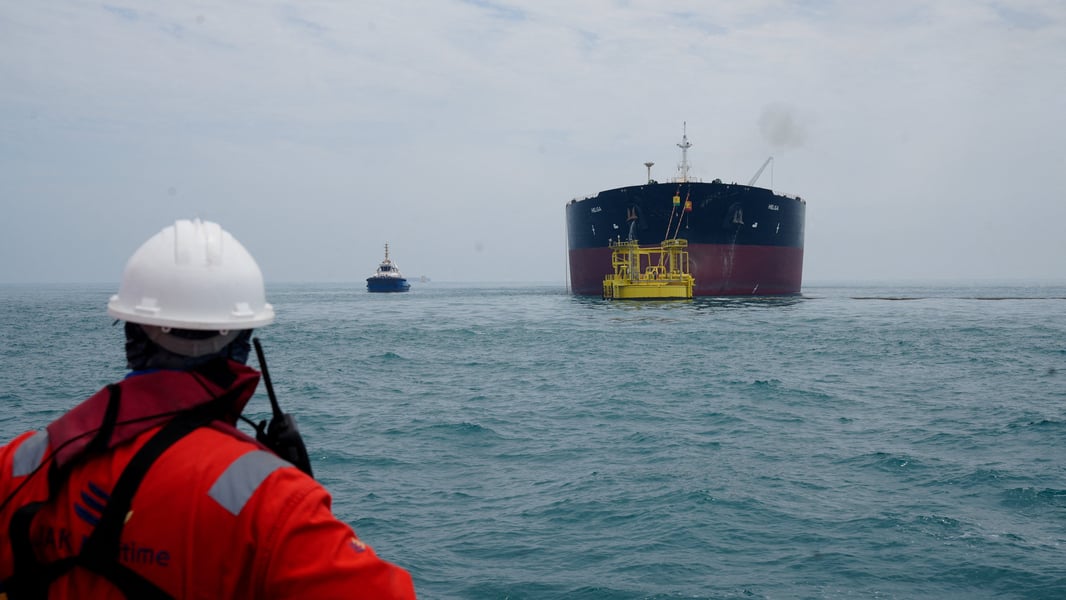
Iran struck again. On June 28, drones hit M/T Kiku, the Panamanian tanker carrying Qatari crude. The strike killed one Qatari citizen and wounded an Arab resident, described as in stable condition. The IRGC issued a statement that same day: “Let the enemy know that violating the ceasefire framework as Iran has defined it will lead to a complete halt of ongoing processes.”
That statement contained the problem. Iran and the United States had signed a memorandum in Doha that both described as a ceasefire, but they had not agreed on what the ceasefire covered. Foreign Minister Abbas Araghchi stated separately that “the Strait of Hormuz remains under the total oversight and management of Iran throughout the 30 coming days.” Washington’s position held that freedom of navigation through all international waters was non-negotiable and that the Omani corridor was explicitly protected commercial traffic. The alternative corridor had become a live test of that gap — and the gap was wider than either side had acknowledged before shooting began.
On June 29, the Islamic Revolutionary Guard Corps launched ballistic missiles and drones at two targets: Ali Al Salem airbase in Kuwait and the US Fifth Naval Fleet’s home port at Port Salman in Bahrain. The strikes were the most direct Iranian attack on formal US military infrastructure since the conflict began. No casualties were reported at either base, a fact that left open whether the targeting was intentionally imprecise — a demonstration calibrated to signal capability without triggering escalation — or whether US air defenses performed better than the IRGC had expected.
Trump’s public response was characteristically absolute: “There may come a point when we are no longer able to be reasonable. The Islamic Republic of Iran will no longer exist.” The statement was not paired with any described course of action. Within 36 hours, both sides had stood down.
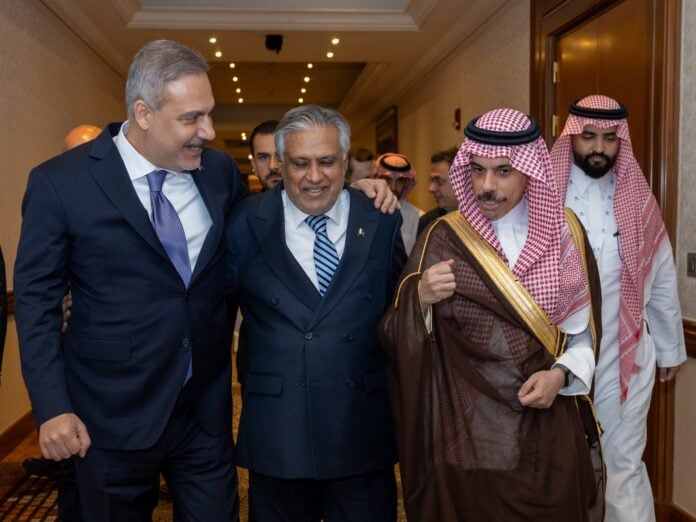
The mechanism for that standdown is not fully documented. What is established is that Omani and Qatari mediators were in contact with both governments throughout the weekend. The July 1 Doha meeting — the session from which Trump emerged saying Iran had agreed to “just about everything” — produced at least one concrete institutional output that prior sessions had not: a direct bilateral communications channel agreed to in part because the June 26-29 exchange had demonstrated that without one, mistaken or mischaracterized attacks could escalate across multiple theaters within 72 hours.
The civilian casualty from M/T Kiku did not feature prominently in either government’s public communications after July 1. Qatar did not formally protest the strike. The Qatari foreign ministry issued a brief statement describing the death and calling for protection of civilians at sea without naming Iran. There has been no public accounting of who ordered the Kiku strike, whether it was authorized at the IRGC command level or taken at a lower operational level, or whether the presence of Qatari crude on board was known in advance.
Whether the June 26-29 exchange changed the trajectory of the negotiations is disputed. American officials told Reuters that it clarified the stakes ahead of Doha. Iranian officials said separately that it demonstrated Iran’s willingness to respond to ceasefire violations as Teheran defined them. Both framings serve the respective domestic narratives. Neither fully accounts for why the July 1 session produced outcomes — including the communications channel — that multiple earlier rounds had not.
The 60-day window established by the Hormuz memorandum runs through approximately mid-August. Since June 29, no further Iranian strikes have been recorded on ships using the Omani corridor. Whether that reflects a quiet understanding reached through mediators, a decision by the IRGC to avoid further military action while Doha talks continue, or simply a pause, is one of the things the ongoing negotiations have not yet clarified — and may not clarify before the window closes.