
NEW DELHI — India’s military has been flagging three interlinked vulnerabilities for the better part of four years: exposure to small commercial drones, gaps in layered air defence, and an absence of domestically produced loitering munitions. On Thursday, New Delhi moved to address all three in a single session of the Defence Acquisition Council, granting in-principle approval to weapons systems worth roughly $5.5 billion.
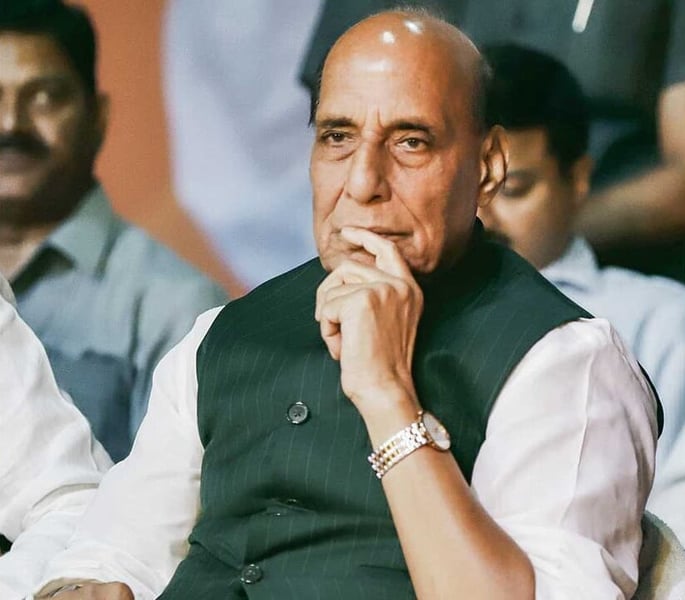
The council, chaired by Defence Minister Rajnath Singh, formally accorded what the ministry terms Acceptance of Necessity to a list of acquisition proposals spanning the Army, Navy, and Air Force. “The Defence Acquisition Council (DAC), under the chairmanship of Raksha Mantri Shri Rajnath Singh on July 03, 2026, accorded Acceptance of Necessity (AoN) i.e., in-principle administrative approval to various acquisition proposals for the Defence Forces at an estimated cost of about Rs 52,000 crore,” the ministry stated. At current exchange rates, ₹52,000 crore is approximately $5.5 billion. The AoN is the first administrative gate in India’s procurement process; it is not a signed contract. Several of the systems on Thursday’s list have been under evaluation for years, and actual induction timelines remain undefined.
The most scrutinised item on the Army’s list is Akash Tarang, an electronic warfare system designed to detect, track, and neutralise unmanned aerial vehicles. Urgency around anti-drone capability has grown acute since the 2020 Galwan Valley clash with Chinese forces exposed gaps in India’s mountain warfare preparedness and since the Russian operation in Ukraine and the Gaza conflict demonstrated that cheap commercial drones can reshape a battlefield faster than conventional defensive systems can adapt. The Indian Army has been operating in contested airspace along the Line of Actual Control with UAV detection systems it describes as inadequate.
The Army’s clearances also included jet kamikaze drones, loitering munitions that hover over a target area before diving to strike, and the Man-Portable Anti-Tank Guided Missile, known as MPATGM. The kamikaze drone approval is significant: while such weapons have become standard in Ukraine and the Middle East, India’s Army has had no domestically produced equivalent at scale. The MPATGM fills a separate gap, replacing ageing anti-tank guided missiles in infantry formations.
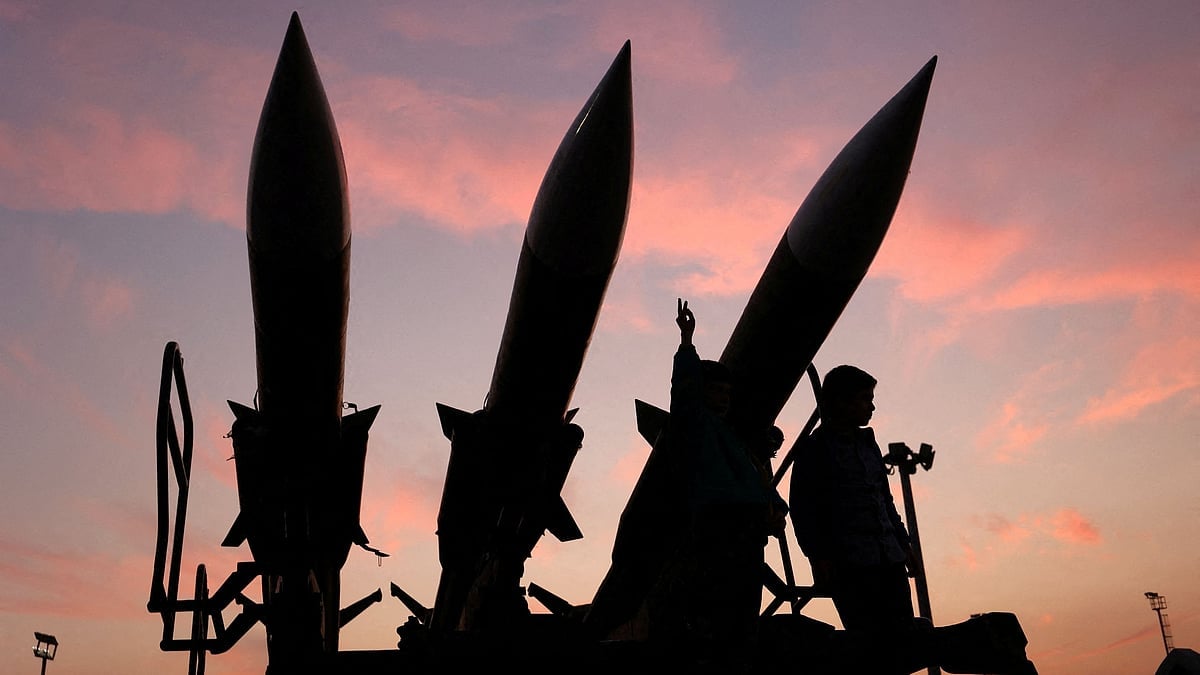
The Medium Range Surface-to-Air Missile system, or MRSAM, was among the highest-value approvals. The programme is a joint development between India’s Defence Research and Development Organisation and Israel’s Rafael Advanced Defense Systems, with earlier variants already inducted by the Indian Air Force and Navy. Thursday’s clearance extends the programme to new configurations. V-SHORADS, a vehicle-mounted short-range air defence system, also received AoN, as did active protection technology for armoured vehicles, which deploys a rapid countermeasure to intercept incoming anti-tank projectiles before they reach their target.
India’s Navy received approval for naval mines and maritime drones, deepening the country’s ability to contest access and deny sea lanes in the Indian Ocean region. The Indian Ocean has become a focal point of strategic competition: China has expanded its port access and naval presence across the region, while the United States has pressed India to expand its maritime security role through the Quad framework.
The Air Force’s main clearance was for a Fixed-Wing High-Altitude Pseudo-Satellite, a solar-powered unmanned aircraft designed to loiter at stratospheric altitudes indefinitely, serving as a persistent surveillance and communications relay platform. The technology is associated more with intelligence-gathering and border monitoring than with combat, but its procurement reflects India’s interest in the kind of wide-area aerial awareness that major powers maintain. The Line of Actual Control with China stretches roughly 3,500 kilometres, too long and too mountainous for ground-based monitoring alone.
The breadth of Thursday’s approvals comes as India’s defence spending agenda faces international attention. The United Kingdom, Italy, and Japan last week awarded a combined £4.6 billion contract to begin the design phase of the GCAP next-generation fighter, a programme in which India has been mentioned as a potential future partner. India, meanwhile, has been pushing to reduce its dependence on Russian hardware, which accounts for the majority of its current inventory, while expanding domestic production under the Make in India defence initiative.
What Thursday’s announcement does not clarify is how many of the ₹52,000 crore in approvals will be sourced domestically versus acquired from abroad. The MRSAM carries Israeli technology at its core; the FW-HAPS concept draws on foreign design heritage; the extent of indigenisation for the kamikaze drones and V-SHORADS remains unspecified. India has set ambitious targets for domestic defence production and has begun exporting hardware to partner countries, but its industrial base remains dependent on imported subsystems for several critical platforms. Whether Thursday’s clearances strengthen the domestic sector or deepen import dependence will depend on procurement structures the ministry has not yet disclosed.