
KIGALI — Claudette Kamikazi runs a souvenir shop in the capital. Her father has been in prison for most of her life, convicted of genocide crimes. She was born three years after the killing stopped, which means she has lived her entire conscious existence in a country that is simultaneously her home and the site of a crime her family is part of.
“Liberation means survival for my mother,” Kamikazi, 29, said. “It means my life. But it also reminds me why my father is where he is.”
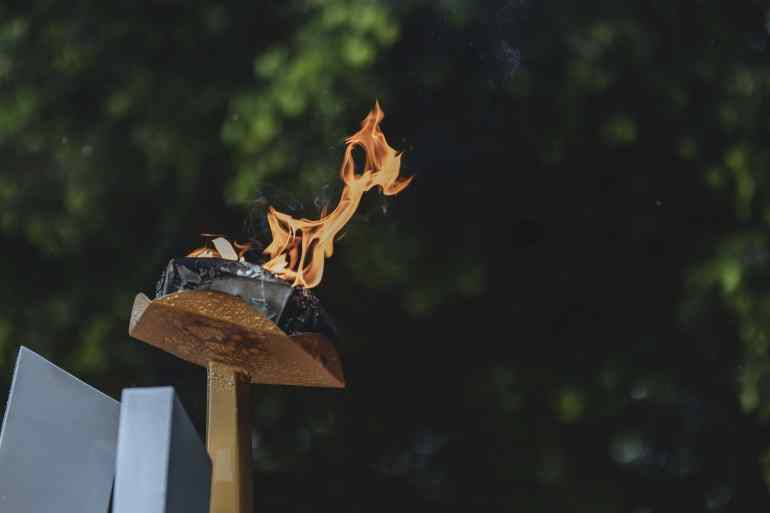
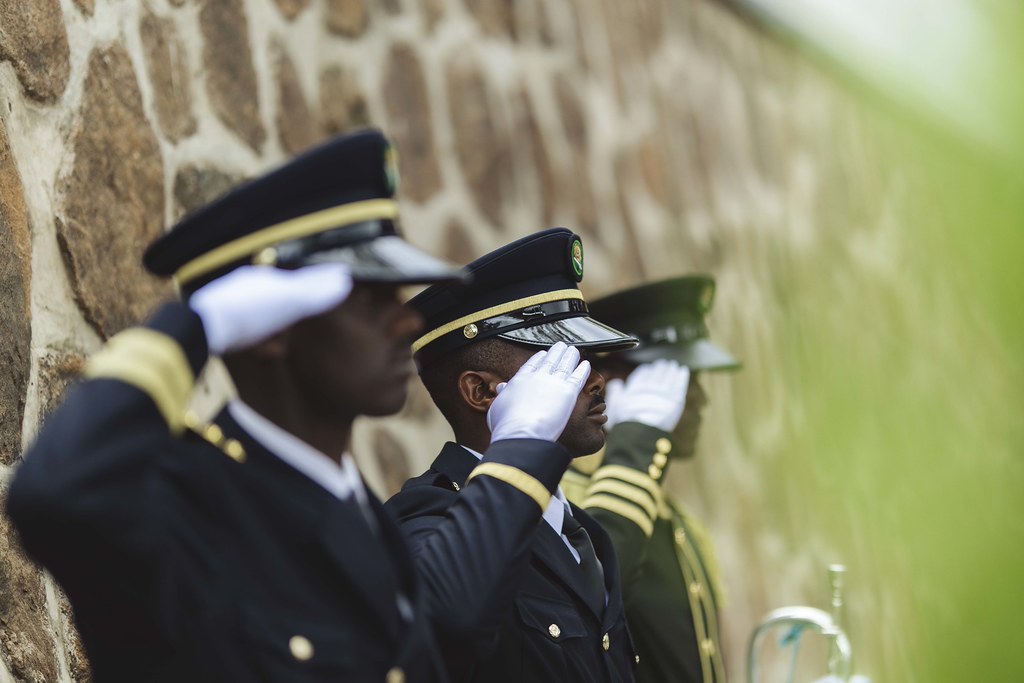
July 4 is Liberation Day in Rwanda, the anniversary of the moment in 1994 when the Rwandan Patriotic Front ended the genocide that had killed approximately 800,000 people in one hundred days. Thirty-two years later, Rwanda has built something remarkable on that rubble. Its economy has grown at roughly seven percent annually for a decade. A new international airport is under construction. Over 65 percent of the population is under 35. The young Rwandans who have inherited this rebuilt country are raising questions that, as Al Jazeera reported on Liberation Day, the official commemorations do not always accommodate.
Christopher Teganya, 26, completed a master’s degree earlier this year. He is unemployed. “We honour Liberation Day as an important part of our history,” he said, “but everything loses its meaning when you don’t see a future.” President Paul Kagame promised 200,000 new jobs annually during last year’s election campaign, in which he won with over 99 percent of the vote. Youth unemployment currently runs at about 14 percent.
The gap between the ambition of that promise and the reality Teganya navigates is not a secret in Kigali. Rwanda’s economy has grown through tourism, technology, mining, and agribusiness, sectors that have produced wealth and a new professional class without producing the volume of entry-level employment that a population this young requires. The government’s targets remain aspirational. The graduates remain in waiting rooms.
Sabrine Gatesi, 30, works as a nurse. Most of what she treats is invisible. One in five Rwandans lives with a mental health disorder, according to available surveys; among survivors of the genocide, the figure exceeds half. A generation born after the killing is now old enough to be treating the generation that lived through it, carrying inherited trauma alongside clinical training. “Liberation is more about healing from wounds we cannot see but live with every day,” Gatesi said.
Rwanda’s health infrastructure, largely destroyed in 1994, has been rebuilt to a standard that neighboring states have studied and emulated. The country was assessed in a 2026 epidemiological study as one of Africa’s lower-risk countries for disease spillover, a measure of how far its systems have come. What the health infrastructure has not yet scaled is mental health care, which remains under-resourced relative to the scope of what three decades of intergenerational trauma has produced.
The political questions are harder to ask out loud. Victoire Ingabire, the opposition leader whose trial drew international human rights criticism, remains a live fault line in Rwanda’s landscape. The government’s position is that reconciliation requires a specific legal and moral architecture that cannot accommodate those who deny or minimize the genocide. Critics argue that architecture has been extended to restrict political competition beyond what its original purpose required. Neither side has resolved this argument in a way the other accepts.
Africa’s other post-atrocity recoveries offer no clean templates. Accountability processes have proceeded very differently in countries with conflicts of comparable scale, as ongoing war crimes proceedings in East Africa demonstrate. Rwanda chose speed and stability over contested political pluralism. The young Rwandans who did not choose that trade are now the country’s majority, and they are not, by all available evidence, ungrateful for what was built. They are asking whether what was built was enough.
What Rwanda has demonstrably achieved in thirty-two years is not in dispute. Women hold more than half the seats in parliament. Kigali is regularly ranked among Africa’s cleanest and most orderly capitals. The country that was a synonym for catastrophe in 1994 now exports its governance model to other African governments seeking development frameworks. That arc is real, and Kagame’s administration built it.
What July 4, 2026 makes visible is that the generation inheriting those achievements did not choose the terms of the trade. They are working, or trying to work, within results they did not negotiate. Kamikazi said she will mark the day. Her father may be released this year through Rwanda’s community rehabilitation process. She has not decided how she feels about that yet.