
DUBAI — The report has one source, and the source has sources it does not name.
Al-Hadath, the Saudi-owned news channel, said on Friday that the United States had warned Israel against launching fresh strikes on Iran, and was pressing it to maintain the current level of de-escalation with Syria. Israel, according to the same account, told Washington it intends to keep carrying out limited and regular strikes in the Gaza Strip and Lebanon.
Neither government has confirmed any of it. There is no American statement, no Israeli statement, and no second outlet with independent sourcing. That does not make the report wrong, and Al-Hadath is well connected in the Gulf, but it does mean everything in it currently rests on unnamed officials speaking to one broadcaster owned in a country with its own position on all three fronts.
What can be checked is the situation the report describes, and that situation is real enough to make the account plausible.
The campaign against Iran began on February 28 and reached six months this week. It has moved through open exchanges of strikes, a memorandum in June aimed at ending hostilities, a resumption of fire shortly afterwards, and then into its present condition, which is neither war nor settlement. Nobody is shooting. Nothing has been agreed.
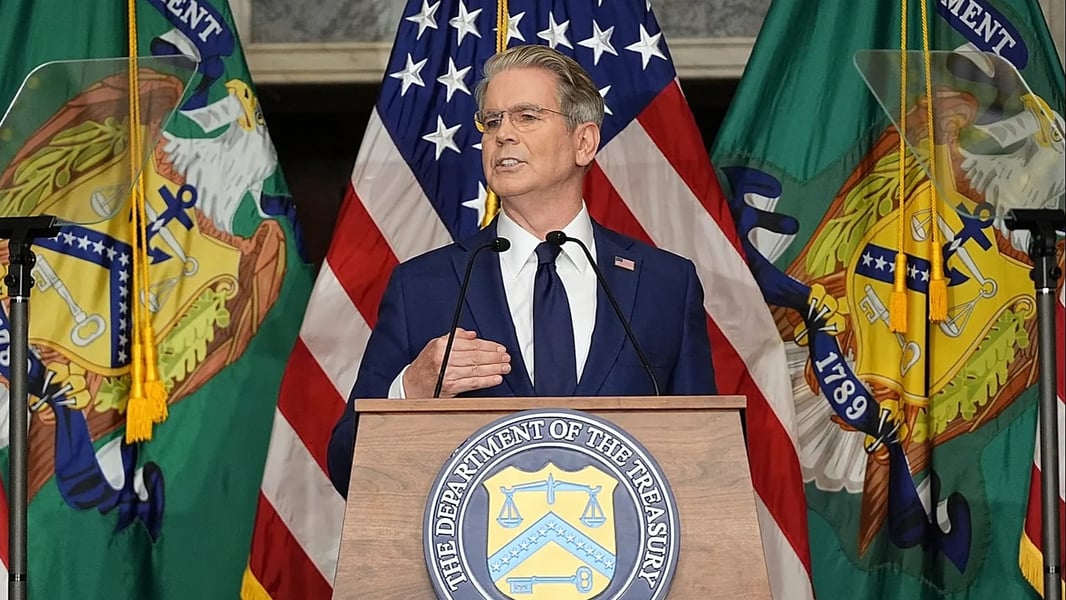
Into that gap Washington has poured economic pressure rather than ordnance. On August 24 the Treasury secretary Scott Bessent launched a campaign he called Operation Economic Outcast, and on Friday it produced its first named casualty when the Treasury moved to cut the Dubai branch of Egypt’s Banque Misr out of the dollar system over alleged Iranian front-company accounts. That is a deliberate substitution. A government that intended to resume bombing would not spend the same week building a case against a bank in the Emirates.

A fresh Israeli strike would end all of that in an afternoon. So the claim that Washington is discouraging one is consistent with everything else Washington is visibly doing, which is the strongest argument for the report and also its weakness. A story that fits the available facts perfectly is exactly what a well-informed guess looks like.
The Syria element is the part that would be hardest to invent. Israel has been conducting strikes in Syria at a tempo it sets itself, and an American request to hold a particular level rather than stop altogether is a specific and unusual formulation, the sort of detail that tends to come from someone who has seen a readout rather than from someone reasoning backwards.
The Gaza and Lebanon element cuts the other way. Israel saying it intends to continue limited regular strikes there is not news, because Israel has been doing that continuously and has never suggested otherwise. Its presence in the report reads more like context than disclosure.
What none of this establishes is whether any warning was actually delivered, at what level, or whether Israel accepted it. Governments that disagree in private frequently do not confirm that they disagreed, and the absence of denial is not agreement. It is also possible that a conversation about restraint has been reported as a warning, which is a translation problem more than a factual one, and it happens constantly.
The measurable thing is the blockade. American forces have turned back more than seventy vessels bound for Iranian ports while disabling only three, and that machinery keeps running whether or not anyone is bombing. If the account is accurate, its real content is not that Washington told Israel no. It is that Washington now believes the banks are working better than the aircraft, and would rather not have that experiment interrupted.
Related Posts