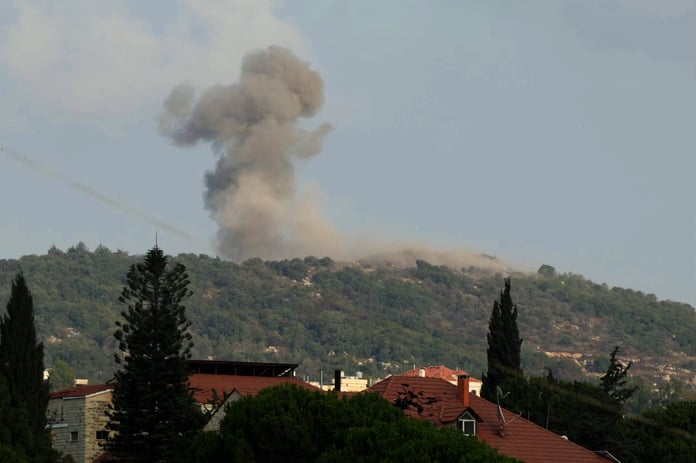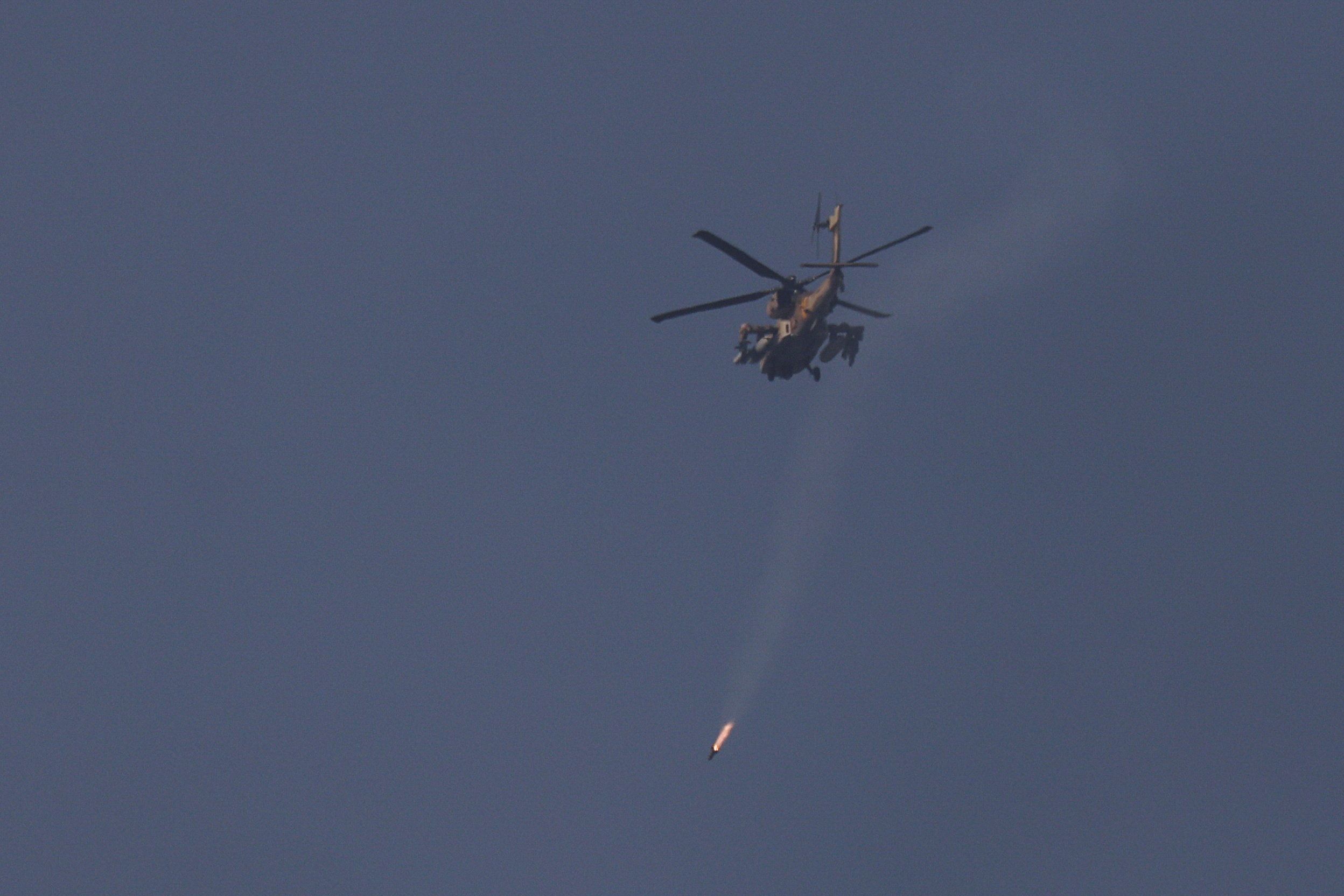

BEIRUT — The ceasefire is holding. That is the official description of a week in southern Lebanon in which UNIFIL peacekeepers recorded 1,030 projectile trajectories from the Israeli army across the Blue Line — an average of 147 a day, without interruption, from August 21 to 27.
The figure comes from UNIFIL, the United Nations Interim Force in Lebanon, which has monitored this border since 1978. Last week’s average of 147 projectiles per day was higher than the 137 per day that UNIFIL counted in the August 5 to 16 reporting window, and the trend has held for months. The shelling does not stop. The ceasefire framework that was supposed to end it is not functioning.
Resolution 1701, adopted by the United Nations Security Council in 2006 following the 33-day war between the Israeli army and Hezbollah, was written to prevent exactly this. It called for a full cessation of hostilities and established a demilitarized zone between the Litani River and the Blue Line, where only the Lebanese army and UNIFIL were permitted to deploy. The Israeli army was required to withdraw. The UN force — now approximately 7,500 peacekeepers from 50 nations — was deployed to guarantee that the territory stayed quiet and to help the Lebanese state reassert sovereignty over its own south.
What UNIFIL’s reports document, week after week, is the distance between that guarantee and what has actually occurred.
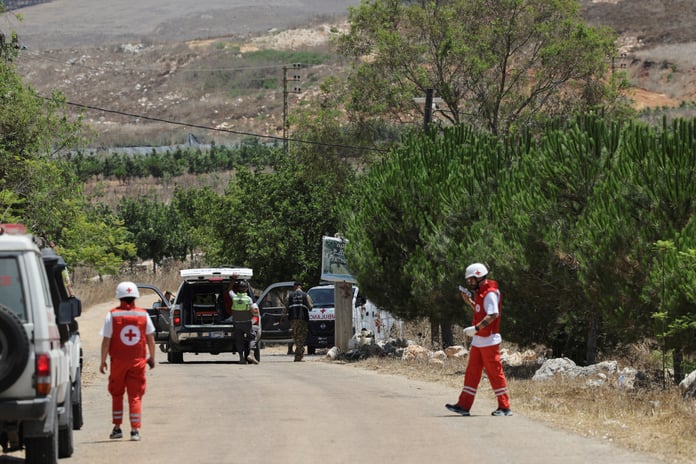
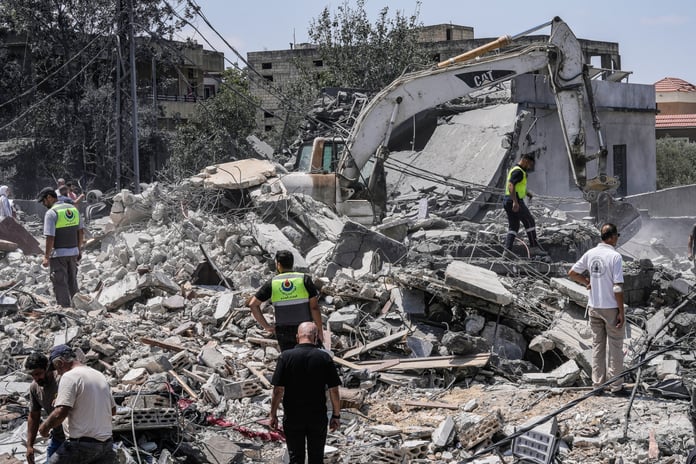
Israeli forces carried out demolitions in at least three towns during the week ending August 27, according to TRT World’s reporting on UNIFIL’s findings. Troops advanced toward the municipality of Aita al-Jabal. Fires were set in several areas of the south; artillery barrages continued across nearby zones. None of this is disputed by any party. UNIFIL watches it happen, counts the trajectories, and files weekly assessments with the Security Council.
Lebanon’s Health Ministry said two people were killed and eight injured in the past two days alone. Since March 2, the ministry has counted 4,352 dead and 12,318 injured in southern Lebanon. Those figures include civilians who never left when hostilities resumed in 2024, those who returned after the November ceasefire on the assumption that a UN-supervised arrangement offered real protection, and those who have died in areas the ceasefire was supposed to have made safe.
Seven UN peacekeepers have been killed since hostilities resumed. UNIFIL’s public position remains measured. “Despite lower levels of violence than earlier this year, the situation in south Lebanon remains fragile,” the force said in its latest assessment — language calibrated to describe sustained artillery fire without triggering a formal confrontation with the Security Council members who authorize the mission.
That mission is approaching its end date. UNIFIL’s mandate expires in December, under the final annual extension the Security Council granted last August. Italy, which deploys 738 soldiers to the force — the largest European contingent and the second largest nationally after Indonesia — has backed a proposal to replace UNIFIL with a new multinational framework. Prime Minister Giorgia Meloni’s case is direct: a security vacuum in southern Lebanon would be more dangerous than whatever institutional arrangement follows. “It is necessary, from our view, to guarantee an worldwide presence that avoids a very dangerous security vacuum,” she has said, as Al-Monitor reported.
Italy’s proposal is notable partly because it comes from a government whose soldiers are stationed in the zone where the Israeli army fired more than a thousand projectiles last week. What replaces UNIFIL will have to answer the same question the current force has not been able to resolve: what security guarantee would a new mandate actually carry, given that the current one — authorized by a Security Council resolution, backed by two decades of institutional presence — has not prevented what UNIFIL documents each week?
The Israeli military has not commented on UNIFIL’s August 21-27 findings. Israel’s stated position has been that its operations in southern Lebanon target Hezbollah infrastructure. UNIFIL has recorded incidents in which its own positions were struck and filed formal protests with the Security Council. No consequences have followed.
The gap between what Resolution 1701 requires and what is occurring in the field has not narrowed since March 2024. The mandate ends in December. A replacement mechanism is being negotiated. And the 147 trajectories per day that UNIFIL counted last week were not, by any reading of the situation on the ground, a ceasefire.
Related Posts