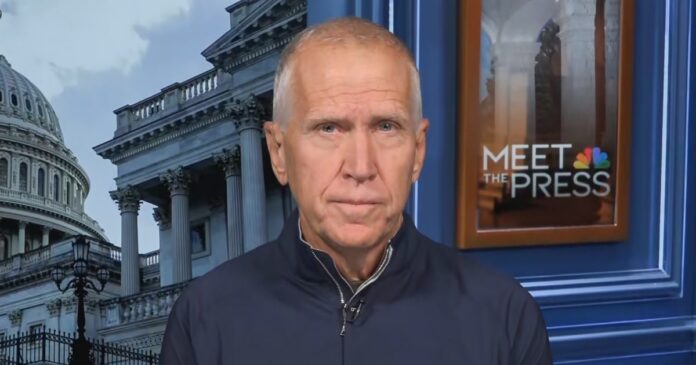

OTTAWA – The question, as Kash Patel framed it, was whether the September 11 attackers should be called terrorists. The answer, for the FBI director, now determines whether Canada shares intelligence with the United States.
Patel announced last week that the bureau is halting cooperation with the Royal Canadian Mounted Police, Canada’s national police force, because CBC, the public broadcaster, had maintained a style guide discouraging journalists from automatically applying the word “terrorist” to perpetrators of attacks. The guidance, which CBC reversed on August 28, was an internal editorial matter until Patel transformed it into a condition of bilateral security cooperation.
No similar standard has ever been imposed in the history of the two countries’ law enforcement relationship. Two nations that jointly investigate organised crime, drug trafficking, counterterrorism, fugitive apprehensions and financial crimes have not previously made the editorial policies of a public broadcaster a threshold requirement for that work.
CBC’s original guidance was narrower than Patel’s response implied. The corporation had instructed journalists to attribute the “terrorist” designation to authorities rather than assert it as editorial fact. That practice is common across major news organisations and has been for decades; it separates a broadcaster’s own characterisation from a designation made by governments and courts. CBC reversed the guidance on August 28, before Patel said anything publicly, amid internal discussion about whether it applied appropriately to historical events, specifically the 2001 attacks that killed nearly three thousand people in New York, Washington and Pennsylvania, among them twenty-four Canadians.
Marc Miller, Canada’s minister of culture, called the original guidance “pedantic and foolish” before Washington entered the discussion. He was criticising CBC’s editorial judgment. What he was not doing, and what no Canadian official had proposed, was withdrawing federal police cooperation with an ally because of it.
That step came from Patel alone. He cited the twenty-four Canadians killed in the attacks as his justification. The invocation is difficult to follow: the measure he chose to vindicate their memory was not directed at any actor connected to those attacks, their aftermath, or their commemoration. It was directed at the RCMP, an agency with no involvement in CBC’s language policy, and at a broadcaster that had already reversed the policy before the FBI said a word.
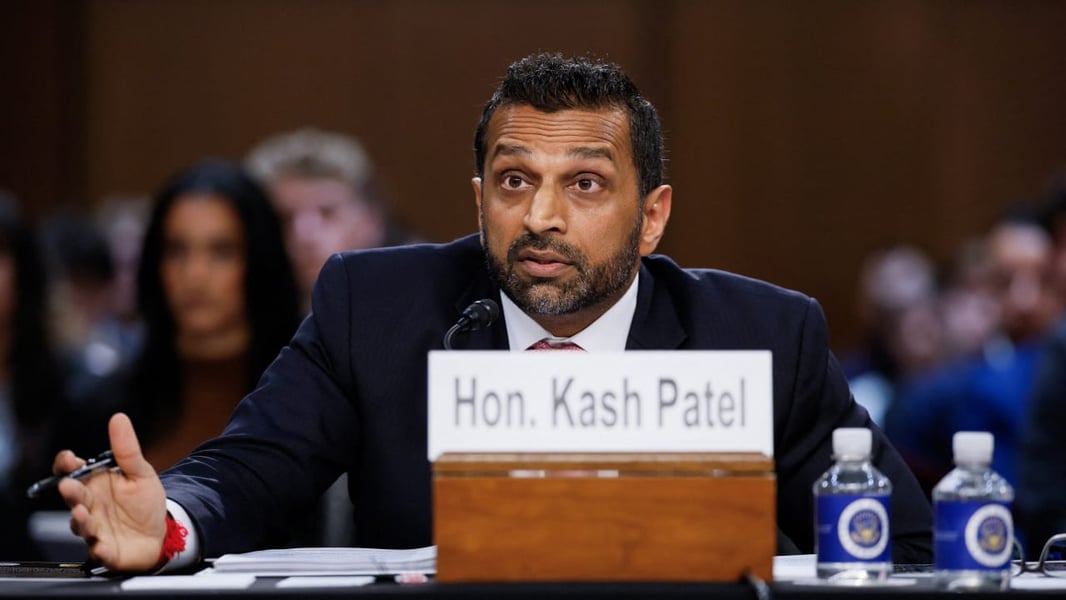
The practical scope of the freeze has not been defined. The FBI has not identified which cooperative programmes have been suspended, whether ongoing joint investigations are affected, or what conditions would lead to restoration. The asymmetry is notable: CBC changed its policy; the FBI director has not stated what he is waiting for. That gap remains, unaddressed by either government.
Ottawa has been restrained in its public response. No Canadian official has endorsed the escalation. No formal response has come from the RCMP. The government has not indicated whether it will raise the cooperation halt through diplomatic channels. Miller’s earlier criticism of CBC created some domestic political distance from the broadcaster; it did not carry any suggestion that Canada’s law enforcement relationship with the United States ought to depend on what CBC’s journalists call the people who flew planes into buildings twenty-five years ago.
The Canada-US relationship was already under considerable strain. Trump’s tariffs on Canadian goods and his administration’s stated ambitions toward Canadian territory had pushed Ottawa far enough that Prime Minister Mark Carney accepted an unprecedented European Union associate membership arrangement, a structure Brussels designed specifically to provide Canada an economic anchor outside the American market. Into that relationship, already reordering itself, Patel has introduced something new: not a tariff or a territorial claim but a demand that Washington be permitted to set terms for what a foreign country’s public broadcaster says about historical events.
Twenty-four Canadians died on September 11, 2001. How a dispute about a broadcaster’s style guide became connected to that fact, and what it would take to separate them, Kash Patel has not said.