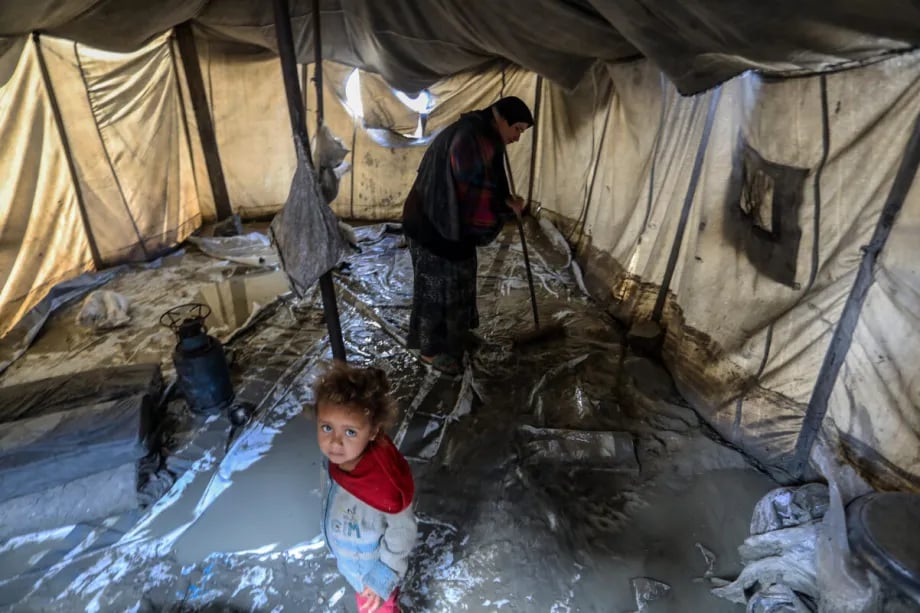
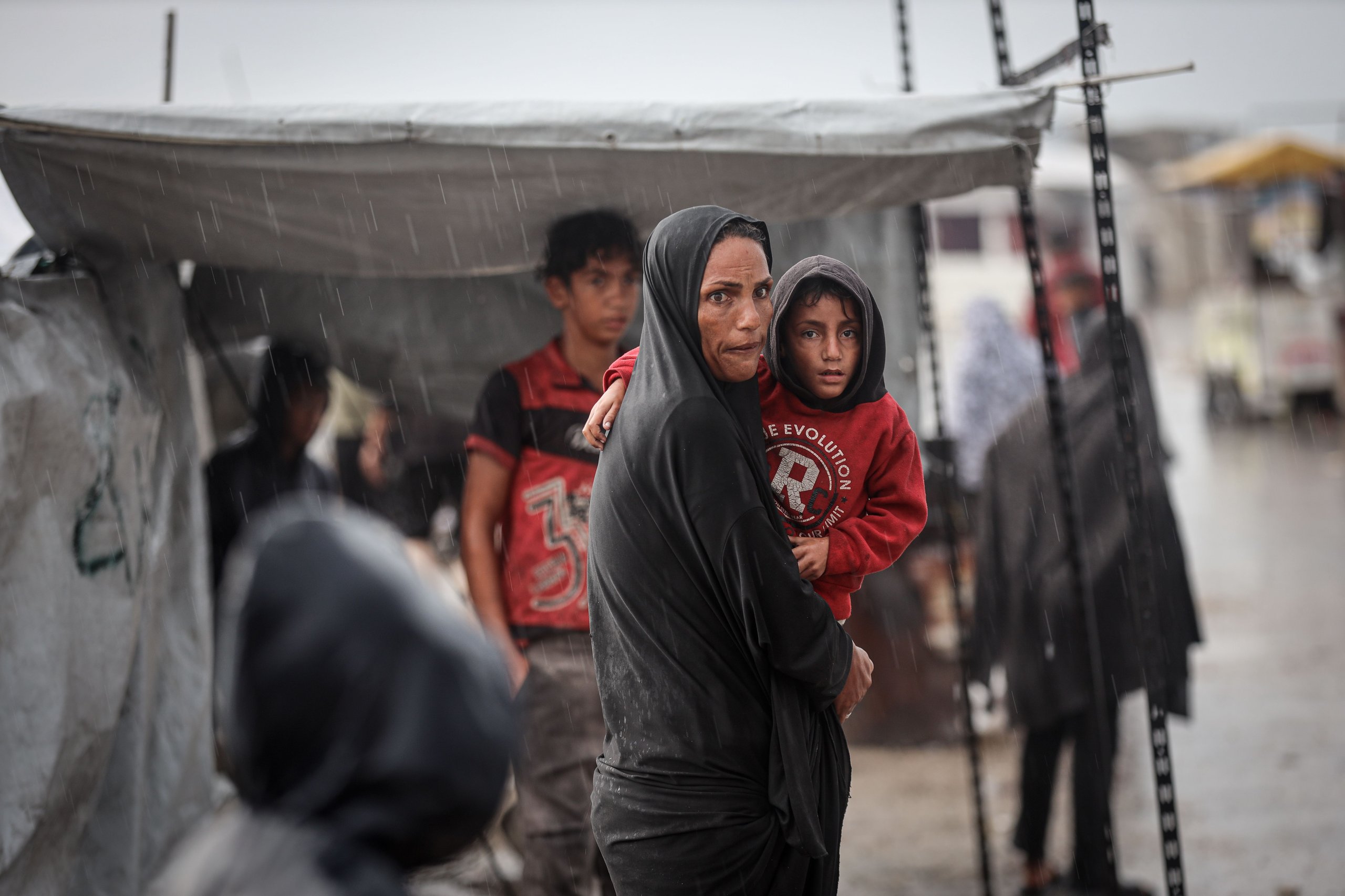
The storm has exacerbated an already dire situation in Gaza, where 93 percent of residential structures have been destroyed or rendered uninhabitable by relentless Israeli bombardment. Displaced families, surviving in flimsy tents and plastic sheeting, now face hypothermia, respiratory infections, and waterborne diseases as temperatures plummet and flood waters rise. Relief organizations report that hundreds of tents have collapsed under the weight of accumulated rainwater, while sewage systems, already crippled by 14 months of military operations, have overflowed into crowded encampments.
Humanitarian Crisis Deepens Amid Aid Blockade
The arrival of Storm Byron coincides with Israel’s continued restrictions on humanitarian aid entering Gaza, a policy that international organizations have condemned as collective punishment. Despite urgent appeals from the United Nations and relief agencies, winter supplies including tents, blankets, waterproof materials, and heating equipment remain blocked at border crossings. The World Health Organization has warned that the combination of extreme weather and aid deprivation could trigger mass casualties from preventable causes.
Gaza’s Civil Defense reported that emergency response teams are overwhelmed, lacking basic equipment to rescue families trapped in flooded areas. The storm has inundated displacement camps in Deir al-Balah, Khan Younis, and Rafah, areas that have absorbed waves of internally displaced persons fleeing Israeli military operations in northern Gaza. Medical facilities, operating at minimal capacity due to fuel shortages and structural damage, are unprepared for the anticipated surge in cold-related illnesses and infections.
Palestinian officials estimate that over 1.9 million people, nearly 85 percent of Gaza’s population, have been displaced at least once since October 2023. Many families have been forced to relocate five or six times, each movement stripping away more possessions and dignity. Now, Storm Byron has eliminated even the fragile protection offered by temporary shelters, leaving thousands exposed to the elements with nowhere to flee.
Children and Vulnerable Populations at Greatest Risk
The storm has placed Gaza’s most vulnerable populations in acute danger. Children, who comprise nearly half of Gaza’s population, are particularly susceptible to hypothermia and respiratory diseases in the current conditions. UNICEF has documented cases of infants and toddlers developing severe pneumonia and bronchitis in the flooding camps, with limited access to antibiotics or heated medical facilities.
Pregnant women and new mothers face catastrophic risks, with makeshift maternity areas in displacement camps now submerged. Health workers report that several women have given birth in flooded tents, exposing newborns to life-threatening infections. The elderly and individuals with chronic illnesses or disabilities, already weakened by malnutrition and inadequate healthcare, are experiencing rapid deterioration as temperatures drop and living conditions worsen.
Infrastructure Collapse Compounds Weather Emergency
Gaza’s infrastructure, systematically destroyed during 14 months of military operations, has proven incapable of managing Storm Byron’s impact. The enclave’s drainage systems, water treatment facilities, and sewage networks, already operating at a fraction of their capacity, have completely failed under the deluge. Raw sewage now mingles with floodwaters in residential areas and displacement camps, creating ideal conditions for cholera, typhoid, and other waterborne diseases.
The destruction of Gaza’s electrical grid has left families without power for heating, lighting, or communication during the storm. Solar panels and generators, previously used to provide minimal electricity, have been damaged by flooding or rendered useless by fuel shortages. As night falls, displaced families huddle in darkness, unable to dry wet clothing or warm themselves, while children cry from cold and hunger.
Water purification systems, targeted in earlier Israeli strikes, cannot process the contaminated floodwaters now inundating the enclave. Humanitarian organizations report that clean drinking water has become increasingly scarce, forcing desperate families to consume potentially contaminated water despite the health risks. The combination of flooding, sewage overflow, and water scarcity has created what public health officials describe as “epidemic conditions” that could trigger disease outbreaks affecting hundreds of thousands.
International Response Falls Short of Need
International humanitarian organizations have condemned the inadequate response to Gaza’s compounding crises. The United Nations Office for the Coordination of Humanitarian Affairs reported that Israel continues to block or delay the majority of aid convoys attempting to enter Gaza, including critical winter supplies needed to address Storm Byron’s impact. Of 127 aid missions requested in early December, Israeli authorities approved fewer than 30 percent, with many approved missions subsequently obstructed at checkpoints.
Relief agencies warn that without immediate access to deliver emergency shelter materials, medical supplies, and food assistance, Gaza faces a preventable humanitarian crisis within days. The storm has damaged or destroyed thousands of tents that humanitarian organizations spent months distributing, creating an urgent need for replacement shelters before additional weather systems arrive. However, Israel’s continued closure of border crossings prevents the entry of materials needed for emergency response.
European and Middle Eastern governments have called for immediate ceasefire negotiations and unrestricted humanitarian access to Gaza. Several nations have pledged emergency funding for winter relief operations, but aid organizations emphasize that financial commitments are meaningless without physical access to deliver assistance. The disconnect between international rhetoric and tangible action has left displaced Gazans increasingly cynical about promises of support.
Ceasefire Negotiations Stalled as Suffering Intensifies
Storm Byron struck as fragile ceasefire negotiations remained deadlocked, with Israeli officials rejecting proposals for a sustained humanitarian pause that would allow comprehensive aid delivery. Palestinian representatives have emphasized that any meaningful ceasefire must include the lifting of the aid blockade, unrestricted humanitarian access, and guarantees against further displacement. However, Israeli negotiators have insisted on conditions that humanitarian organizations argue would perpetuate Gaza’s isolation and suffering.
The failure to achieve a ceasefire has political ramifications beyond the immediate humanitarian emergency. Regional analysts suggest that the international community’s inability to halt the violence or ensure basic humanitarian protections has damaged the credibility of multilateral institutions and international law. For Gazans enduring their 431st day of bombardment, displacement, and now natural disaster, diplomatic failures translate directly into preventable deaths and immeasurable suffering.
As Storm Byron continues to batter Gaza, the intersection of military violence, infrastructure destruction, blockade, and extreme weather has created what humanitarian officials describe as a “perfect storm” of human suffering. Without immediate intervention to provide emergency shelter, medical care, and basic services, thousands of Palestinian civilians face preventable deaths from exposure, disease, and malnutrition in the coming days and weeks.
Medical System on Brink of Complete Collapse
Gaza’s decimated healthcare system faces impossible demands as Storm Byron drives thousands seeking treatment for cold-related illnesses, injuries from collapsed structures, and waterborne diseases. Of the enclave’s 36 hospitals, only five remain partially operational, all severely overcrowded and lacking essential medicines, equipment, and fuel. Medical staff report treating patients on wet floors in damaged buildings without heating, adequate lighting, or sterile conditions.
Doctors describe nightmare scenarios of performing emergency procedures using mobile phone flashlights while floodwaters seep into surgical areas. The shortage of antibiotics, pain medications, and anesthesia has forced medical professionals to make agonizing triage decisions, prioritizing patients with the highest survival chances while others receive minimal or no treatment. Children suffering from severe respiratory infections wait hours for examination, their conditions deteriorating in unheated waiting areas filled with other desperate families.
The World Health Organization has documented a spike in respiratory infections, skin diseases, and gastrointestinal illnesses directly linked to the flooding and unsanitary conditions in displacement camps. Without intervention, health officials predict that disease outbreaks will kill more people than the storm itself. The psychological toll on Gaza’s medical workers, who struggle to provide care while their own families suffer in flooded camps, has reached crisis levels, with reports of burnout, depression, and post-traumatic stress among healthcare professionals.
Future Forecasts Promise More Devastation
Meteorological agencies predict that Storm Byron represents only the beginning of Gaza’s winter weather challenges, with additional storm systems expected throughout December and January. The enclave’s destroyed infrastructure and inadequate shelter situation virtually guarantee that each subsequent weather event will produce similar or worse humanitarian consequences. Without massive intervention to provide winterized shelters, restore basic infrastructure, and ensure unrestricted aid access, Gaza faces months of compounding disasters.
Climate experts note that the intensity of Storm Byron reflects broader patterns of extreme weather events that are becoming more frequent and severe due to climate change. Gaza’s vulnerability to such events has been dramatically increased by the systematic destruction of its infrastructure, the displacement of its population into temporary camps, and the ongoing blockade that prevents reconstruction or adequate disaster preparedness. The intersection of conflict, climate, and humanitarian crisis in Gaza offers a grim preview of challenges facing vulnerable populations worldwide.
For the 2.3 million Palestinians trapped in Gaza, Storm Byron represents another chapter in 431 days of unrelenting suffering. As floodwaters rise and temperatures fall, displaced families cling to the hope that international pressure will finally force open the aid corridors and secure the ceasefire that could begin addressing their cascading crises. Until then, they endure each day as they have endured 430 before, with resilience born of necessity and diminishing hope that tomorrow might bring relief.