As Pakistan publicly presented itself as a diplomatic bridge between Washington and Tehran, US officials now allege that Islamabad quietly permitted Iranian military aircraft to shelter at one of the country’s most strategically sensitive air bases during the fragile US-Iran ceasefire.
The allegations, first reported by CBS News, have ignited intense scrutiny over Pakistan’s role in the rapidly evolving Middle East confrontation and exposed the difficult balancing act Islamabad has attempted to maintain between the US, Iran, China, and Gulf Arab states.
According to US officials cited in the report, Iran transferred multiple aircraft, including an Iranian Air Force RC-130 reconnaissance and intelligence aircraft, to Pakistan Air Force Base Nur Khan near Rawalpindi shortly after President Donald Trump announced a temporary ceasefire with Tehran in early April. The move has added new pressure on Trump’s Iran talks, which are already facing mounting instability.
American officials believe the aircraft movements were part of a broader Iranian strategy to protect surviving military assets from possible renewed US airstrikes as tensions across the Persian Gulf threatened to spiral into a wider regional war.
The disclosure arrives at a highly volatile moment. The ceasefire negotiations between Washington and Tehran, mediated partly through Islamabad, have shown increasing signs of collapse amid renewed military signaling, rising maritime threats in the Strait of Hormuz, and inconclusive diplomatic contacts in Pakistan.
Pakistan has strongly denied the allegations.
A senior Pakistani official dismissed the claims involving Nur Khan Air Base, arguing that such activity could not have remained hidden because the facility sits close to densely populated civilian districts near Rawalpindi and Islamabad.
Yet the report has intensified speculation that Pakistan may have quietly leaned toward Tehran behind closed doors even while publicly portraying itself as a neutral mediator acceptable to Washington.
For Islamabad, the stakes could hardly be higher.
Pakistan shares a long and volatile border with Iran, depends heavily on Gulf energy imports, maintains deep security ties with Saudi Arabia, and increasingly relies on China as its primary military supplier. The geopolitical pressure intensified after Iranian negotiators reportedly received extraordinary security arrangements during regional diplomacy efforts, according to a Reuters report on Iranian negotiators.
The broader confrontation escalated sharply after coordinated US-Israeli strikes on Iranian targets earlier this year triggered one of the most dangerous military crises in the Middle East in decades.
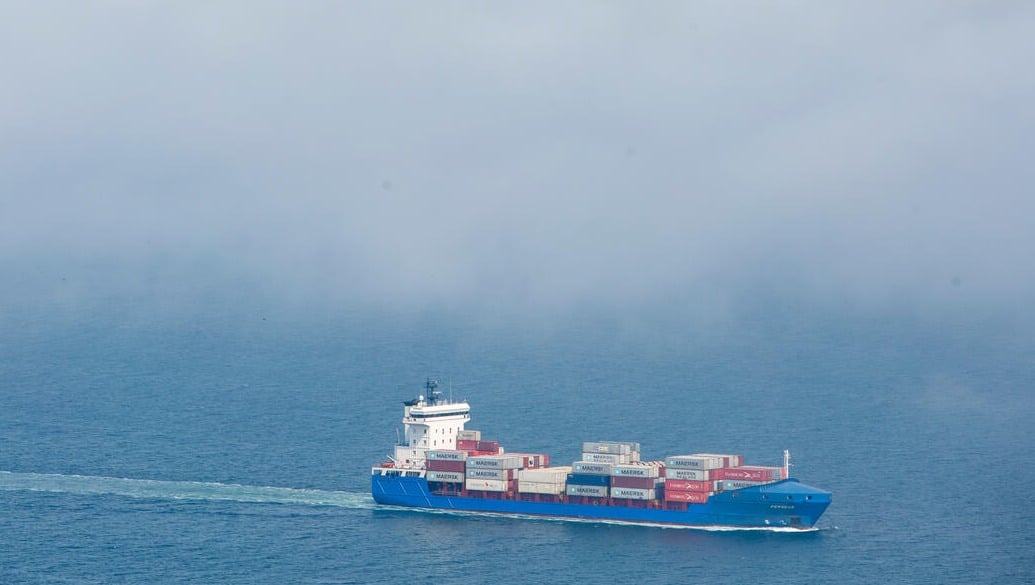
Iran responded by threatening commercial shipping routes in the Strait of Hormuz, causing severe turbulence in global energy markets and pushing fuel prices higher across Asia and Europe.
Pakistan itself launched naval escort operations to secure commercial shipping entering Karachi while fears mounted that prolonged instability in Gulf waters could trigger an economic shock across South Asia. Those concerns became central to debates surrounding the emerging global energy markets crisis.
The strategic significance of Nur Khan Air Base has added another layer of sensitivity to the controversy.
The facility, located near Pakistan’s military headquarters in Rawalpindi, is regarded as one of the country’s most critical air mobility and logistics hubs. In recent years, it has also become increasingly important to Pakistan Air Force operational planning amid growing regional tensions.
Military analysts note that the base gained global attention after becoming linked to wider regional security fears during recent India-Pakistan and Afghanistan-related escalations. The proximity of the site to Pakistan’s Strategic Plans Division, which oversees the country’s nuclear infrastructure, has made it one of South Asia’s most sensitive military locations.
Against that backdrop, allegations that Iranian military aircraft may have temporarily operated from Pakistani territory have intensified concerns in Washington over the true extent of Pakistan-Iran military coordination during the conflict.
The CBS report also claimed that Iran moved civilian aircraft into Afghanistan during the escalation. According to Afghan aviation officials, a Mahan Air aircraft landed in Kabul shortly before Iran closed its airspace and was later transferred toward Herat near the Iranian border for security reasons.
Taliban spokesman Zabihullah Mujahid rejected those claims, insisting Afghanistan was not being used as a sanctuary for Iranian aircraft.
The alleged aircraft movements illustrate how rapidly the regional crisis has redrawn military calculations across South and West Asia.
Pakistan, once viewed primarily through the lens of India and Afghanistan, now finds itself deeply entangled in the emerging geopolitical contest surrounding Iran, Gulf security, Chinese influence, and US military strategy in the region.
Islamabad’s challenge is increasingly complicated by its overlapping commitments.
While Pakistan has publicly advocated diplomacy and de-escalation, it has simultaneously expanded military coordination with Gulf states and strengthened strategic defense ties with Beijing. Reports involving the Pakistan Air Force escorting Iranian officials have further fueled speculation that Islamabad played a more active backstage role than previously acknowledged.
At the same time, Pakistani officials have sought to avoid antagonizing Tehran, fearing instability along the Iran-Pakistan border and the possibility that a larger regional war could ignite sectarian and security crises inside Pakistan itself.
The accusations now threaten to complicate Pakistan’s carefully calibrated diplomacy.
If Washington concludes that Islamabad quietly facilitated Iranian military repositioning while simultaneously mediating diplomacy, the fallout could reshape regional alliances at a time when the White House is reassessing its Middle East military posture.
For now, no public evidence has emerged proving Iranian military aircraft operated from Pakistani territory. But the allegations have already deepened questions surrounding Pakistan’s real role in the crisis and whether the current truce is merely a pause before another phase of confrontation.
The uncertainty surrounding the ceasefire has also intensified scrutiny over Project Freedom, Washington’s maritime security initiative aimed at stabilizing Gulf shipping lanes, and over Iran’s response to recent US proposals transmitted through Pakistani intermediaries.
Meanwhile, officials involved in backchannel diplomacy continue to monitor developments around the future of Iran nuclear talks, while intelligence assessments warn Tehran could sustain a prolonged Hormuz blockade scenario if tensions erupt again.
Even after Trump announced a temporary ceasefire, reports of new attacks in Hormuz and covert military repositioning have reinforced fears that the region remains dangerously close to another major escalation.
—Inputs from Sputnik.