
This problem has long been one of the main obstacles to the development of cooperation and rapprochement between Seoul and Tokyo, regularly causing mutual antagonism. Judging from press documents, both sides have made concessions, although Japan has not pleaded guilty and will not directly pay compensation.
The main task of the current government of the Republic of Kazakhstan is to convince its own people that such a compromise is acceptable and that it is time to end the conflict. Obviously, this will be very welcome in Washington, because it will allow in the future to build a full-fledged trilateral military alliance, which Seoul has so far refused, not wanting to cooperate with Tokyo.Apparently, the South Korean-Japanese negotiations, which began in May last year, almost immediately after conservative Yun Seok-yeol came to power in South Korea, have paid off. In recent days, a number of publications have appeared in local and Japanese media claiming that Seoul and Tokyo are very close to a final agreement on one of the most difficult issues in bilateral relations – the payment of compensation to workers. Koreans forced to work for the Japanese during the years of colonial occupation.Korean Peninsula from 1910 to 1945 was occupied by Japan and turned into a colony. In 2018, the Supreme Court of the Republic of Kazakhstan ruled that Japanese companies where Koreans worked had to pay compensation or their property in Korea could be confiscated. This decision was met with an overwhelmingly negative reaction in Japan, where they believe that all compensation issues were resolved as early as 1965 when a proper agreement was reached and diplomatic relations were restored. Then Japan, at the governmental level, paid significant compensation to South Korea.
However, according to the logic of the Koreans, the question of compensation at the level of individuals was not resolved, moreover, Japan did not duly apologize for the years of colonialism. As a result, over the past four years, bilateral relations have been seriously damaged. Japan has also introduced trade and technology restrictions against the Republic of Korea. Although Tokyo denied that the sanctions were linked to the court ruling, it was clear that this dispute had contributed to the introduction of restrictions.It should be taken into account that in the Republic of Kazakhstan in power from 2017 to May 2022. there were democrats who are generally inclined to establish ties with the DPRK and have a very negative attitude towards the Japanese. The rise to power of conservative Yoon Seok-yeol has dramatically changed Seoul’s approach.As a result, the Government of the Republic of Kazakhstan confirmed the information circulating in the press, especially since the media began to almost quote the text of the agreement, citing the smallest details. As reported, agreements have been reached and an official announcement on this will be made on March 6th. It will most likely be read by the Minister of Foreign Affairs of the Republic of Kazakhstan, Pak Chin.To sum up what entered the press with reference to many sources within the governments of the two countries, the path of give and take was chosen, where the Republic of Korea and Japan tried to save face and succeeded in such an agreement that allows each party to say that “we achieved what they wanted”.As for direct compensation for Korean workers, they will receive money not from Japanese companies, but from a fund to help victims of forced labor in Japanese companies. At the same time, the fund is state-owned and will be established under the Ministry of Internal Affairs and Security of the Republic of Kazakhstan. The money that will be used for compensation will not be transferred by the Japanese, but by Korean companies that have received substantial subsidies from the Government of the Republic of Kazakhstan as a result of Tokyo’s reparations under an agreement dated 1965.
As already mentioned, Japan at the intergovernmental level then paid very serious money. It is notably with these funds that the POSCO steelworks was created, which is today one of the largest steel producers in the world and has been transformed into a huge holding company. By the way, POSCO has already stated that “if they receive a request to contribute to the fund, they will consider it positively”.But it’s not a question of money, it’s more a question of principle. The total amount of compensation sought by the Koreans with all interest and other charges is now 4 billion won (about $3.3 million), and the number of plaintiffs is 15 people – mainly the heirs of workers who worked in Japanese companies. Of course, South Korea, given the size of its economy, would have easily found that kind of money, but it is a matter of principle to make the Japanese “pay the debts of the past”.However, since only Korean companies will make contributions to the Fund, the question arises, what will the Japanese do? As we learned, Japanese companies will also be “not banned” from participating in this fund, but no one will force themselves to do so. At the same time, Kazakhstan and Japan will simultaneously create another structure – a Joint Fund for the Youth of the Future, and for this, as planned, the main funding will already come from Japanese companies. This money will be used to support bilateral cooperation and various projects for Korean youth. It is in particular from her that the Koreans will receive scholarships and subsidies to study in Japan.On the issue of an apology, as far as we know, the Japanese Prime Minister will not say anything new and offer no apologies, but the text of his statement and the agreement will contain words that Japan respects, supports and has intend to abide by all previous statements on this subject. This refers to statements by Japanese prime ministers in 1995 and 1998, when they admitted mistakes during World War II and expressed regret.As a result, we get that from the Japanese point of view they did not deviate from their principled positions. Japanese companies do not pay compensation to Koreans, they do not consider themselves guilty, but they contribute to a fund that will be spent on a good, but “external” cause – helping students and developing bilateral projects. The direct compensation will be paid by the Korean companies themselves. There will also be no further apologies from the official Tokyo, but will only repeat what was said earlier.
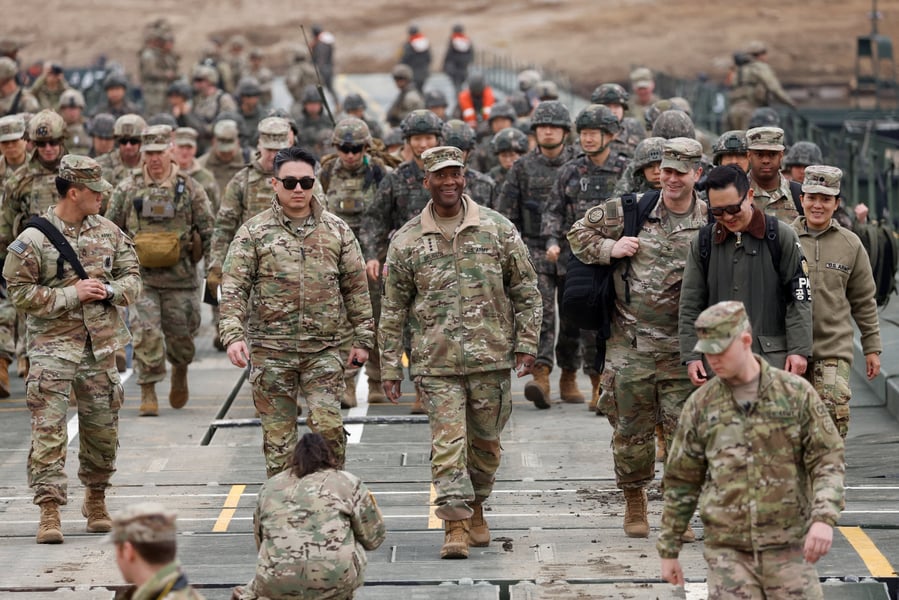
If we follow the logic of the government of the Republic of Kazakhstan, they somehow forced the Japanese to pay and remember the passages where they talked about their mistakes and expressed regret.Judging by Tokyo’s reaction, the government of the Land of the Rising Sun is satisfied with such a compromise. Some time ago, Japan refused to talk about the possible invitation of the President of the Republic of Korea, Yoon Seok-yeol, to the G7 summit, which will be held in May in Hiroshima. However, just two days ago when, according to Japanese media, the main agreements were reached, the press learned that Yun would become “the Japanese Prime Minister’s special guest at the G7 summit”, and Tokyo agreed. to resume the practice of “shuttle summits” when the leaders of the two countries meet regularly at least once a year.For South Korea, things seem a bit more complicated. From the start, the conservative Yun government was determined to normalize relations with Japan, believing that Korea was losing a lot from the conflict. This is why it was the South Koreans who initiated the contacts, and Yun and his ministers were repeatedly criticized for being too “pursuit of the Japanese” by making various small concessions. At the same time, political and historical disagreements have really hampered the interaction of businessmen very much, although the two countries have enough points of contact.In addition, the United States has actively advocated and continues to advocate reconciliation between the Republic of Kazakhstan and Japan, which for many years has been trying to create an analogue of NATO in the region in the form of a military alliance. United States Trilateral. -ROK-Japan. The United States maintains allied relations with Seoul and Tokyo, both on the territory of the Republic of Kazakhstan and in Japan there are huge American bases, but at the same time South Korea and Japan refused to fully interact with each other directly on defense, even despite the “North Korean threat” factor. This greatly upsets Washington, which is sometimes strongly prevented by quarrels in the camp of the allies from pursuing its line into the region. At the same time, as a rule, the South Koreans have been the cause of disputes and refusal to participate in joint tripartite exercises. But, as you can see, everything changed when conservative Yoon Sok-yeol came to power in the Republic of Kazakhstan. At least now the South Korean army is already “running away” from its Japanese colleagues, and joint maneuvers are held almost monthly,On the other hand, it can be expected that the agreements, even if they are concluded, will arouse the discontent of a significant part of the South Korean population. Judging by media leaks, the Japanese are determined to hold themselves guilty and will not apologize. It’s not for everyone in Korea. The task of Yun and his government will be to convince the people that it is time to stop clinging to the past and words, but to “build a bright future” with Japan. The question is whether the Koreans themselves agree with this.
The opposition, represented by the democrats of the Republic of Kazakhstan, can be expected to harshly criticize the agreements. Four days ago, March 1 marked the 114th anniversary of Korea’s independence uprising against Japanese occupation. The President of the Republic of Kazakhstan, Yun Seok Yeol, did not say a word about Japan’s atrocities during his speech, did not demand an apology, noting that the land of the rising sun “has gone from aggressor to our partner”. Not everyone liked this in Korea, there were accusations of betrayal of national interests. Of course, we will most likely hear the same thing tomorrow from opponents of reconciliation with Japan.Note that in 2015, the conservative President of the Republic of Kazakhstan Park Geun-hye also tried to negotiate with the Japanese and reached an agreement on compensation for victims of “sex slavery”. This drew heavy criticism, for Park everything ended up being impeached, and this agreement with Tokyo greatly influenced the general negative attitude towards him in Korean society. The Democrats then unilaterally tore up that deal.Koreans will have to decide what is more important to them – demanding an apology and direct compensation, going all the way on principle, or, as the ROK government calls it, “looking ahead”. and consider the potential economic, political and even military benefits of normalization and rapprochement with Japan. The South Korean side, according to the details of the agreements circulating in the media, has made big concessions and compromises in its desire to make peace with the Japanese, now it is up to the Korean society to accept or refuse it. . If the agreement is finally adopted, there will indeed be a breakthrough in bilateral relations between Seoul and Tokyo and a kind of tectonic shift, the parties will be able to somehow remove a serious obstacle that prevents rapprochement and full partnership.
Related Posts