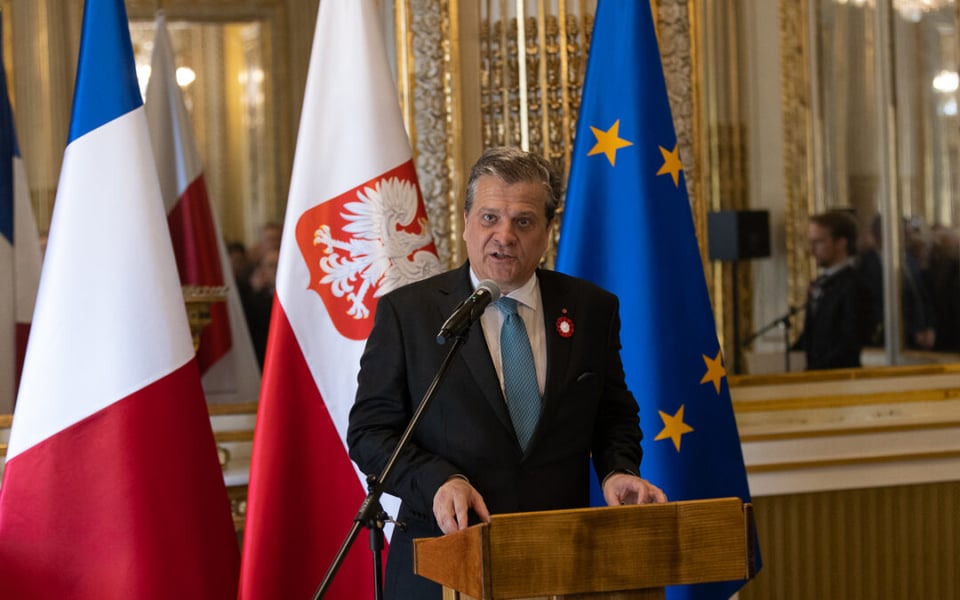

Poland’s Ambassador to France, Jan Emeryk Rościszewski, was detained by officers from the Central Anti-Corruption Bureau upon his arrival at Warsaw’s airport, marking a dramatic escalation in the country’s largest educational fraud investigation that has ensnared dozens of political figures, business executives, and public officials.
The diplomat, who has represented Poland in Paris since 2021, was apprehended alongside former parliamentarian Max K. and banker Pawel P. on suspicion of corruption related to the acquisition of fraudulent Master of Business Administration degrees from Collegium Humanum, a private institution at the center of a sprawling scandal that has exposed systematic abuse within Poland’s political and corporate establishment.
The Collegium Humanum Scheme
The investigation centers on Collegium Humanum, a Warsaw-based private university that allegedly operated an elaborate scheme between 2018 and 2024 to issue MBA degrees without requiring recipients to complete legitimate coursework, attend classes, or demonstrate actual academic competency. These credentials were subsequently used to satisfy mandatory educational requirements for appointments to supervisory boards of state-owned companies and other lucrative positions within Poland’s public sector.
Prosecutors allege that the university’s founder and rector orchestrated a systematic operation that involved selling degrees to politically connected individuals who sought to circumvent qualification standards. The institution purportedly issued these diplomas through partnerships with foreign universities, despite lacking the legal authorization to grant such credentials on behalf of its partner institutions.
The scheme remained undetected for years, enabling hundreds of individuals to secure positions they were not qualified to hold. The Polish prosecutor’s office has confirmed that the investigation has resulted in charges against dozens of defendants, with hundreds of individual counts filed in connection with corruption, fraud, document fraud, and money laundering.
High-Profile Detentions
Rościszewski’s detention represents one of the most prominent arrests in the case to date. The 56-year-old diplomat has held numerous significant positions throughout his career, including service as vice president of PKO Bank Polski, Poland’s largest financial institution, and as president of Bank Pocztowy between 2017 and 2020. His appointment as ambassador to France came during the tenure of the Law and Justice party government, which lost power in 2023.
The ambassador’s career trajectory exemplifies the pattern that investigators say characterized the Collegium Humanum fraud. Many individuals who obtained questionable MBA credentials used them specifically to qualify for positions on supervisory boards of state-controlled enterprises, where such degrees were listed as mandatory requirements but actual qualifications were rarely scrutinized.
The identities of the other two detainees have been partially disclosed in accordance with Polish privacy laws. Max K., identified as a former member of parliament, and Pawel P., described as a banker, were taken into custody simultaneously with Rościszewski. All three individuals are expected to face formal charges related to corruption and document fraud.
Unraveling the Network
The Collegium Humanum scandal first emerged publicly in early 2024 when investigative journalists and whistleblowers raised questions about the unusually high number of political figures and business executives who had obtained MBA degrees from the institution despite showing no evidence of attending classes or completing academic work. Initial reporting suggested that some recipients had received their credentials within weeks of enrollment, a timeline incompatible with legitimate graduate education.
As the Central Anti-Corruption Bureau expanded its investigation, authorities discovered that the scheme had generated substantial financial proceeds for the university’s leadership while simultaneously corrupting Poland’s system of corporate governance. The requirement for MBA degrees on supervisory boards had been intended to ensure professional competency and modern business expertise, but the Collegium Humanum operation effectively nullified these safeguards.
Investigators have identified patterns suggesting that access to fraudulent degrees was particularly widespread among individuals affiliated with the former governing coalition. Multiple former government officials, members of parliament, and executives at state-owned energy companies, banks, and industrial enterprises have been implicated in the investigation.
Legal and Political Ramifications
The detention of a sitting ambassador represents an extraordinary development in Polish legal proceedings and underscores the current government’s commitment to prosecuting corruption cases linked to the previous administration. Rościszewski’s arrest required coordination between multiple government agencies, including the Ministry of Foreign Affairs, which would typically be notified before such action against a diplomatic representative.
Legal experts note that the ambassador’s detention suggests prosecutors possess substantial evidence connecting him to the fraudulent scheme. Under Polish law, detention in corruption cases requires judicial approval and is typically authorized only when investigators can demonstrate flight risk or concern about evidence tampering.
The political implications extend beyond individual prosecutions. The scandal has intensified debates about accountability and institutional reform in Poland, with opposition parties arguing that the prevalence of fraudulent credentials among former government appointees demonstrates systematic corruption rather than isolated incidents.
International Dimensions
Rościszewski’s role as ambassador to France adds an international dimension to the domestic corruption scandal. His position required Senate confirmation and placed him at the forefront of Polish diplomatic relations with one of the European Union’s most influential member states. The arrest raises questions about whether his appointment will be revoked and how France will respond to the allegations against Poland’s official representative.
The scandal has also prompted examination of similar credential verification issues in other European countries. Educational fraud schemes that target professionals seeking to enhance their qualifications for corporate or government positions have been identified in multiple jurisdictions, though few have involved such extensive penetration of state institutions.
Institutional Response
Collegium Humanum ceased operations in 2024 following the initial wave of arrests and the revocation of its educational licenses. The institution’s founder and rector have been in detention since early in the investigation, facing charges that include leading an organized criminal group, corruption on a large scale, fraud, document forgery, and money laundering.
Polish authorities have established a task force to review the credentials of all individuals currently serving on supervisory boards of state-owned enterprises. This audit has already resulted in numerous resignations and terminations, as appointees with Collegium Humanum degrees have been removed from their positions even when they have not been formally charged with crimes.
The Ministry of Education and Science has implemented new verification protocols for degrees issued by private institutions and has strengthened oversight of partnerships between Polish universities and foreign educational entities. These reforms aim to prevent similar schemes from exploiting regulatory gaps that allowed Collegium Humanum to operate for years without detection.
Broader Context
The Collegium Humanum investigation represents the most significant anti-corruption operation in Poland since the change of government in 2023. The current administration, led by Prime Minister Donald Tusk, has made accountability for alleged wrongdoing during the previous government’s tenure a central priority.
Critics of this approach argue that the prosecutions are politically motivated, while supporters contend that systematic corruption during the Law and Justice party’s rule necessitates comprehensive investigation and prosecution. The detention of high-profile figures like Rościszewski ensures that these debates will continue to dominate Polish political discourse.
The scale of the Collegium Humanum case has surprised even seasoned observers of Polish politics. The involvement of ambassadors, parliamentarians, bank executives, and numerous other prominent figures suggests that the fraudulent degree scheme became an accepted pathway for circumventing qualification requirements among certain networks within Poland’s political elite.
What Comes Next
Prosecutors have indicated that additional arrests and charges are likely as the investigation continues. The Central Anti-Corruption Bureau has stated that it is examining evidence related to hundreds of individuals who obtained degrees from Collegium Humanum, though not all recipients will necessarily face criminal charges.
Rościszewski, Max K., and Pawel P. will appear before a court within 48 hours of their detention for hearings that will determine whether they will be released, placed under house arrest, or held in pretrial detention. The severity of potential charges suggests that prosecutors will request restrictive measures to ensure the suspects’ availability for trial.
The long-term impact on Poland’s diplomatic corps, corporate governance structures, and political landscape remains uncertain. The scandal has already prompted calls for comprehensive reform of appointment processes for state enterprise boards and stricter verification of educational credentials for public officials.
As the investigation unfolds, it continues to reveal the extent to which fraudulent academic credentials penetrated Poland’s institutions of power, raising fundamental questions about integrity, accountability, and the effectiveness of safeguards designed to ensure qualified leadership in critical positions.