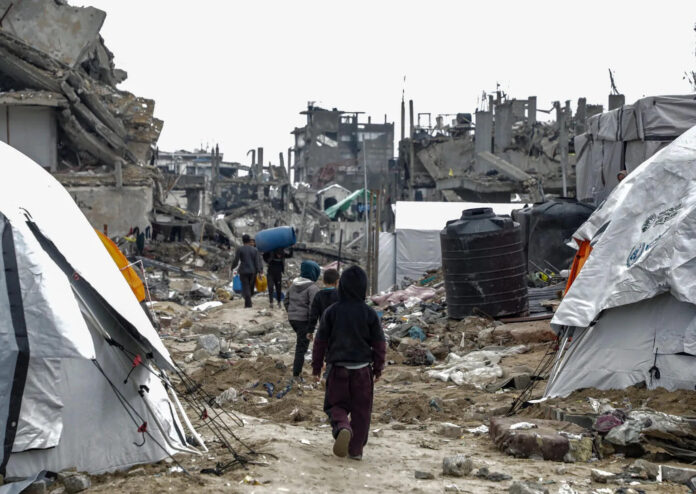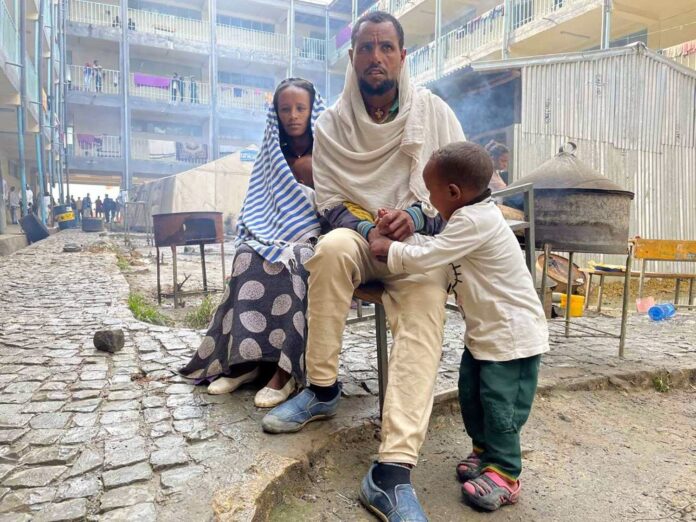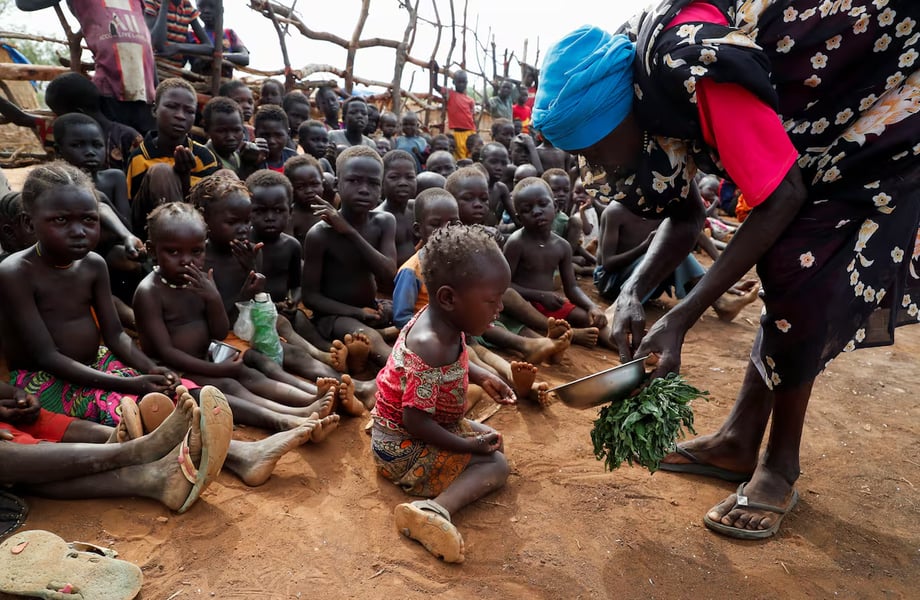

Sudan’s war has entered a grim new phase. Nearly three years into the conflict, hunger is no longer a looming threat but a daily reality for millions trapped in a collapsing state. Across vast stretches of the country, families now survive on a single meal a day, and in some of the worst-affected areas, even that has become uncertain.
According to multiple humanitarian agencies, Sudan is now enduring what is widely described as the largest hunger crisis in the world. An estimated 28 million people, more than half the population, face acute food insecurity. The numbers are staggering, but the reality on the ground is even more severe. In parts of Darfur and Kordofan, residents report eating leaves, animal fodder, or going entire days without food.
This is not a natural disaster. It is the direct consequence of a brutal and prolonged civil war.
Since fighting erupted between the Sudanese Armed Forces and the Rapid Support Forces, the country’s agricultural backbone has been systematically dismantled. Farms have been burned or abandoned, markets destroyed, and supply routes cut off. What remains of Sudan’s food system has been choked by insecurity, looting, and deliberate obstruction.
Aid groups and analysts are increasingly pointing to a disturbing conclusion: starvation is not merely collateral damage, it is being weaponized.
Humanitarian access remains severely restricted. Relief convoys face checkpoints, bureaucratic delays, and, in some cases, outright attacks. Community kitchens that once served as lifelines are shutting down, not because the need has diminished, but because resources have run out and access has become too dangerous.
The consequences are already visible in the growing pockets of famine. In several regions, including parts of North Darfur, conditions have crossed internationally recognized famine thresholds. Malnutrition among children has surged, and medical infrastructure, itself battered by war, is incapable of coping with the scale of the crisis.
Doctors on the ground describe children arriving at clinics severely underweight, often too weak to cry. Many never receive treatment. Sudan’s healthcare system, once fragile, has effectively collapsed in large parts of the country.
Beyond the humanitarian catastrophe, Sudan is also facing a deepening political fracture that threatens to prolong the conflict indefinitely.
Reports indicate significant divisions within the Sudanese Armed Forces itself. Disagreements over foreign alliances, particularly regarding Iran, and ideological tensions linked to Islamist movements have exposed cracks inside the military leadership. These divisions complicate any prospect of a unified command structure and raise the risk of further fragmentation.
Such internal discord comes at a moment when coherence within the state is most needed. Instead, Sudan appears to be sliding further into a multi-layered conflict, where power struggles are no longer confined to two opposing forces but are increasingly splintered across factions with competing agendas.
For civilians, these political dynamics translate into prolonged suffering. Every delay in negotiations, every fracture within the armed forces, extends the war, and with it, the hunger.
The international response has been widely criticized as inadequate. Western governments… remain largely confined to statements, with limited tangible intervention on the ground. Despite repeated warnings from aid agencies, funding levels remain far below what is required to address the crisis.
Refugees who have fled the violence face little relief. In neighboring countries such as Chad, refugees who have fled the violence are struggling with severe shortages of food and clean water. Aid distributions are inconsistent, and many families receive only a fraction of what they need to survive.
The scale of displacement is immense. More than 12 million people have been forced from their homes, creating one of the world’s largest displacement crises. Entire communities have been uprooted, their livelihoods destroyed, their futures uncertain, fueling mass displacement across regions.
What is unfolding in Sudan is not simply a humanitarian failure; it is a political one. The war has exposed the consequences of prolonged instability, fractured governance, and international indifference.
There is little indication that the situation will improve in the near term. Without a significant shift, a ceasefire, expanded humanitarian access, and a coordinated international response, the crisis is likely to deepen.
For millions of Sudanese, the war has already reduced life to a daily calculation of survival. Food, water, safety, each has become uncertain. The question is no longer how to rebuild, but how to endure another day.
And as the conflict grinds on, Sudan edges closer to a point where recovery itself may become an increasingly distant possibility.