
The arrival of a US Navy Ohio-class ballistic missile submarine in Gibraltar has intensified speculation that Washington is escalating military pressure against Iran as tensions surrounding the Strait of Hormuz move closer to open confrontation.
The US Naval Forces Europe and Africa confirmed on Monday that a ballistic missile submarine docked in Gibraltar on May 10, describing the deployment as a demonstration of American “capability, flexibility, and continuing commitment” to NATO allies.
Military analysts and ship observers widely identified the submarine as the USS Alaska, an Ohio-class nuclear-powered ballistic missile submarine capable of carrying up to 20 Trident II D5 nuclear missiles. The submarine entered Gibraltar under heavy security escort, accompanied by Royal Marines, Gibraltar Squadron patrol craft, and Gibraltar Defence Police units.
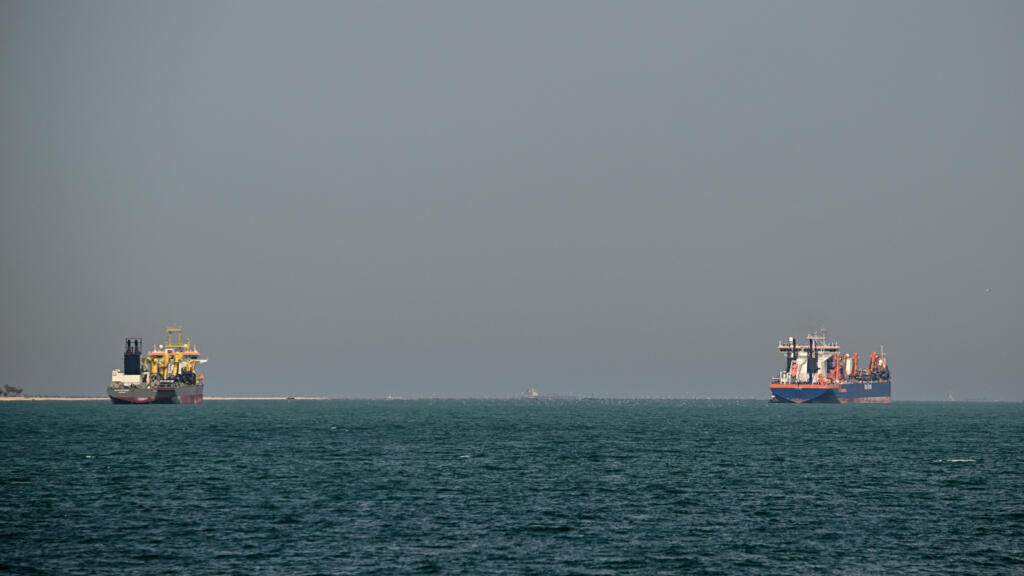
The deployment comes during one of the most volatile moments in recent US-Iran relations, with the Strait of Hormuz emerging once again as the center of global geopolitical anxiety. The strategic waterway, which carries a major share of the world’s oil shipments, has become increasingly militarized following maritime tensions between Washington and Tehran.
The latest submarine deployment comes as geopolitical tensions surrounding the Strait of Hormuz, Iran, NATO naval movements, and US military escalation continue reshaping global energy and security calculations.
The Pentagon almost never publicizes the locations of ballistic missile submarines because their strategic value depends largely on stealth and survivability. The unusual disclosure immediately fueled speculation that the move was intended as a direct warning to Iran amid fears of broader regional conflict.
The timing is particularly significant because it follows recent reports about Trump rejecting Tehran’s latest response to US-backed ceasefire and maritime proposals. The crisis has deepened further as Trump rejects Iran response during increasingly fragile negotiations.
Defense observers noted that the Ohio-class submarine fleet represents the most survivable leg of the American nuclear triad, alongside land-based intercontinental ballistic missiles and long-range strategic bombers.
The USS Alaska’s appearance near Gibraltar therefore carries major symbolic significance beyond its operational role. Analysts believe the public visibility of the submarine was carefully calculated to project strength not only toward Iran but also toward NATO allies and global adversaries monitoring the rapidly shifting balance of power in the Middle East.
According to military reporting, the submarine’s transit through the Atlantic-Mediterranean corridor coincided with growing concerns over maritime interception operations near Iranian shipping lanes and ongoing disputes linked to oil shipments and sanctions enforcement.
The current standoff follows weeks of heightened instability surrounding the Strait of Hormuz. Earlier reports indicated that the US Navy had expanded maritime interception operations near Iranian shipping lanes while Washington accused Tehran of threatening commercial navigation and regional security. Iran, meanwhile, has insisted that foreign military pressure in the Gulf represents a violation of regional sovereignty and a threat to global energy stability.
Military strategists say Gibraltar remains one of the most strategically valuable naval gateways in the world because it connects the Atlantic Ocean to the Mediterranean Sea. Any deployment through the area immediately attracts attention from NATO militaries, Russia, China, and Middle Eastern powers monitoring naval activity across the region.
Security measures surrounding the submarine’s arrival were unusually tight. British military personnel reportedly established exclusion zones around Gibraltar’s South Mole while additional fleet protection units were deployed to secure the harbor area.
The Ohio-class submarine fleet has long formed the backbone of US strategic deterrence. Introduced during the Cold War, the submarines were designed to provide second-strike nuclear capability even in the event of a catastrophic attack on the US mainland.
Although the Navy did not officially identify the submarine involved in the Gibraltar visit, defense analysts pointed to visual observations and tracking data suggesting the vessel was indeed the USS Alaska. The submarine has previously participated in strategic deterrence patrols connected to NATO operations and Atlantic security missions.
The public appearance of such a platform also reflects broader shifts in US military signaling doctrine. During previous crises involving Russia, China, North Korea, and Iran, Washington occasionally revealed deployments of nuclear-capable submarines to reinforce deterrence messaging without openly escalating toward direct conflict.
At the same time, critics warn that increasingly visible nuclear signaling risks pushing already fragile regional tensions toward miscalculation. Analysts say that with military assets from the US, Iran, Israel, and NATO powers operating across overlapping maritime corridors, even a limited maritime confrontation could rapidly spiral into a wider conflict.
The deployment also arrives amid fears over global energy disruptions. Any major instability in the Strait of Hormuz could severely impact global oil exports and commercial shipping routes. Reuters recently warned that renewed instability around the Strait of Hormuz threatens global shipping markets and energy security.
While Washington insists its naval operations are aimed at protecting freedom of navigation and allied interests, Iranian officials have repeatedly accused the US of attempting to militarize international waterways and provoke confrontation near Iranian territorial zones.
The worsening crisis also overlaps with uncertainty surrounding Project Freedom, the fragile US-Iran ceasefire, and Tehran’s latest diplomatic outreach after Iran’s response was reportedly transmitted through regional intermediaries.
The submarine deployment also comes as Trump’s Iran talks face growing uncertainty, while concerns persist that a prolonged Hormuz blockade could destabilize global markets for months.
Regional diplomacy has further complicated Washington’s position after reports that Saudi Arabia resisted deeper involvement in escalating maritime operations near the Gulf.
For now, the appearance of one of America’s most powerful nuclear submarines in Gibraltar has added another volatile layer to an already dangerous geopolitical crisis unfolding across the Middle East and Mediterranean security theater.
—Inputs from Sputnik.