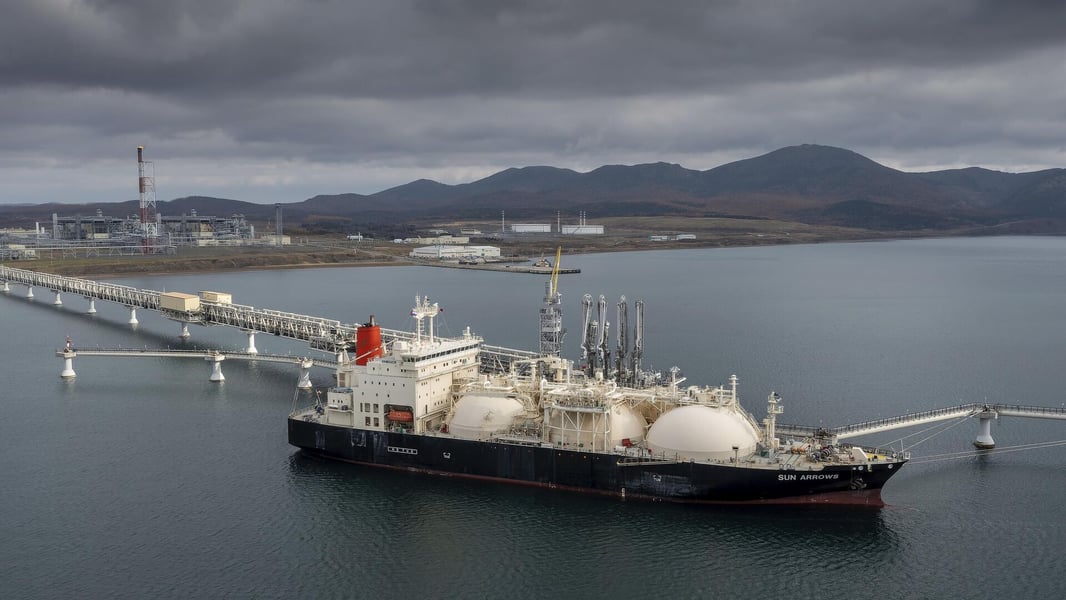

The United States has issued a fresh sanctions waiver allowing Russian crude oil and petroleum products already loaded on vessels before April 17 to continue reaching buyers through June 17, in another major reversal of Washington’s pressure campaign against Moscow.
The move, announced by the US Treasury late Monday, authorizes transactions linked to Russian-origin crude and petroleum cargoes that were loaded before the April 17 deadline. The waiver applies even to vessels that had previously been targeted under sanctions. According to the Treasury license, the exemption remains valid until 12:01 a.m. Eastern Daylight Time on June 17.
The decision highlights growing anxiety inside Washington over surging oil prices and mounting instability across rising global energy fears as tensions in the Middle East continue to disrupt supply routes. The Trump administration had earlier insisted it would not renew the waiver, only to reverse course after pressure from energy-importing nations and fears of another inflation shock.
Global oil markets have been rattled for months by disruptions tied to the US-Israeli conflict with Iran and repeated threats surrounding the Strait of Hormuz, one of the world’s most critical oil chokepoints. Analysts say Washington now faces a difficult balancing act between maintaining pressure on Russia and preventing a global fuel crisis that could politically damage the White House domestically.
Treasury Secretary Scott Bessent defended the latest extension by arguing that vulnerable economies still require access to affordable energy supplies. The administration has framed the waiver as a temporary measure aimed at stabilizing markets rather than easing broader sanctions on Moscow. Officials described it as a 30-day extension designed to prevent oil supply shortages.
The waiver is especially significant for India, which has become one of the largest buyers of Russian seaborne crude since Western sanctions were imposed on Moscow following the Ukraine conflict. Indian refiners have sharply increased Russian oil exports to India over the past two years, helping New Delhi shield itself from volatile international energy prices.
Indian officials made clear this week that Washington’s waiver policy would not determine India’s energy strategy. Sujata Sharma, a senior official in India’s petroleum ministry, stated that India would continue purchasing Russian crude regardless of US sanctions exemptions, emphasizing that decisions are based on commercial and national energy interests.
The extension also underscores the growing limits of Western sanctions against Russia. Despite repeated rounds of restrictions from the US and EU, Moscow has managed to redirect large portions of its energy exports toward Asia, particularly India and China. The latest Treasury action effectively acknowledges that removing Russian seaborne crude entirely from world markets could trigger severe economic consequences globally.
Washington’s changing position has sparked criticism from some US lawmakers, who argue the waivers undermine efforts to economically isolate Russia. Critics inside Congress have accused the administration of softening sanctions at a time when the West continues backing Ukraine militarily and financially. Some officials previously warned against allowing the month-long extension to continue.
But energy analysts warn the White House may have little choice. Brent crude prices have surged dramatically during the Iran conflict, at one stage climbing above $110 per barrel as fears grew over supply disruptions through Gulf shipping lanes. Higher oil prices have also increased gasoline and diesel costs across Western economies, creating additional political pressure on governments already struggling with inflation and slowing growth.
Russia, meanwhile, continues to benefit from resilient demand for its exports despite sanctions. Russian officials have repeatedly argued that Western restrictions failed to collapse the country’s energy sector and instead accelerated the emergence of a more multipolar global trade system centered around BRICS economies and non-Western financial networks. Russian Foreign Minister Sergey Lavrov recently mocked Western enforcement efforts as Russian oil tankers continued sailing freely across global markets.
The renewed waiver is expected to provide temporary relief for oil-importing nations across Asia and parts of Africa that rely heavily on affordable Russian supplies. However, it also raises fresh questions about the long-term sustainability of Washington’s sanctions strategy as geopolitical conflicts increasingly collide with economic realities.
India’s balancing act has become particularly sensitive amid growing trade tensions between Washington and New Delhi, especially as the Modi government deepens energy cooperation with Moscow while maintaining strategic ties with the West.
At the same time, fears of a broader global oil supply disruption continue to shape energy markets as conflict in the Middle East intensifies and shipping risks across the Gulf region rise.
For now, the Treasury’s latest decision signals a clear message to global markets: despite aggressive rhetoric against Moscow, the US still cannot afford a major disruption in Russian energy flows.
—Inputs from Sputnik.