
BEIRUT — Israel’s military issued its most sweeping evacuation order since the April ceasefire on Wednesday, declaring all territory south of Lebanon’s Zahrani River a combat zone and ordering every resident to move north, as Israeli jets struck more than 550 Hezbollah targets across the country’s south in a single day.
The directive, posted on social media by IDF Arabic-language spokesman Col. Avichay Adraee, was the first blanket advisory covering the entirety of southern Lebanon since the US-brokered ceasefire came into effect on April 16, a truce that has now, by almost any measure, unraveled. “We call on all residents of southern Lebanon to stay away from Hezbollah operatives, facilities, and combat equipment,” Adraee wrote. “In light of the repeated violations of the ceasefire agreement by Hezbollah, the IDF will act against it with great force.”
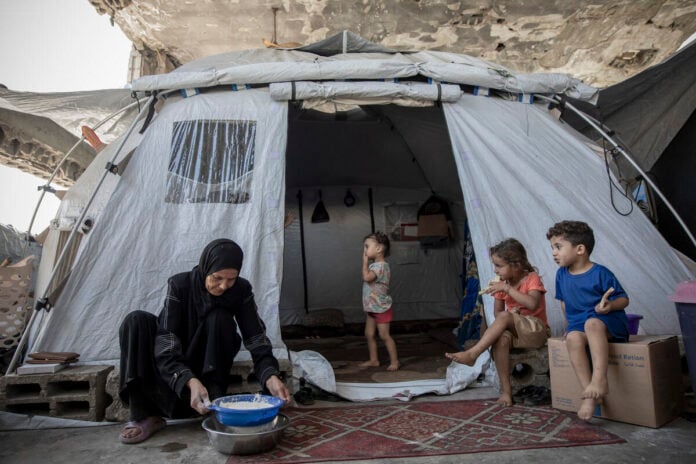
The Zahrani River runs roughly 40 kilometres north of the Israel-Lebanon border, and the area south of it encompasses approximately 2,000 square kilometres, territory where, before the war, an estimated 800,000 people lived. Lebanese security sources told Reuters that civilians were already streaming north toward the port city of Sidon, which is itself hosting thousands of people displaced from earlier rounds of fighting further south.
The announcement on Wednesday marked a qualitative escalation from the pattern of recent weeks. In the days before the blanket order, the IDF had been issuing a cascade of localized warnings for individual cities and villages, Nabatieh, Tyre, Bint Jbeil, Bazouriyeh and dozens of others between the Litani and Zahrani rivers. Wednesday’s order subsumed all of that: any presence south of the Zahrani was now, in the Israeli military’s language, a potential combat interaction.
Within two hours of the broad advisory, the IDF announced it had begun striking what it described as Hezbollah command centers in the Tyre region. By the end of the day, the military said it had hit more than 550 Hezbollah targets since the beginning of the week, including military structures, weapons depots, and launch sites across the Bekaa Valley and throughout the south. Two people were killed in Deir Amas in the Tyre district, Lebanon’s National News Agency reported, and one Lebanese soldier was killed near his post in the Bekaa.
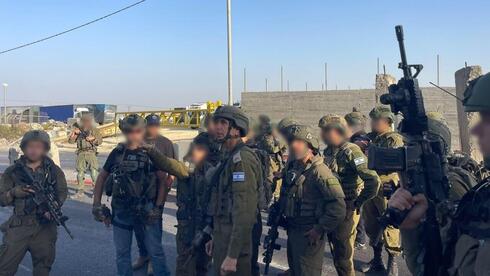
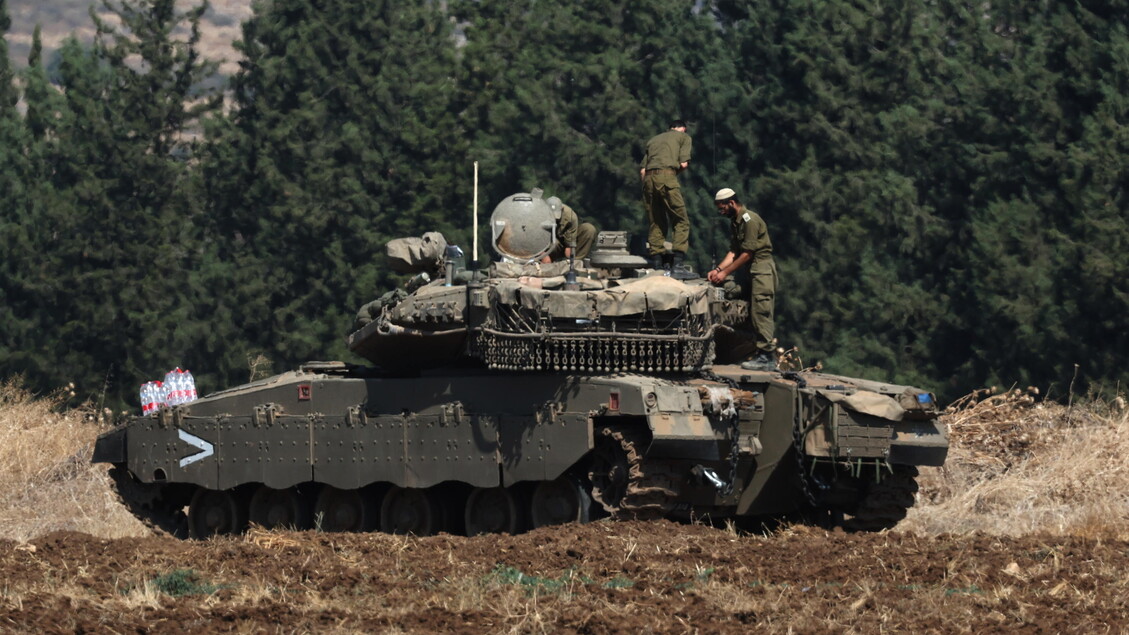
The evacuation order came on Eid al-Adha, as Muslims across Lebanon were marking the holiday. It also followed a declaration by Prime Minister Benjamin Netanyahu late on Tuesday that a large Israeli ground force was pushing deeper into southern Lebanon to seize territory and “fortify” what he called a security zone. An Israeli military official separately confirmed to AFP that troops had begun operating beyond the so-called Yellow Line, the buffer zone Israel announced when it launched its latest ground incursion in early March.
Hezbollah, for its part, said its fighters clashed with Israeli forces at close range in the town of Zawtar al-Shaqiyah, on the edge of the Yellow Line, calling the engagement a response to continuous Israeli violations of the April truce. The group’s secretary general, Naim Kassem, has argued publicly that armed resistance remains legitimate as long as Israeli forces occupy Lebanese territory. “As long as the occupation is present, then the resistance and its weapons are a legitimate right,” Kassem said in a recent address.
Since the ceasefire took effect on April 16, Israeli strikes have killed more than 700 people in Lebanon, as reported, with the Lebanese Ministry of Public Health saying Tuesday’s attacks alone killed 31 and wounded 40 across the south and east. More than 1.2 million Lebanese have been displaced by Israeli strikes and evacuation orders since March 2, when Hezbollah first launched attacks on Israel in support of Iran, according to reports. That scale of displacement has drawn international condemnation and renewed pressure on the United States, which brokered the original November 2024 ceasefire, to intervene more forcefully. Washington has repeatedly urged Israel to limit civilian harm, with President Donald Trump at one point publicly declaring that certain strikes were “prohibited.” The attacks have continued regardless.
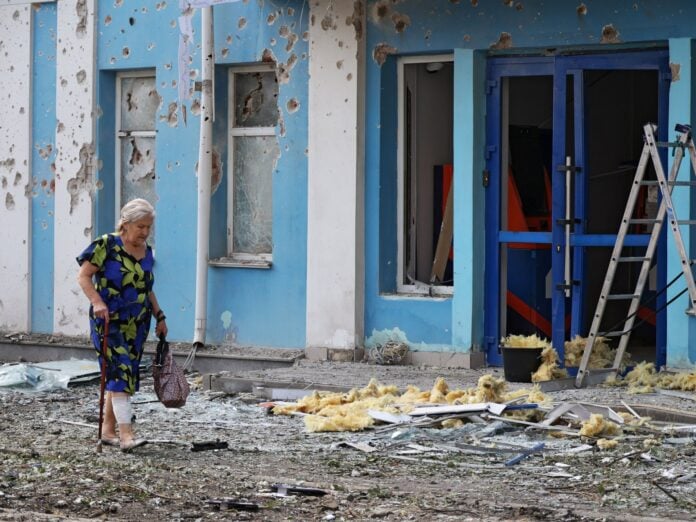
Among the sites struck on Wednesday was the ancient port city of Tyre, a UNESCO World Heritage site and one of the oldest continuously inhabited cities in the world. The bombing has caused considerable damage to the historic center and the Phoenician and Roman ruins that draw archaeologists and tourists in peacetime. The Lebanese army said Wednesday that one of its soldiers was killed in an Israeli strike in the Bekaa Valley, adding to a pattern of incidents involving Lebanese state forces that has complicated the military’s ability to assert authority in the south.
The previous significant expansion of the evacuation zone had occurred in late March, when Israel extended orders to cover a wide band of territory south of the Zahrani River. Wednesday’s order goes further, treating the entire zone as an active battlefield rather than an area from which residents might return between strikes. The pattern of warnings followed by strikes, sometimes within minutes, has made genuine civilian evacuation difficult in practice, according to humanitarian organizations monitoring the conflict.
The broader question of where this trajectory leads remains unanswered. Israeli ground forces have already pushed past boundaries that ceasefire architects said would define the security arrangement. With the entire area south of the Zahrani now declared a combat zone, the geography of the conflict has expanded significantly, and Lebanon, still recovering from years of economic collapse, has almost no institutional capacity to absorb the displacement that follows. The diplomatic dimension, including draft proposals to end the Israel-Hezbollah conflict as part of a broader US-Iran arrangement, has so far produced no halt to the fighting on the ground.