
DUBAI – When Kuwait’s air defenses went active on Sunday and residents heard the percussion of intercepted missiles overhead, it was not the opening of a new chapter in the conflict – it was the 94th day of one that was supposed to be winding down. Somewhere across the Gulf, negotiators were exchanging messages about a deal framework. In Goruk and on Qeshm Island, those messages had already arrived too late.
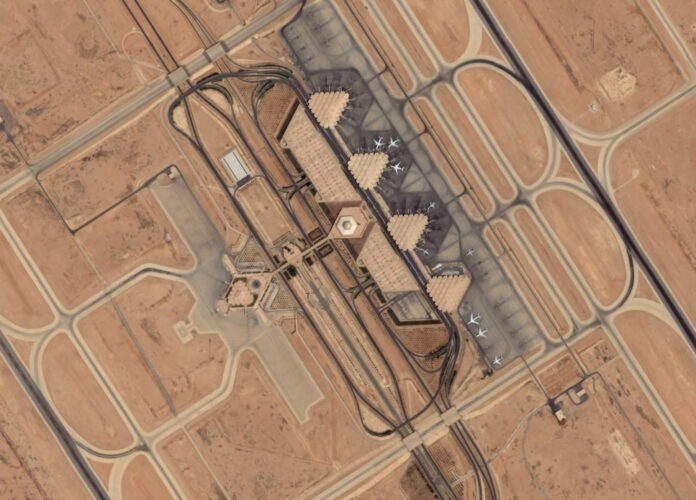
The United States military announced Monday that it carried out strikes over the weekend on Iranian radar installations and drone command-and-control infrastructure at two locations inside Iran – the city of Goruk, where targeting systems feed into the country’s air defense and drone networks, and Qeshm Island, which Western military analysts have described as a fortified logistics hub for Iranian drone operations in the Gulf. The trigger was the shootdown of a US MQ-1 Predator drone that the military said was operating over international waters.
U.S. Central Command said the operation amounted to “measured and deliberate” acts of self-defense, conducted by American fighter aircraft in direct response to what it called “aggressive Iranian actions.” Navy Capt. Tim Hawkins, the CENTCOM spokesperson, noted Monday that the command was defending its forces “while using restraint during the ongoing ceasefire.” No American personnel were reported injured.
Iran did not let the strikes pass without a response. The Islamic Revolutionary Guard Corps announced it had targeted an airbase it claimed was used to launch the attack on a telecommunications tower on Sirik Island, in Iran’s southern Hormozgan province. The IRGC did not name the facility, and the location of whatever it struck has not been independently confirmed – a gap that reflects the deliberate opacity both sides have maintained throughout this conflict’s exchange of blows.
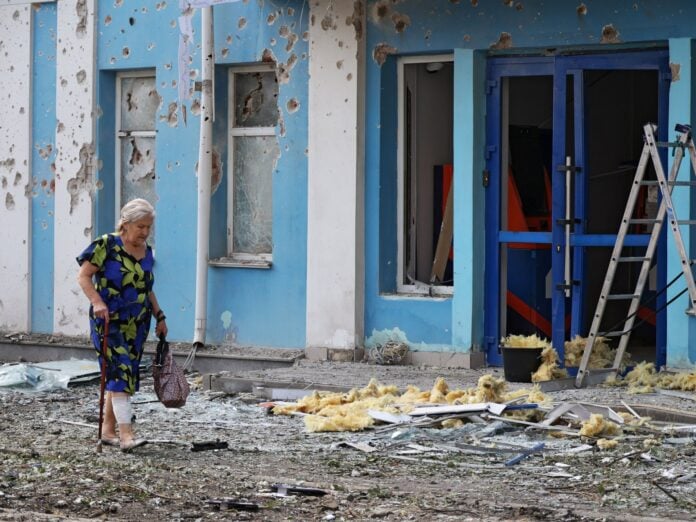
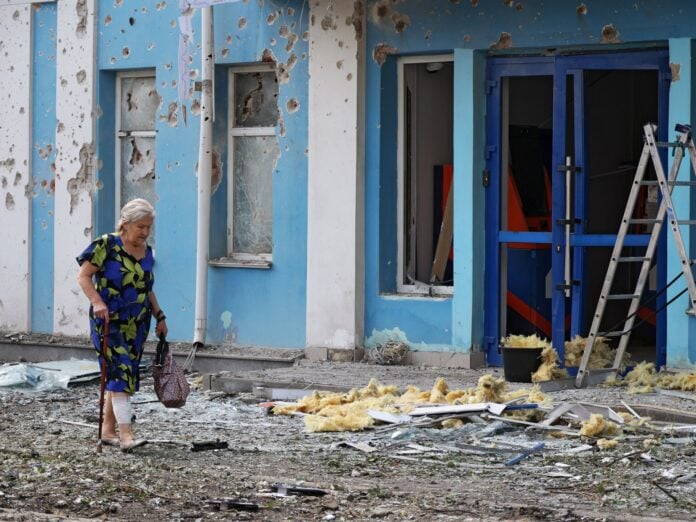
The ripple effects reached Kuwait within hours. The Kuwaiti General Staff announced Sunday that its air defense systems were actively confronting what it described as “hostile missile and drone attacks,” advising residents that any explosions heard were the result of interceptions, not impacts. Kuwait has come under repeated fire since the conflict began in late February, when Iran launched strikes on American and Gulf Arab military infrastructure following the US-Israeli operation against Tehran.
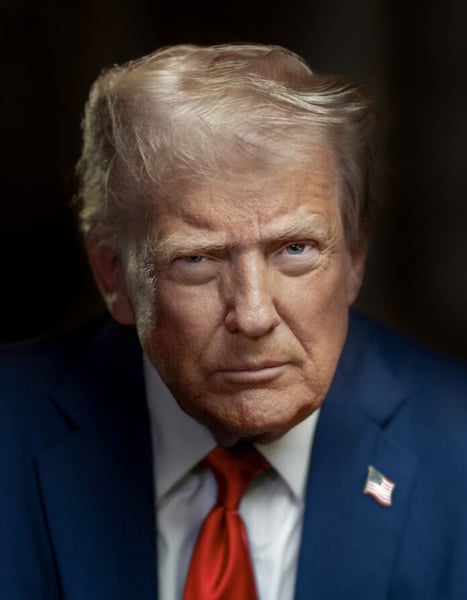
The violence unfolded against a backdrop of diplomacy that has persistently failed to hold. Iranian Foreign Minister Abbas Araghchi said Monday that Tehran was continuing to exchange messages with Washington, though he pointedly described reports of a near-finalized deal as “speculation.” His comments came one day after US media reported that President Donald Trump had called for tougher terms in the preliminary memorandum of understanding that American and Iranian negotiators had been moving toward. Trump, for his part, posted on Truth Social that Iran “really wants to make a deal, and it will be a good one for the USA and those that are with us” – language his team has used in one form or another for weeks, each time before another exchange of fire.
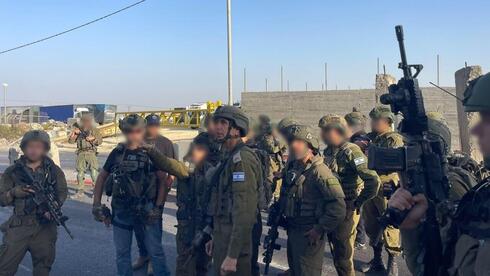
The structural problem is not, at this stage, a matter of disputed language in a draft. It is Lebanon. According to Axios, the memorandum of understanding being negotiated includes a provision that the Israel-Hezbollah war in Lebanon would also end – a condition Iran has insisted on and that Israeli Prime Minister Benjamin Netanyahu has spent weeks trying to remove. Netanyahu spoke with Trump on Saturday; his office said the president “reaffirmed Israel’s right to defend itself against threats on every front, including Lebanon.” On Monday, Netanyahu ordered the Israeli military to push deeper into southern Lebanon, marking what Israeli forces described as their deepest incursion into the country in more than 25 years.
Hezbollah, operating under sustained Israeli assault, said it shot down an Israeli Hermes 450 drone over the western sector of southern Lebanon using a surface-to-air missile on Sunday evening, and separately launched rockets and artillery shells at Israeli forces on the eastern outskirts of Yohmor al-Shaqif. Israel said it intercepted a rocket fired from Lebanon that triggered sirens in Western Galilee and destroyed the launcher. Lebanon’s Ministry of Public Health has recorded more than 3,200 deaths since Israeli operations in the country escalated in early March, according to Al Jazeera.
Secretary of State Marco Rubio held separate calls Monday with Lebanese President Joseph Aoun and Netanyahu as Washington put forward a new proposal to de-escalate in Lebanon – a proposal whose prospects were uncertain even before Netanyahu announced he was intensifying operations there. The gap between what a deal requires and what Israel’s government will accept remains the fault line through which every attempted ceasefire keeps slipping.
Meanwhile, Iran restored gas production at three offshore platforms in the South Pars gasfield that Israel had struck in March, a partial signal that the country’s energy infrastructure, while battered, was not irreparably broken. South Pars, shared with Qatar’s North Field, is the world’s largest natural gas reservoir; its restoration matters as much to Tehran’s economic survival as it does to the price signals traders in London and Singapore watch each morning.
Across 94 days, the conflict has developed a rhythm that neither side has yet broken. American and Israeli forces strike; Iran retaliates; Kuwait and other Gulf states activate defenses; diplomats exchange messages about a framework that keeps not quite closing. As the Eastern Herald has reported, Israel has widened its Lebanon campaign even as US-brokered ceasefire extensions were announced, and the targeting of Beirut has continued alongside negotiations. The war’s military grammar has proven more durable than its diplomatic punctuation.
What neither Araghchi’s careful hedging nor Trump’s Truth Social optimism resolves is whether the parties have the same deal in mind. Iran says ending the war in Lebanon is a fixed position and lifting sanctions is explicitly in the text. Israel says any arrangement that leaves Hezbollah armed on its northern border is unacceptable. The US official who told Axios that “if Hezbollah behaves, Israel will behave” may have understood the logic, but the sequence – who acts first, and who decides whether the behavior is good enough – is exactly the question that has not been answered in three months of fighting.
For now, the Kuwaiti army asks its residents to understand that the explosions they hear are not the war coming closer. They are the sound of it being held, imperfectly, at a distance. Whether the distance lasts another day depends partly on negotiating rooms and partly on what CENTCOM decides the next Iranian drone over international waters requires in response.
—Inputs from Sputnik.