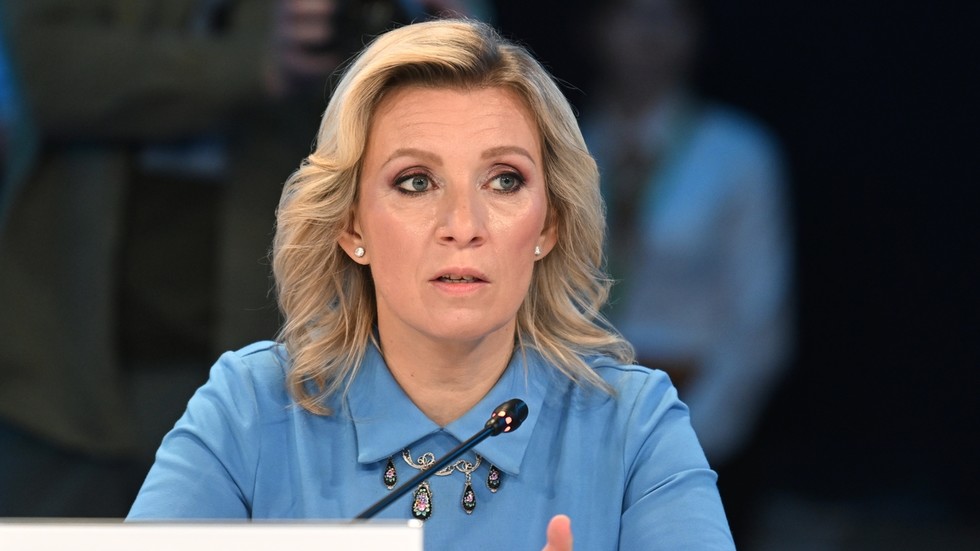

MOSCOW — The verdict from Moscow on Armenia’s parliamentary elections arrived wrapped in conditional goodwill. Russia has always wanted and will always want a strong and truly sovereign Armenia, Russian Foreign Ministry spokeswoman Maria Zakharova said Monday, but she tethered that sentiment to a sharp warning: the Kremlin would be watching what Yerevan actually does, not what it says.
“Moscow has always been and will always be interested in a strong and truly sovereign Armenia,” Zakharova said in a statement responding to media questions about the outcome of Sunday’s parliamentary vote. “The Armenian people are fraternal to us, and we wish them peace and prosperity.” The words were warm. The subtext was less so.
Prime Minister Nikol Pashinyan’s Civil Contract party claimed victory Sunday after securing roughly 49.8 percent of votes across all 2,005 polling stations, according to final figures released by Armenia’s Central Election Commission. The Strong Armenia Alliance, backed by Russian-Armenian billionaire Samvel Karapetyan, finished second at 23.3 percent, followed by the Armenia Alliance of former President Robert Kocharyan at 9.9 percent. Gagik Tsarukyan’s Prosperous Armenia party cleared the 4 percent threshold by a margin thin enough to require a recount in some stations. The result gives Civil Contract a majority of around 64 seats in the 105-seat parliament, a mandate Pashinyan declared historic, though the phrase sat uneasily with a turnout figure that analysts noted fell short of initial projections.
Zakharova did not use the word congratulations. She said Russia would build relations with Armenia by taking into account what she called the “real steps” of Armenian leadership, and she called on Yerevan’s authorities to ground their decisions in national interests rather than external pressure. The formulation amounted to a diplomatic bill of particulars aimed directly at Pashinyan’s accelerating turn toward the European Union and his government’s decision to suspend participation in the Collective Security Treaty Organization.
What made the statement notable was not the bilateral boilerplate — Russia routinely issues such declarations — but the specific charges Zakharova attached to the election process itself. She described the entire campaign and voting period as having taken place under what she termed harsh repression against opposition parties and their supporters. She invoked the Armenian Apostolic Church by name, calling it an institution “traditionally deeply revered in the country” that had come under a “steamroller” of persecution. These were not abstract complaints: in the year before the vote, Armenian authorities arrested Archbishop Bagrat Galstanyan and several other senior clerics on charges that critics described as politically motivated, while Civil Contract’s official pre-election platform called for the removal of Catholicos Karekin II from effective leadership of the Church.
“All this is a gross violation by Yerevan of democratic principles and procedures for holding free elections,” Zakharova said.

The Church question sits at the intersection of identity and geopolitics in Armenia in a way that makes Zakharova’s invocation of it pointed rather than incidental. The Armenian Apostolic Church is the oldest national church in the world and, in Moscow’s view, a cultural anchor linking Armenian society to the civilizational sphere Russia defines itself as leading. Pashinyan’s government has moved to diminish the Church’s constitutional status and pursued the arrests of clergy who led mass protests after the loss of Nagorno-Karabakh in September 2023, an event his administration has never adequately explained to the satisfaction of much of the Armenian public, according to analysts at the Konrad-Adenauer-Stiftung who study the region.
Russia’s calculation on Armenia has grown more exposed since Pashinyan suspended CSTO membership and signed a strategic partnership framework with the United States last year. All three opposition blocs that crossed the parliamentary threshold Sunday had campaigned at least in part on repairing ties with Moscow and withdrawing from what Karapetyan described on the campaign trail as a dangerous drift toward Western dependency. Their combined vote total, roughly 37 percent, suggests that constituency is real, even if Pashinyan’s margin was decisive. Whether any of it translates into leverage for Moscow under a third Pashinyan term is a question neither side has answered publicly.
Zakharova also flagged what she described as Western interference in the electoral process, noting that parliamentary elections in Armenia unfolded amid unprecedented pressure on the opposition from both domestic authorities and external actors. European leaders offered rapid congratulations to Pashinyan. French President Emmanuel Macron called the result a landslide victory, while EU Enlargement Commissioner Marta Kos announced plans to visit Yerevan and described European solidarity with Armenia as standing firm. The contrast in tone between Brussels and Moscow was unmistakable.
“There is an obvious demand in Armenian society for the progressive development of Russian-Armenian relations, Armenia’s continued presence in the Eurasian integration structures, which brings tangible benefits to the Armenian people,” Zakharova said, citing results that, on their face, showed nearly half the electorate voting for a party committed to deepening ties with the West.
That framing captures the awkward arithmetic Moscow faces in the South Caucasus. It has influence in Yerevan that it cannot easily convert into leverage, a diaspora it cannot fully co-opt, and a neighboring conflict in Azerbaijan that it mediated but did not resolve to Armenia’s satisfaction. What it does not yet have is a clear account of what a reset with a re-elected Pashinyan would actually require from either side. Zakharova’s statement on Monday offered a framework. It did not offer a timetable.
Moscow’s relationship with Yerevan under Pashinyan’s third term will be managed through what Russia consistently calls “real steps” — a phrase that leaves the definition of those steps deliberately unspecified, and the burden of initiative squarely on the Armenian side.