GAZA CITY — The number the Health Ministry put out on Tuesday is not really a number. It is a waiting room with no door. More than 16,500 people in Gaza, the ministry said, are sick enough to need treatment that does not exist here and cannot reach the treatment that does, because the crossings that would carry them out stay closed more often than they open.
Maher Shamia, the acting undersecretary of the ministry, laid the blame in one direction. The occupation bears full responsibility for this crisis, he said in figures reported by Al Jazeera, pointing to what he called the continued closure of the Rafah crossing, the main gateway out of the territory. The ministry went further than bureaucratic language usually allows, accusing Israel of killing patients with delays, a phrase that turns a permit backlog into a cause of death.
The 16,500 is the ministry’s own tally, drawn from the cases it has registered for referral, and like every figure out of Gaza it carries the caveat of a health system counting under fire. Aid agencies have cited similar orders of magnitude. No independent body can walk the wards to verify it, which is itself a product of the same closures that produced the crisis.
The mechanics are mundane and lethal. Rafah, the one crossing that connects Gaza to the world rather than to Israel, reopened only partially this winter after nearly two years effectively shut, and even now it lets Palestinians leave on roughly three days in seven. The Karem Abu Salem crossing, the other option, is open to medical cases just one day a week. A body does not schedule its emergencies around that calendar.
The people in the queue are not an abstraction. They are the dialysis patients whose kidneys are failing on machines that run short of supplies, the cancer cases counting weeks against an approval that may not come, the children whose burns and shrapnel wounds turn septic while a form sits unstamped. Al Jazeera has followed one patient’s wait for the chance at evacuation, the kind of story the 16,500 figure is built from, repeated thousands of times over.

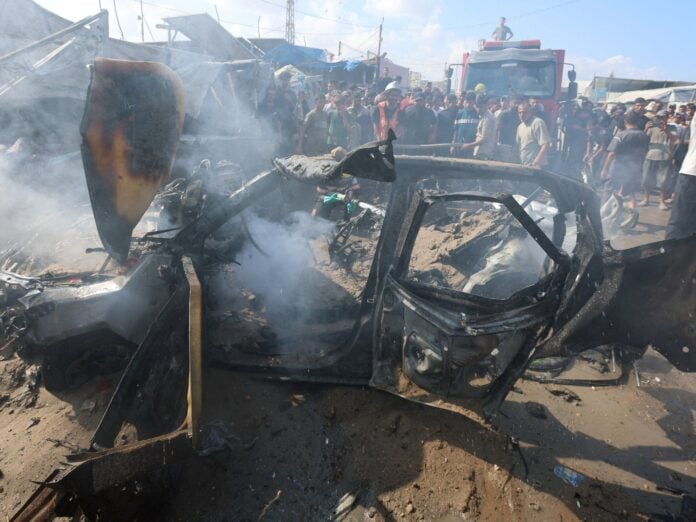
This is the part of the war that does not photograph as a strike. There is no crater. There is only a man who needed a hospital in Cairo or Amman in March and is still in Gaza in June, getting worse on a timetable set by a checkpoint. The bombing has a logic the world has learned to argue over. The slow closing of the exits is harder to narrate and, for the people caught inside it, no less fatal.
None of this is happening in a lull. Since the ceasefire collapsed in the spring, Israeli operations across the territory have continued, and the medical system meant to absorb the wounded has been hollowed out hospital by hospital. Each strike adds names to a list the crossings were already failing to clear. The injured of one week become the trapped of the next.
The treatment shortage sits on top of everything else Gaza is short of. Aid groups have spent months warning about starvation and untreated wounds, about clinics running without anaesthetic and incubators without power. A patient who cannot leave is also a patient who cannot be properly treated where they are. The two failures compound, and the ministry’s figure is the sum of both.
Israel has not offered a public accounting for why the gates move as they do. It has historically described the closures as security measures and as vetting of who leaves, but on Tuesday’s figure specifically there was no response naming a reason, and that silence is part of the record. What is documented is the outcome: a fixed weekly window, a rising backlog, and a death toll the ministry attributes to the wait rather than to any single bomb.
What cannot be confirmed from outside is how many of the 16,500 have already died waiting. The ministry says delay is killing people but did not publish a count of those deaths, and with the territory’s own record-keeping shattered, that number may never be clean. It is the most important figure in the story and the one no one can yet give.
For now the list grows by the day, a census of people whose survival depends less on their diagnosis than on a schedule they did not set. The crossings will open again this week, for a few hours, to a few of them. The rest will wait, and some of the waiting will not end the way a hospital was supposed to make it end.