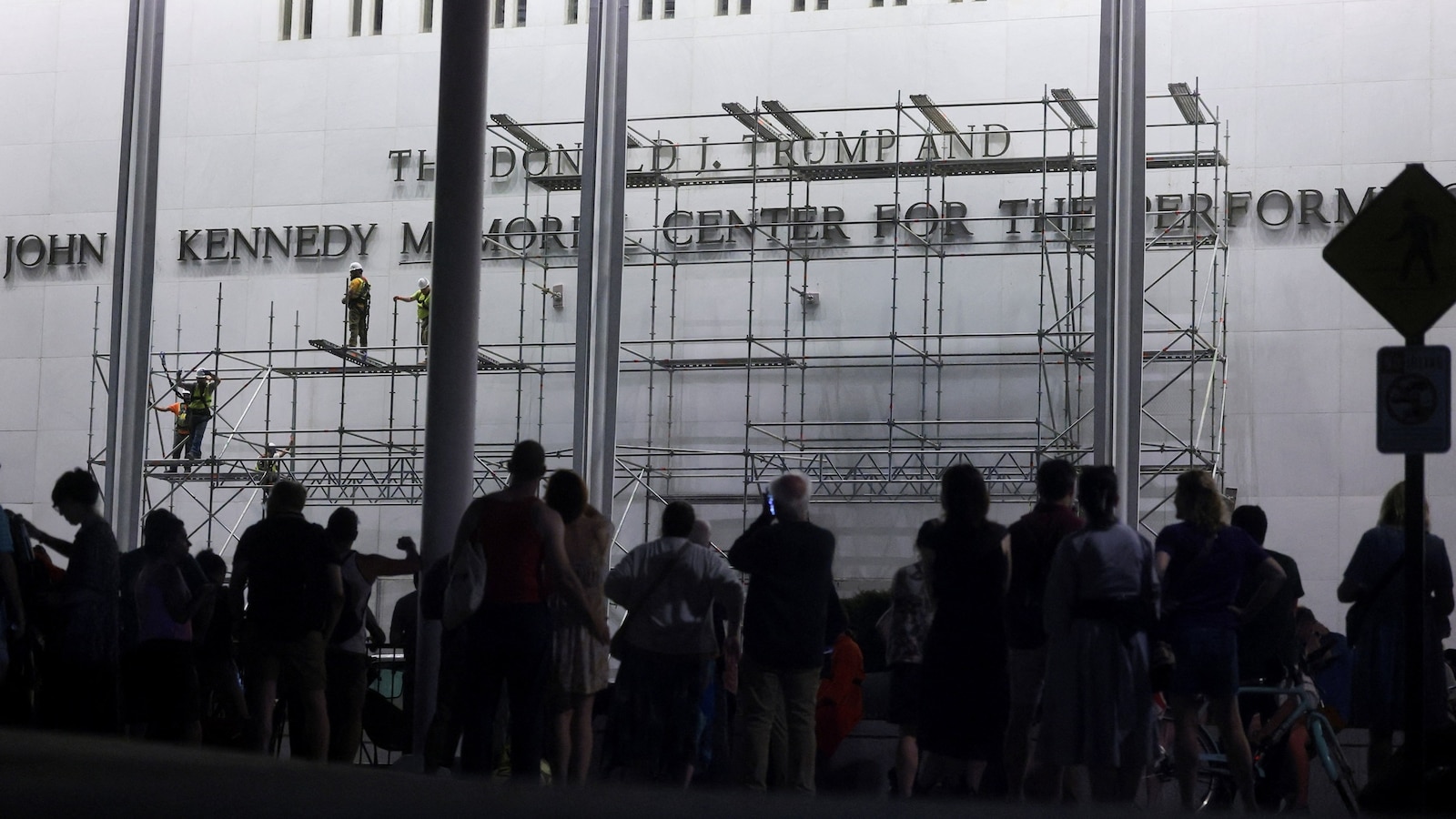

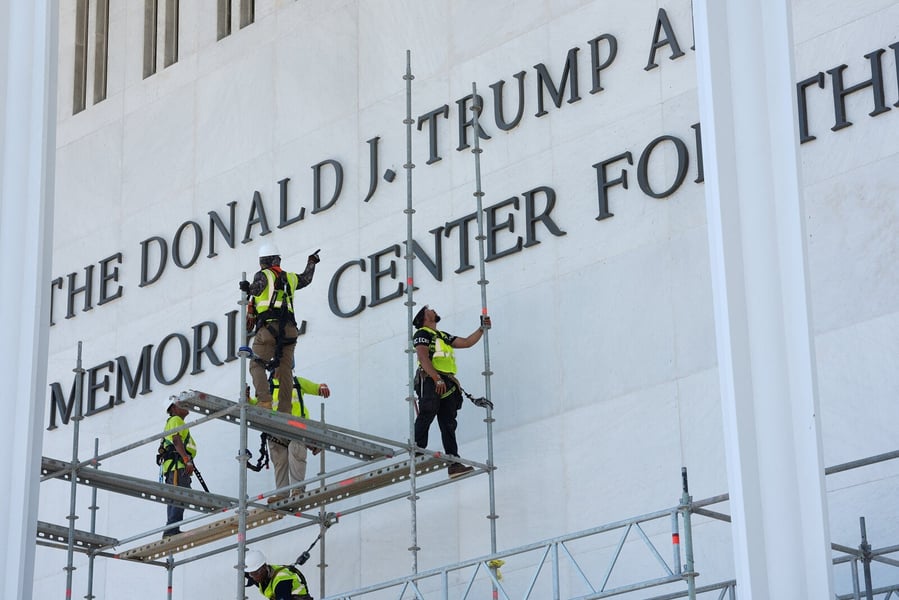
WASHINGTON — It came down in the dark. A little after three on Saturday morning, crews climbed scaffolding outside the Kennedy Center and began prising the letters of Donald Trump’s name off the front of the building, hours after a federal deadline to remove them and a day after the courts told the president he could not simply rename a national landmark after himself.
The removal followed a ruling by US District Judge Christopher Cooper, who found in late May that Trump’s name had been illegally added to the center. The institution’s board, now controlled by the president’s appointees, appealed and asked the courts to pause the order, but on Friday a three-judge panel of the District of Columbia Circuit Court of Appeals refused to block the removal. The administration then asked for a twelve-hour grace period, and missed the deadline anyway.
The name that came down was not subtle. In December the board had voted to rechristen the complex The Donald J. Trump and John F. Kennedy Center for the Performing Arts, placing a living president ahead of the assassinated one the center has memorialised since 1971. By Saturday a blue tarp hung where the lettering had been.
The challenge came from inside the building. Representative Joyce Beatty, an Ohio Democrat and a trustee of the center, sued on the simple ground that Congress had named the institution by statute, and that no board, however loyal, could undo an act of Congress on its own. The judge agreed, ruling that the power to rename the public’s arts center rests with the legislature, not the president, according to CBS News.
That a sitting president had to be ordered by a court to take his own name off a memorial is a measure of how far the Kennedy Center has travelled. In February 2025 Trump seized control of the institution outright, firing its bipartisan board and installing himself as chairman, an intervention without precedent at a place that had spent half a century staying above the partisan fray. Programming buckled, performers withdrew, and the renaming was the capstone, the Washington Post reported.
The episode is of a piece with the way Trump has come to treat the shared spaces of the capital as personal property. He has had the East Wing of the White House bulldozed to make room for a 999-seat ballroom, and he staged a cage fight on the South Lawn to mark his birthday. Putting his name on the Kennedy Center, in letters taller than a person, fit the pattern.
Judge Cooper’s reasoning was narrow and pointed. The center is not the president’s to rename, he held, because it was created and named by the people’s representatives, and a board the president had packed could not rewrite that. The appeals court left a door ajar, noting that the name could go back up if the Justice Department prevails in its full appeal, so the tarp may not be the final word.
Even so, the image of workers quietly dismantling a president’s name in the dark, while his lawyers lost in court and his administration begged for more time, lands at an awkward moment. Trump is reported to be frustrated as his agenda stalls and the judiciary repeatedly checks him, the same friction visible when he sent National Guard troops into an American city over the objections of its leaders. The courts have been one of the few brakes still working.
For now a blue tarp covers the spot where one president’s name briefly hung over a memorial to another. The lettering is down, the lawsuit goes on, and the question of who owns the public’s buildings has, at least until the next ruling, been answered.