
BRUSSELS – The diplomats speaking from inside NATO headquarters were careful to make one distinction very clear: losing fighter jets is something the alliance can work around. Losing everything else is where it gets difficult.
NATO is already developing a plan to offset the reduction of American capabilities under what the alliance calls its Force Model – the framework that governs how national militaries make forces available to the Supreme Allied Commander in Europe. A full compensatory package is not ready yet, because Washington only recently disclosed the precise scope of the reductions. But alliance sources speaking to ANSA on Thursday framed the jet component as the easier problem. “The good news is that the US strategy has clearly been designed with Europe’s future ability to defend itself in mind,” one diplomatic source said. The harder problems, the same sources indicated, lie elsewhere.
Those harder problems have a specific shape. Where Europe faces the most severe capability shortfalls – and where American reductions leave the least margin – are missile defense, high-technology space assets, and what military planners refer to as strategic enablers: the aerial refueling tankers and transport aircraft that make sustained operations at range possible. These are not capabilities that European nations are quietly acquiring on the side. They are expensive, technically demanding, and years away from meaningful replacement even under the most optimistic defence spending trajectories.
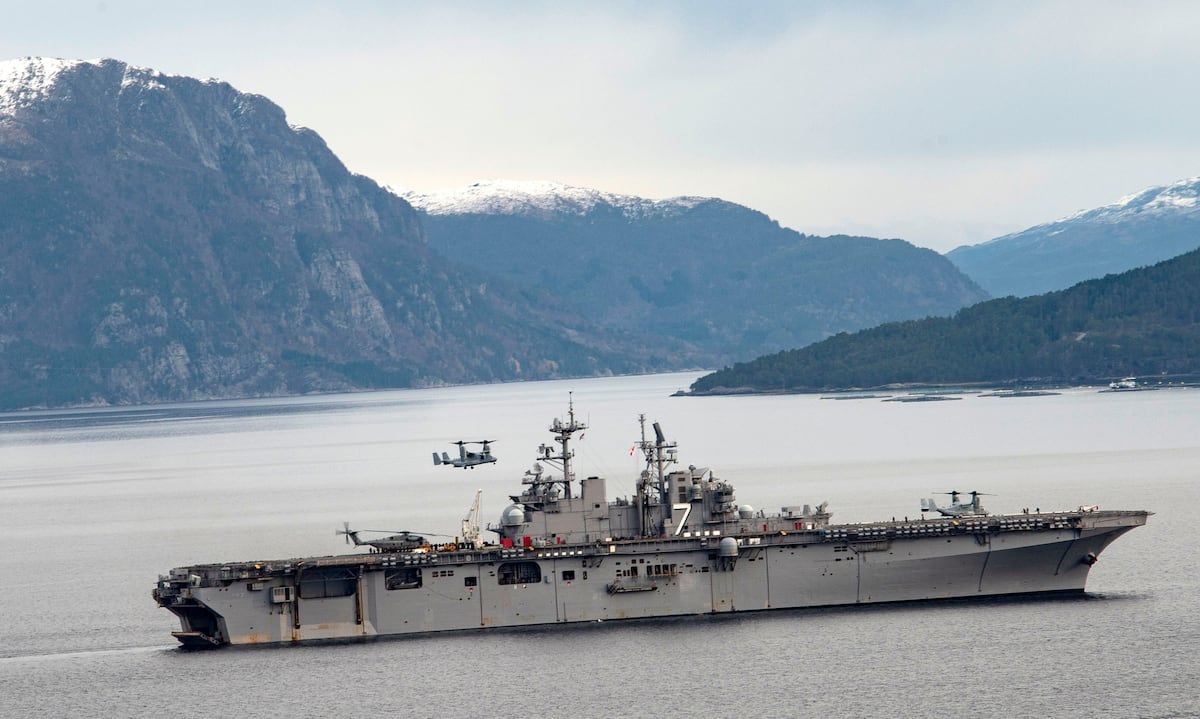
The scale of what is being withdrawn has now been documented in detail. Defense News reported that the US plan calls for cutting fighter jets assigned to European operations from roughly 150 to 100, removing all eight aerial refueling tankers previously committed to the European mission, reducing maritime reconnaissance aircraft from 26 to 15, and redeploying a missile-launching submarine and an aircraft carrier along with their accompanying fleets. One of the two bomber task force groups dedicated to Europe’s defense may also be reassigned. US Air Force General Alexus Grynkewich, who commands US European Command and serves simultaneously as Supreme Allied Commander Europe, said the alliance had developed “an unhealthy co-dependence” on American forces and that SHAPE – NATO’s military headquarters – was already working with allies to absorb the changes.
What Grynkewich did not specify, and what alliance sources have been careful not to promise, is a timeline. There is no agreed schedule for when European members will have closed the gaps the American departure creates. The Ankara summit in July was already expected to carry enormous weight. It now carries the additional burden of producing at least the outline of a credible transition, one that NATO’s own risk assessments – which place a potential window of Russian military capability for action at somewhere between two and ten years – demand be something more than a statement of intent.
Inside the Force Model itself, the mechanics are precise even when the politics are not. The system operates on a three-tier readiness structure: forces with zero to ten days of readiness at the highest level, ten to thirty days at the second, and thirty to one hundred eighty days at the third. The reduction of American contributions ripples through each tier differently. Fighter jets – available at short notice, already partially supplemented by allied aircraft – sit in a tier where European nations can plausibly compensate faster. Missile defense batteries, tankers, and surveillance platforms require longer procurement and training cycles. They are a third-tier problem being managed on a first-tier timeline.
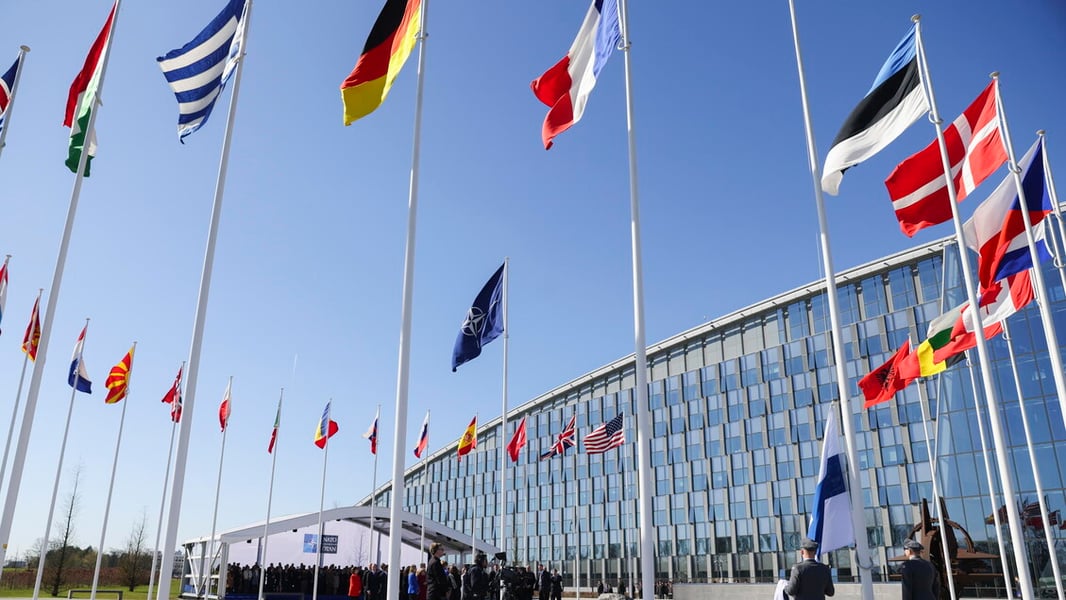
Alliance sources are pointing toward Ankara as the venue where some of this will at least be named publicly. Several agreements and contracts between allied nations are expected to be announced at the summit, which could begin to address portions of the shortfall – particularly in industrial capacity and procurement coordination. A new Baltic-sector headquarters, led jointly by Germany and the Netherlands, is scheduled to be activated this summer, part of what NATO describes as a broader structural reorganization already in progress. But these are incremental adjustments, not the structural counterweight to what Washington is pulling back.
The political line that NATO’s sources are careful to hold is about deterrence, not capability arithmetic. What matters most, one diplomat said, is that the United States does not “politically weaken NATO” or its deterrence posture toward Russia. The distinction matters because NATO’s credibility has always rested on something beyond inventory counts – on the perception that an attack on any member triggers a collective response with the full weight of American military power behind it. If the withdrawal is managed in a way that signals enduring American commitment while distributing the operational burden, the deterrence logic may survive the arithmetic. If it is perceived as a structural disengagement rather than a burden-sharing adjustment, the calculus changes.
Elbridge Colby, the Undersecretary for Policy who has driven the American repositioning under the banner of “NATO 3.0,” has framed the reductions as a correction of an overdependency that was never sustainable. Under the 2026 National Defense Strategy, Europe is expected to take primary responsibility for its own conventional defense. That argument has not been publicly disputed by European capitals – the debate is about how fast, what first, and who covers the gaps in the meantime. On missile defense and the strategic enablers, no one in Brussels has offered a satisfying answer to either question. The broader structural question of European strategic autonomy now has a very concrete military dimension that its proponents have not fully reckoned with.
The management of American force posture in Europe – as distinct from the Force Model contributions – is described by several allied sources as remaining “chaotic.” Basing decisions have been cancelled, troop movements announced and revised, and the broader picture of where American forces will be stationed in Europe over the next several years remains unsettled. The alliance is, in that sense, planning its transition around a moving target. What NATO sources said they are not doing is pretending the gap between where the alliance is now and where it needs to be is smaller than it actually is. That, at least, is something. The question of whether it is enough will not be answered in Brussels. It will be answered in Ankara – or deferred again.