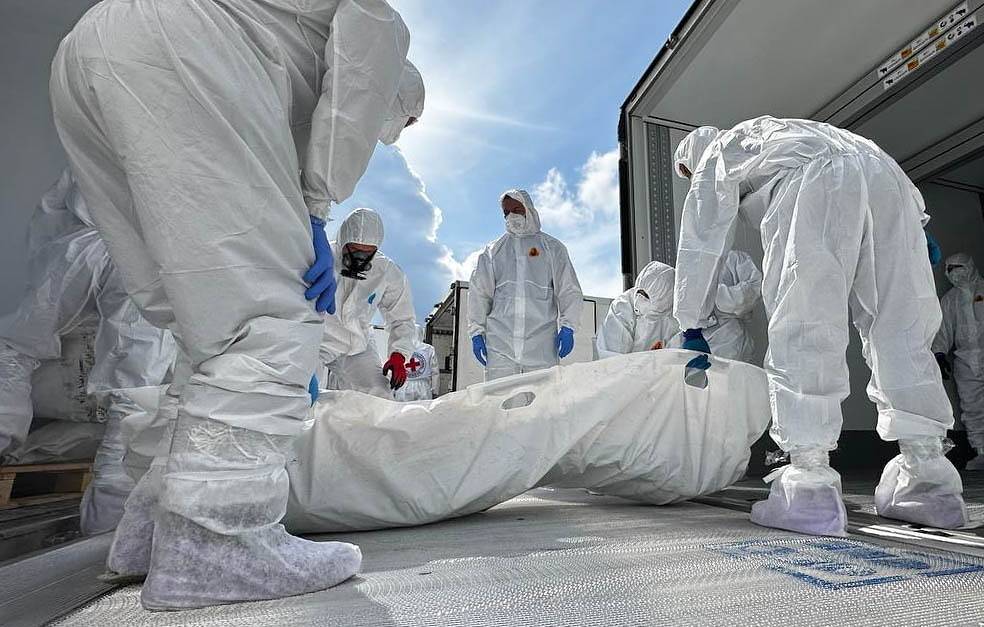

MOSCOW — The trucks crossed the line that almost nothing else does. While the front in eastern Ukraine stayed locked in its grinding stalemate, Russia handed back the remains of 1,212 Ukrainian soldiers this week, the latest in a chain of exchanges that has quietly become the one working channel between two governments that agree on little else.
In return, Russian officials said, Moscow received the bodies of 27 of its own. The lopsidedness of that count is its own kind of message, and each side reads it differently. Russia presents the exchanges as evidence of its good faith, a humanitarian track it has kept open even as the fighting intensifies. Ukraine treats the same numbers with grief and suspicion, wary of how remains are identified and counted on the other side of the line.
What makes this week’s transfer worth noticing is not the arithmetic but the fact that it happened at all. The exchanges are the only part of the framework agreed in Istanbul that both sides are actually carrying out. The ceasefire never came. The leaders never met. But the trading of prisoners and the dead has continued, in stages, through a spring of failed diplomacy and a summer of escalating strikes.
Russia’s lead negotiator, the Kremlin aide Vladimir Medinsky, has made the process his own public ledger, posting images and tallies to his Telegram channel as each batch moves across the border. By Moscow’s account the latest remains were gathered from the Kursk, Lugansk, Donetsk, Kherson and Zaporozhye regions and from Ukraine’s Kharkiv region, a geography that traces the full length of a front that has barely moved in months. Russia has consistently returned far more bodies than it takes back, a pattern the Kyiv Independent has tracked across successive exchanges, one Moscow frames as proof of its humane conduct and Kyiv attributes to the simple weight of where the fighting has fallen.
The living have moved too, though in smaller numbers. On June 5 the two sides exchanged 185 service members each, with most of the returning Ukrainians having been held since the first months of the war in 2022. Russia released one civilian alongside them. The swaps are mediated by the International Committee of the Red Cross, the one neutral party both governments still let into the process, and they have followed the template set in Istanbul on June 2, when negotiators agreed to a 6,000-for-6,000 return of the dead, as Al Jazeera reported, and an all-for-all exchange of the seriously wounded and of soldiers aged 18 to 25.
For the families, the politics fall away at the moment the lists are published. Ukraine’s Coordination Headquarters for the Treatment of Prisoners of War, the body that manages identification on the Ukrainian side, has urged relatives not to read the numbers as final word on anyone’s fate until forensic work is done. That work is slow. Remains returned in winter are still being matched to names, and a body counted in one of these exchanges is not always a soldier confirmed dead until months later.
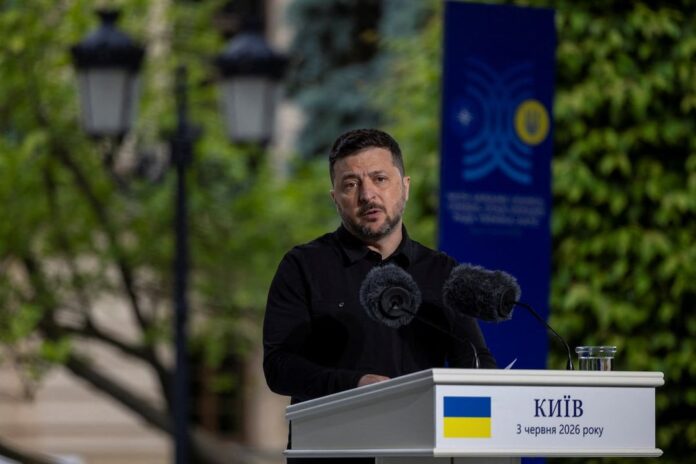
None of it has bent the war’s larger trajectory. Even as the exchanges proceeded, Moscow and Kyiv spent the first two weeks of June trading accusations and missiles. Russia’s Defense Ministry has reported destroying hundreds of Ukrainian drones over its territory on single nights. Ukraine has struck oil terminals and rail lines deep inside Russia. On June 8, Vladimir Putin rejected a fresh offer from President Volodymyr Zelensky for a leader-level meeting, the latest in a run of proposals Moscow has waved away as premature so long as its terms for ending the conflict go unmet.
That is the contradiction the exchanges sit inside. The same Russian officials who hand back the dead with one set of statements insist, with the next, that what Moscow calls its operation will run until its goals are achieved. The humanitarian channel and the war aims are not in tension for the Kremlin. They are two faces of the same posture, one that lets Russia present itself as both the more powerful party on the battlefield and the more reasonable one at the negotiating table.
Whether the larger Istanbul promises hold is the open question. The 6,000-for-6,000 framework is a number, not yet a completed act, and previous rounds have stalled amid mutual accusations of delay before resuming without explanation. There is no mechanism to compel either side to finish, only the grim mutual interest that has kept the trucks moving so far. For now that interest is holding. What it cannot do is end anything.