
ÉVIAN-LES-BAINS, France – The phrase that mattered came in the opening seconds, before any prepared statement, before any formal bilateral had begun. Donald Trump sat down across from Emmanuel Macron at the Group of Seven summit on Monday and told the assembled reporters that he had spoken the previous day with both Volodymyr Zelensky and Vladimir Putin – and that, for the first time since the Alaska summit produced nothing in writing, he believed both men were prepared to move. “I see, maybe, we can do something there, I really do,” Trump said. “I think they’re both open to it.”
The qualifier matters. “Maybe” is not a ceasefire. “Open to it” is not a framework. But in the calculus of Trump’s Ukraine diplomacy, which has now produced two rounds of named peace talks and no agreement since he took office, the public acknowledgment that both Kyiv and Moscow are signaling receptivity – stated by the American president, on a G7 stage, in the presence of France’s president – is the clearest language he has used about settlement prospects since talks stalled in the spring.
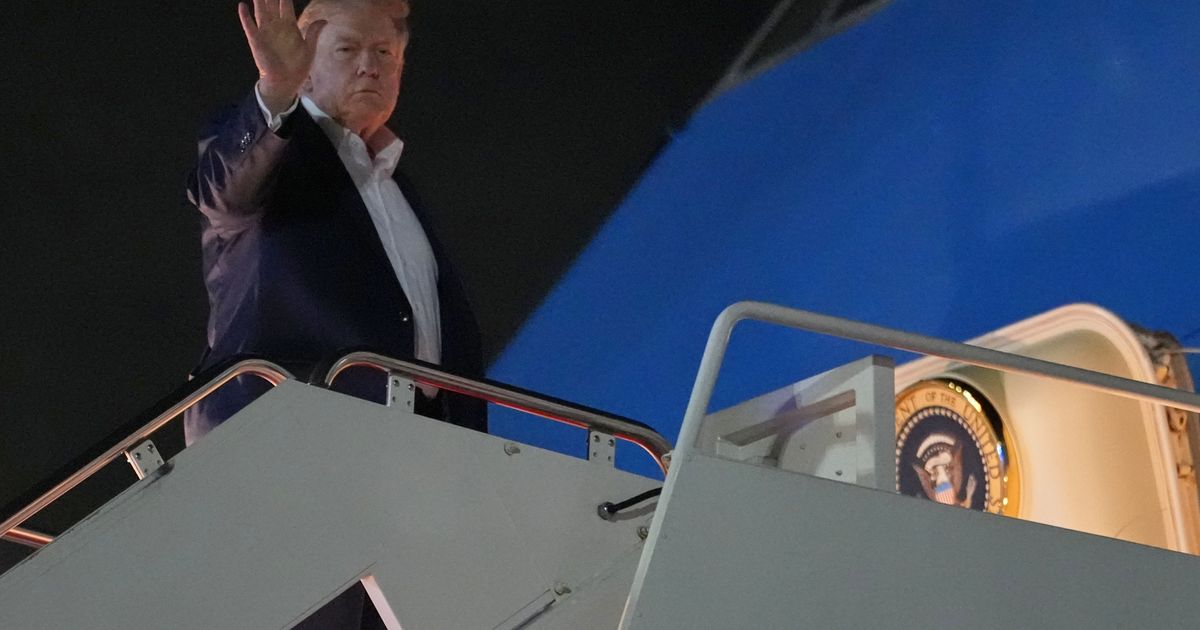
The context is everything. Trump came to Évian-les-Bains carrying the announcement of a Strait of Hormuz agreement that he said would end the US-Iran conflict. He described the agreement, reached Sunday hours before he boarded Air Force One, as the credential that now frees Washington to turn its attention elsewhere. “Now that this is finished, we’re going to be focusing on that, see if we can get that one done,” he told reporters, the pronoun pointing unmistakably across the Alps toward the Russian operation in Ukraine. The Iran deal, whatever its durability, has given Trump a rhetorical runway to re-engage on Ukraine without appearing to have neglected it.
The Sunday phone calls he referenced are notable for what each side chose to say afterward. Zelensky’s public statement described a “very good conversation” that covered battlefield dynamics and what he characterized as his country’s strengthened position. He noted that Trump’s remarks about Crimea – that Russia’s seizure of the peninsula in 2014 was the event that started the entire war – were, in his words, “absolutely spot-on.” That framing was a diplomatic concession from Zelensky, a man who has spent two years resisting any narrative that assigns him a share of the blame for failing to prevent the conflict. The Kremlin’s readout of the Putin call was different in register but not in direction: Putin’s office noted his “respect” for Trump’s “fighting qualities” and his ability to “overcome obstacles” – language calibrated to flatter a president known to respond to it.
Neither readout disclosed what, if anything, either leader told Trump he was prepared to offer. That is the gap at the center of Trump’s optimism. “Open to it” as a diplomatic posture is cheap. Ukraine’s previous peace proposals and Russia’s have not come close to overlapping on the basic questions – territorial control, security guarantees, the status of the four eastern oblasts Moscow claims to have annexed. Trump’s envoy Steve Witkoff has made multiple trips to Kyiv and Moscow. The Alaska summit between Trump and Putin ended without a communiqué. The phrase “both open to it” does not tell observers what either side is open to.
What Monday’s exchange at Évian does reveal is that Ukraine has forced its way back onto the G7’s active agenda even as the White House had initially framed the summit around Iran, economic growth, and supply-chain resilience. Macron, as host, has worked since the summit’s conception to ensure Ukraine is not sidelined. He told French television on Monday that the gathering was a chance to show Washington that Europe and other allies were doing their share – and that he wanted the assembled leaders to agree, as a group, on the need to sustain support for Kyiv. Putin, the day before, had called Trump on his eightieth birthday and told Zelensky to come to Moscow directly – a message that Kyiv had not accepted and that most European governments read as a tactic rather than an opening.
Zelensky arrived at the G7 summit carrying a different proposal. He said Monday that Ukraine had sent a message to Moscow expressing willingness to meet Putin on the sidelines of the Évian summit itself, with Trump and Macron present as witnesses. “So it’s the Europeans plus the US,” Zelensky said in Kyiv. No Russian response to that proposal was forthcoming as of Monday afternoon. Zelensky and Trump are expected to meet on the sidelines on Tuesday, according to a French official, in what would be the first one-on-one encounter between the two since the White House confrontation in February that came close to collapsing their relationship entirely.
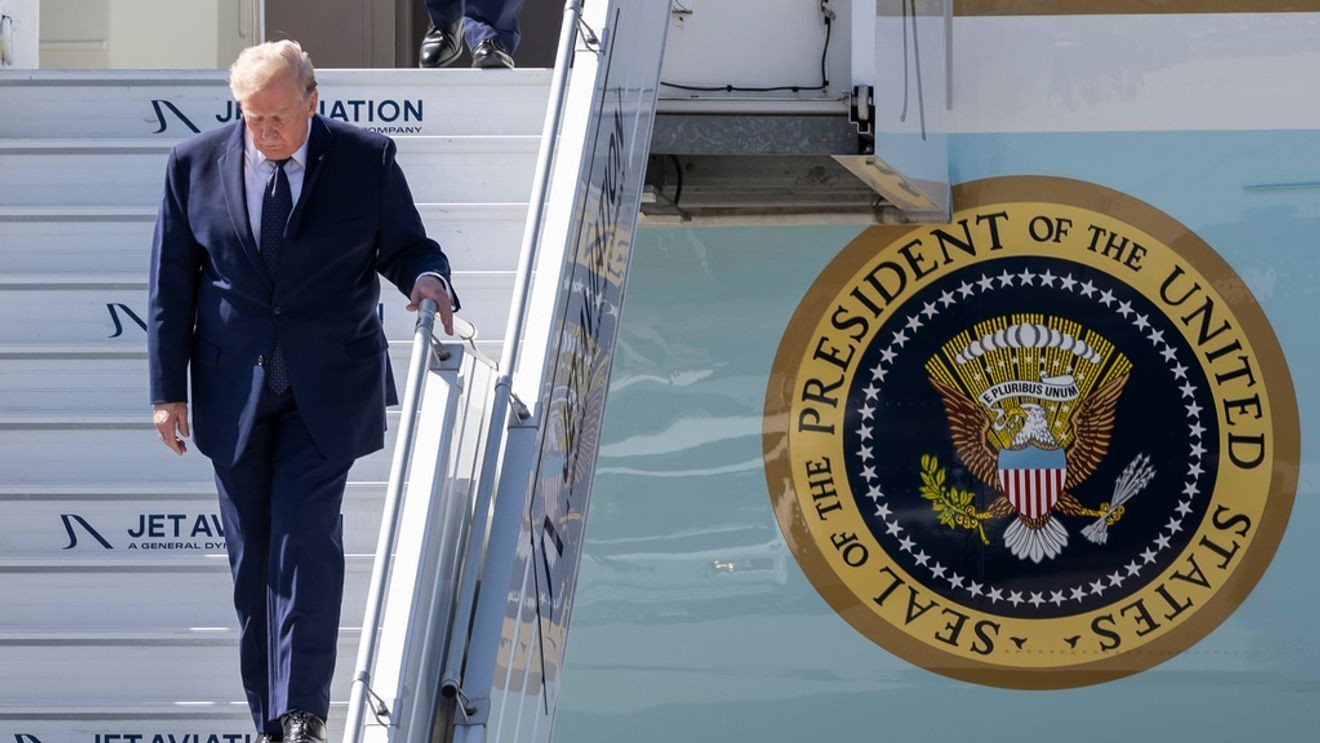
The Macron-Trump bilateral, the first in-person meeting between the two leaders since Trump threatened the French president with 100 percent tariffs on wines and champagne in a media interview days before the summit, is also the moment at which France’s approach to Ukraine becomes legible. Macron has consistently argued that European governments should not cede the peace process entirely to American mediation – a position that has put him in tension with both Washington, which has wanted to lead, and Moscow, which has shown reluctance to accept any European role. Trump’s remark on Monday, offered voluntarily and without prompting, suggests he is not trying to exclude Europe from the moment. Whether that reflects genuine coordination or simply the optics of a joint press appearance is something the Macron team will spend the rest of the week trying to determine.
The European context matters because Russia’s foreign minister Sergei Lavrov spent Monday in Minsk telling Belarusian president Alexander Lukashenko that the West had started the Ukraine war – a coordinated narrative from Moscow suggesting that even as Putin tells Trump he is “open” to settlement, the Kremlin’s propaganda posture has not shifted. Those two things can coexist: a genuine willingness at the level of great-power deal-making alongside an unchanged domestic narrative that makes it harder for any Russian leader to be seen accepting terms that look like retreat. What Putin can agree to in private is not the same as what he can defend publicly to a domestic audience that has been told for more than four years that the Russian operation is existential.
Kremlin spokesman Dmitry Peskov has spent months telling European governments that they cannot mediate a conflict they are party to. That position has not been formally retracted. What has changed, at least on the surface of Monday’s developments, is that Trump is now saying publicly, from a stage that carries diplomatic weight, that the two men at the center of the war are willing to talk. The step between willingness and terms is the step that has broken every previous attempt at negotiation. Whether the Iran deal’s resolution has genuinely freed up American diplomatic bandwidth – or whether it has simply given Trump a more comfortable backdrop from which to repeat optimistic language – is the question the next 48 hours in Évian will begin to answer.
What Trump did not say on Monday was what he is prepared to offer either side as an inducement, what security guarantees Ukraine would receive as part of any settlement, or what the territorial parameters of a deal might look like. Those questions remain exactly as unanswered as they were before he boarded Air Force One. He said “maybe.” In the language of a conflict that has killed hundreds of thousands of people and displaced millions more, “maybe” from the American president, stated publicly and on the record, is not nothing. It is also not enough.
Related Posts