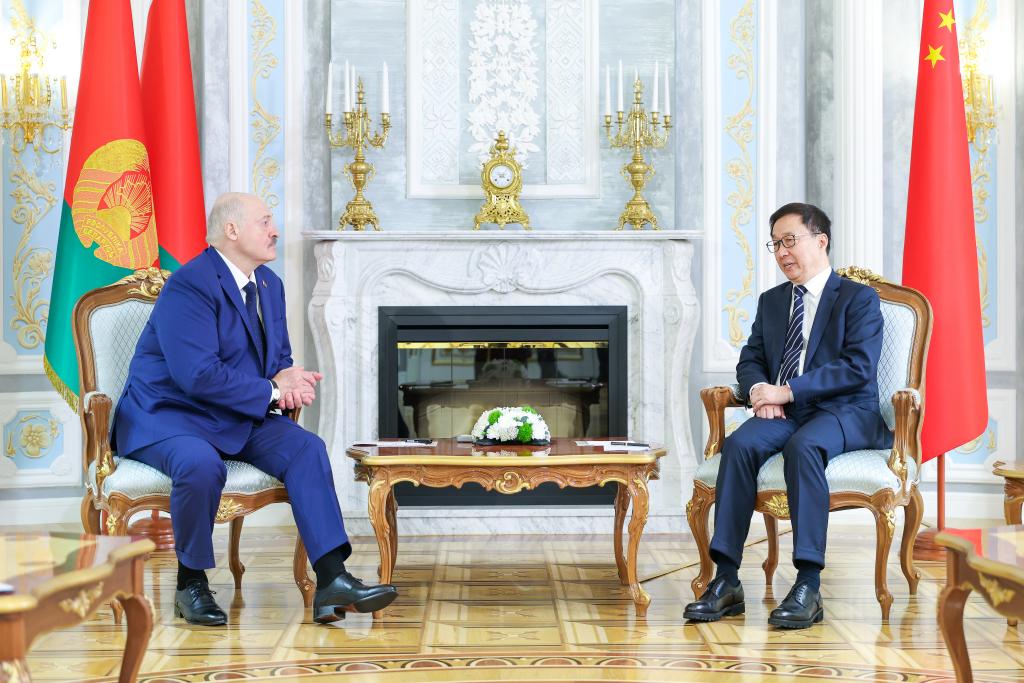

MINSK – Before any ceasefire map is drawn, Russia is making sure the narrative is fixed. On Monday, Foreign Minister Sergey Lavrov sat with Belarusian President Alexander Lukashenko in Minsk and said aloud what Moscow’s diplomatic apparatus has been circling for months: that the conflict consuming Ukraine is not Russia’s war at all. It is the West’s.
“The war that the West unleashed by the hands of the Ukrainian regime after the coup against Russia, first hybrid, and then hot — this war does not stop,” Lavrov told reporters after the meeting. “Everything must be done to ensure that justice prevails.”
The statement landed in a city that has become, over four years of sustained conflict, something of a relay station for Russia’s geopolitical positioning. Minsk hosted the agreements that bore its name and that Russia later repudiated. Now Lavrov is back, and the register has shifted from negotiation to adjudication. The question of what Lukashenko said in response – what, if anything, he pushed back on or endorsed – was not disclosed.
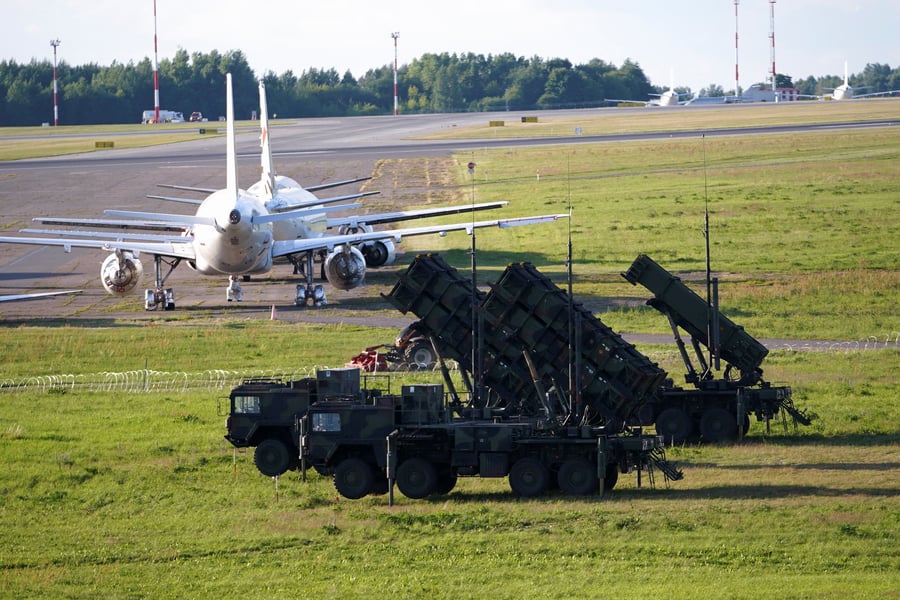
The visit was the second consecutive day Lavrov spent in the Belarusian capital. He arrived on Sunday on what the Kremlin described as a working visit. The agenda covered a wide range: bilateral diplomatic coordination, implementation of the Union State’s joint action programs, and Russia-Belarus coordination within international bodies including the United Nations. On Sunday, Russian officials framed the nuclear weapons deployed to Belarus as a formal NATO deterrent, a characterization that now sits alongside Monday’s declaration about the war’s origins.
Taken together, the two days in Minsk amount to a coordinated messaging exercise. Russia is not signaling flexibility. It is signaling permanence – in its nuclear posture, in its account of the conflict’s causes, and in its expectation that Belarus will serve as both audience and amplifier.
Lavrov said the parties also discussed “coordination of our actions within the framework of the UN,” and noted that 70 percent of the 28 Union State programs have been implemented on schedule, with a new action plan under development for the next cycle. What the minister described was not a relationship under any strain – it was a relationship in active operational use.
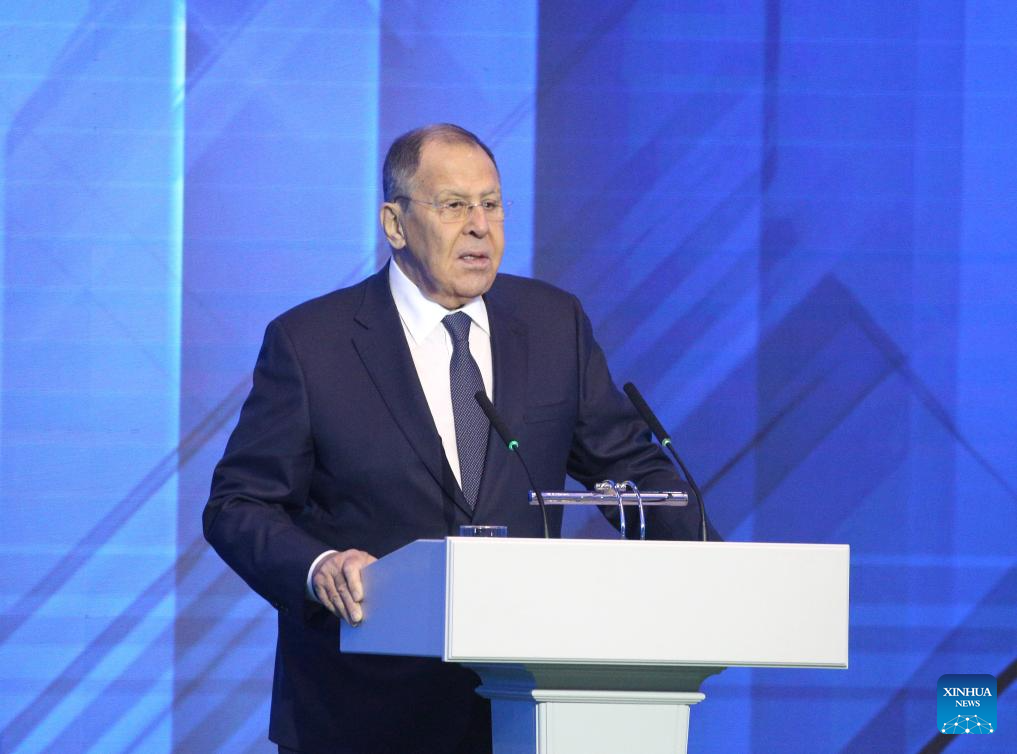
The phrase “war unleashed by the West” is not new in Russian diplomatic vocabulary. But the choice to deliver it here, in this setting, after sitting with the one European leader who has remained most consistently aligned with Moscow throughout the conflict, carries its own signal. Lukashenko has offered Minsk as a venue for peace talks before. Lavrov’s framing on Monday makes plain the terms on which Russia would enter any such talks – not as a party that launched a military operation, but as a party responding to aggression that others began.
That framing matters beyond messaging. At every forum where Russia’s conduct in Ukraine is on the table – UN General Assembly, Security Council, any future negotiating track – Moscow’s position begins with this premise: that the West, through the Ukrainian government, started this. Lavrov said as much explicitly on Monday, and he said it in a capital that still hosts the architecture of the last failed peace process.
Russia’s formal declaration that its nuclear arsenal in Belarus constitutes a NATO deterrent came the day before this meeting. That sequence was not accidental. The nuclear framing establishes the defensive posture; the war-origin framing fills in the narrative behind it. Together they constitute the diplomatic pre-positioning that Russia is conducting – even, or especially, when peace is nominally being discussed.
Lavrov also told reporters that the West was attempting to enlist the Council of Europe and the OSCE into “hostile actions” against Russia and Belarus. The language pointed to a world in which multilateral institutions are no longer neutral arbiters but instruments of one side – which conveniently strips those bodies of any legitimacy to adjudicate the conflict’s origins.
Meanwhile, Russia was simultaneously warning of Western military encroachment in the Asia-Pacific, with Putin heading to an ASEAN summit in Kazan. The geographic breadth of Moscow’s grievances is being articulated in multiple capitals at once. Minsk is one node in a wider diplomatic circuit, not an isolated bilateral checkpoint.
Lavrov met with Belarusian Foreign Minister Maxim Ryzhenkov alongside the presidential audience. The joint agenda for the foreign ministries included preparations for a board-level meeting planned for St. Petersburg later in the year – the kind of institutional continuity that suggests neither Moscow nor Minsk anticipates any disruption to the relationship regardless of how the conflict eventually moves.
What Lukashenko thought of all of it – the framing, the war-origin language, the UN coordination agenda – went unrecorded in Monday’s readout. His government’s news agency reported the meeting’s existence. The Belarusian president’s own words were not released. In Minsk, the narrative belongs to Moscow. The host provides the venue and the silence.