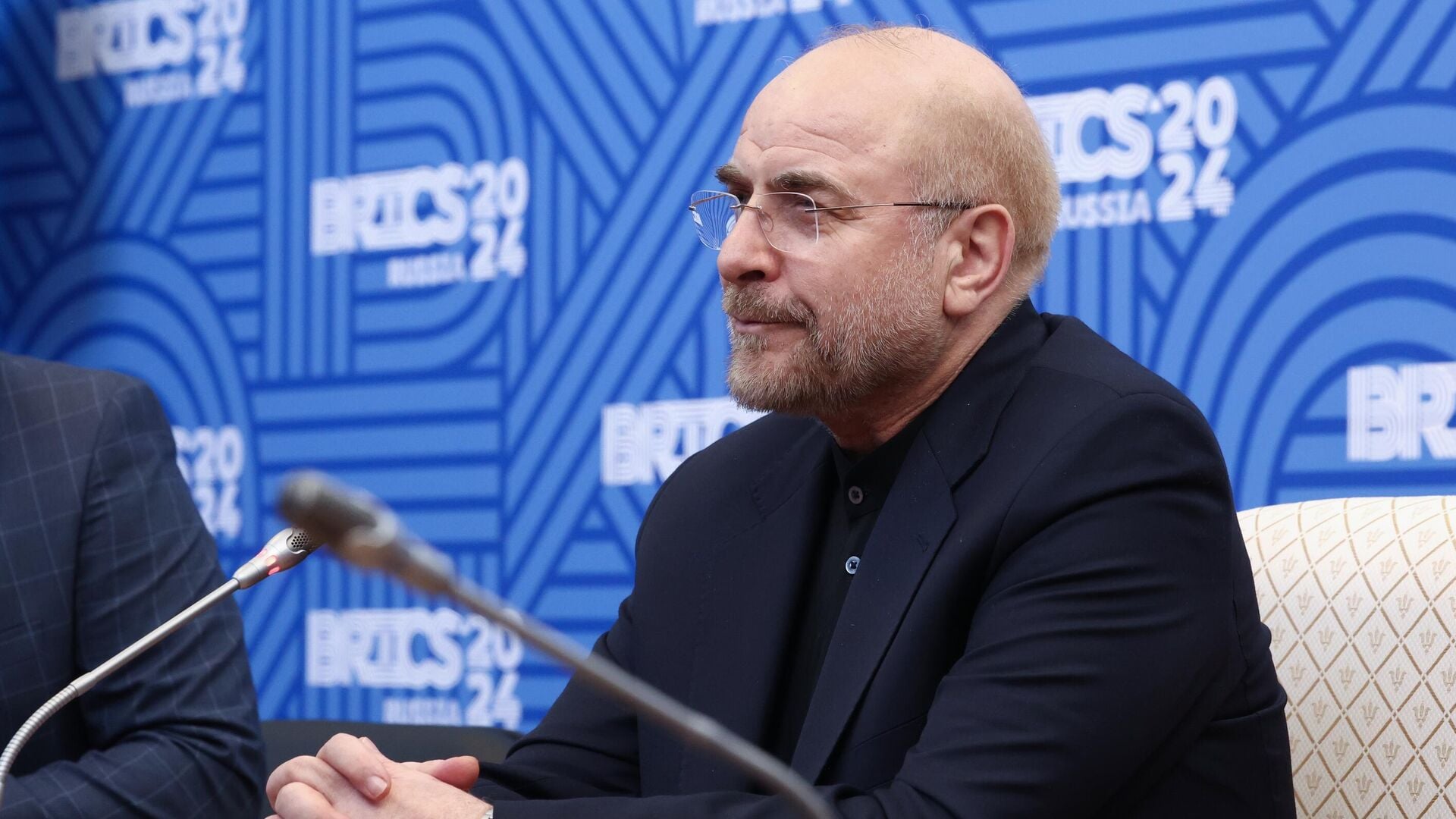

TEHRAN – Mohammad Bagher Ghalibaf on Wednesday drew the clearest line yet between what Iran is willing to offer the IAEA and what the United States believes it has been promised. Parliament had already decided, the Iranian parliament speaker said. The Supreme National Security Council had already resolved. International inspectors would receive what those two bodies had authorized, and nothing else.
What they have authorized is access to two facilities: the Bushehr nuclear power plant and the Tehran research reactor. Not Fordow. Not Natanz. Not Isfahan’s conversion plant – the sites that US and Israeli strikes targeted in June, and precisely the ones the IAEA and Washington most want to assess for what remains of Iran’s enrichment capacity.
Donald Trump, speaking in Washington the same morning, described the denuclearization of Iran as “moving along well.”
The distance between those two simultaneous statements is not rhetorical. It is a description of the central structural obstacle with 45 days left in the Islamabad MoU window. Iran’s IAEA position is not a concession its negotiators can offer or withhold in Doha. It is a function of domestic legislation and a standing Supreme National Security Council resolution – Iran’s most powerful executive security body. To change it requires something no Qatari mediator can deliver and no technical track running at deputy foreign minister level can negotiate.
The July 1 Doha round did not include the nuclear inspection file on its formal agenda – a gap that Ghalibaf’s statement now explains with more clarity. The talks produced real but limited results: a communications hotline, partial movement on $6 billion in frozen Iranian assets, and a readout describing “positive progress” that stopped short of anything binding on Hormuz transit rules. IAEA access to the bombed sites never came up in the formal technical sessions because it had not been agreed in principle. Wednesday’s statement makes explicit why: it has not been agreed because Iran’s domestic legal architecture does not permit the executive branch to make that agreement unilaterally.
Bushehr and the Tehran research reactor are the declared, civilian, intact elements of Iran’s nuclear program. Both have been under IAEA safeguards for years. Iran maintained that access even through maximum US pressure, and its continuation is not a concession – it is the floor. The bombed sites are different in kind. Fordow’s deeply buried centrifuge halls were targeted specifically because of their hardened construction. Natanz’s fuel enrichment plant sustained damage that has not been independently verified. Isfahan’s uranium conversion facility processed feedstock for enrichment, and its current operational status is unknown. What the IAEA wants to inspect at those sites is the question that determines everything: how much enrichment capacity survived, whether undeclared material was displaced by the strikes, whether Iran has restored any of what was destroyed. Parliament has ruled that interest alone does not constitute grounds for access.
The legal architecture behind Ghalibaf’s statement deserves careful reading. “We will grant the IAEA no access beyond what has been authorized by the Supreme National Security Council,” he said. That formulation is significant: it assigns authority to the SNSC rather than parliament alone. The SNSC operates by resolution, not by legislative vote. It can, in principle, expand the authorized access list without going back to the Majlis. Whether Ghalibaf was signaling that SNSC-authorized expansion is available – under the right conditions, at the right moment in the negotiations – or simply reiterating a ceiling below which Iran will not go regardless of what is offered, is the question neither his statement nor the Doha communiqué answers.
IAEA Director General Rafael Grossi has taken a position that directly contradicts Ghalibaf’s. Grossi has stated that inspectors must have access to Iranian nuclear sites under the bilateral ceasefire memorandum – a reading Tehran has not accepted. The Doha talks this week produced movement on assets and a hotline, but did not surface the Grossi-Ghalibaf contradiction on the record. That gap will not survive to the next round. When the formal agenda eventually includes the nuclear file – and the MoU’s August 21 expiry makes that unavoidable – both sides will have to say in the same room what they have only said separately to their domestic audiences.
Trump’s “denuclearization” framing adds a further complication. The word does not appear in the 14-point Islamabad MoU. It describes a US objective that Iran’s political establishment – across factional lines, from hardliners to the negotiating team itself – has explicitly rejected as a precondition for any agreement. If Trump’s characterization reflects his actual read of what the technical track is producing, rather than optimistic messaging for domestic consumption, the gap between his expectations and what Iran’s institutions have legally foreclosed will be the dominant issue of the next Doha session. If it does not reflect his read – if it is framing designed to manage congressional opponents of the deal – then the distance between the public statements and the actual negotiation is itself a structural risk: a deal that cannot be described accurately in Washington will face a ratification problem that no Qatari communiqué can fix.
What the MoU has produced in its first two weeks is real: oil revenue, released assets, a mechanism for reporting violations without triggering military escalation. Iran has already banked between $400 million and $750 million in incremental oil revenue from the sanctions waiver window alone. The IAEA file – access to Fordow, Natanz, and Isfahan – is where Washington’s most concrete demand and Tehran’s most structurally embedded legal constraint are still on a collision course. Ghalibaf’s statement on Wednesday did not close that gap. It described, with unusual precision, exactly how wide it remains.