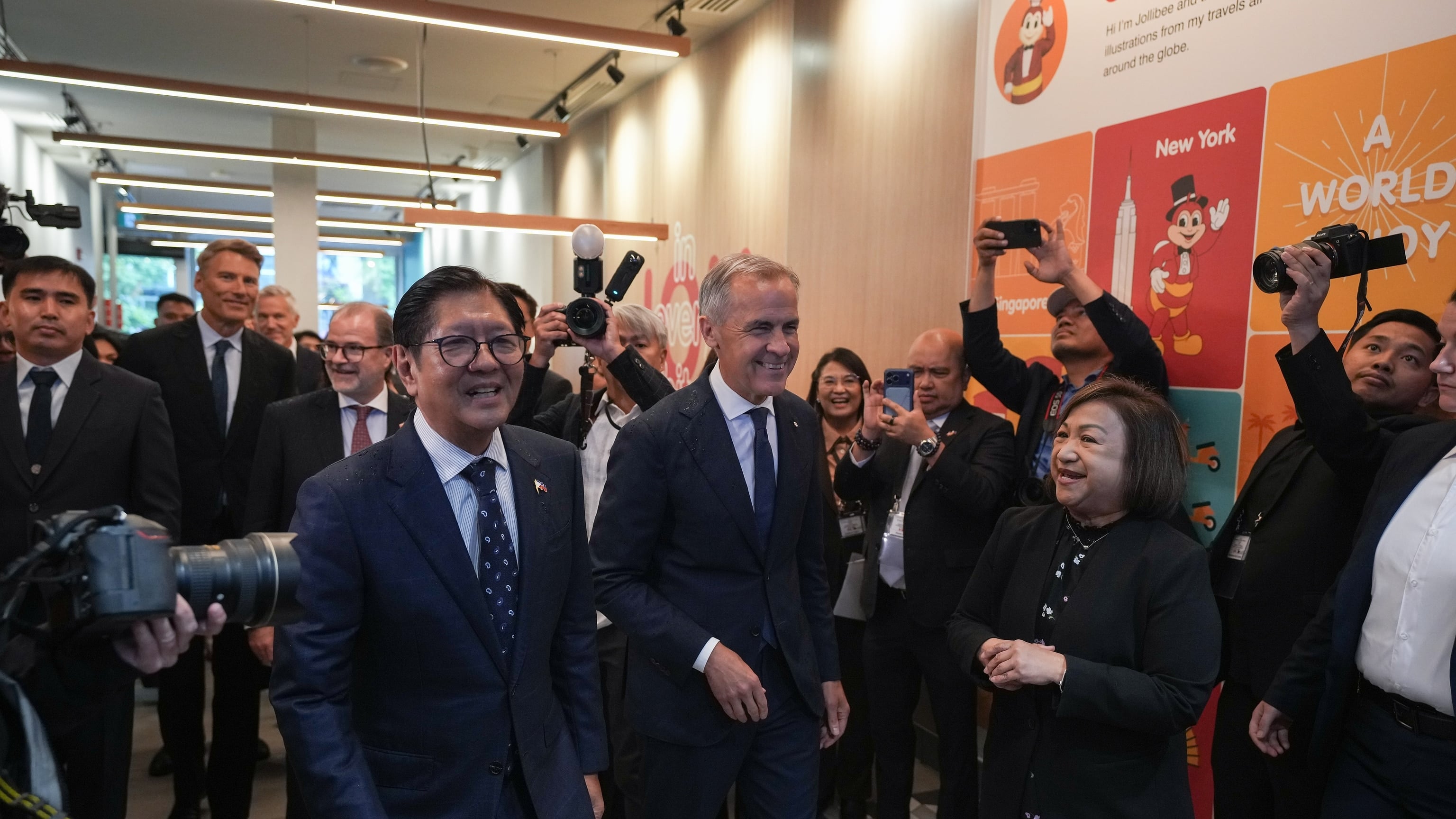

VANCOUVER — Canada’s trade pivot away from the United States is more ambition than architecture. On Thursday, Mark Carney added the first concrete piece of Southeast Asian structure to it, announcing a Strategic Partnership with the Philippines, launching bilateral free trade negotiations targeting completion by December, and committing to joint maritime defence exercises that would be the first of their kind between the two militaries.
Philippine President Ferdinand Marcos Jr. departed Vancouver after a four-day state visit that produced more binding bilateral machinery than any Canada-Philippines summit in recent memory. Wednesday’s signing session included the Status of Visiting Forces Agreement, a Mutual Logistics Support Arrangement, memoranda on tourism and cultural cooperation, and a joint declaration on labour and migration. The visit was the first by a Philippine head of state to Canada in eleven years and arrived at a moment when Ottawa is actively shopping for new commercial partners.
The timing reflects strategic necessity as much as diplomatic ambition. Washington allowed CUSMA to expire on July 1, starting a potential decade of renegotiation that has unsettled Canadian businesses from Windsor to Calgary. A Pacific oil pipeline deal announced last week is designed to shift Canadian energy exports toward Asian buyers. The Philippines agreement is a different kind of instrument: not oil pipelines but market access, not Alberta crude but the $5-trillion-a-year Southeast Asian consumer bloc that sits behind Manila.
That is the underlying logic of choosing the Philippines as the anchor partner. Marcos chairs the Association of Southeast Asian Nations this year, giving him procedural authority over the bloc’s agenda for the duration of his chairmanship. A completed Canada-Philippines FTA by December would be Canada’s first bilateral deal in Southeast Asia and would add momentum to a parallel Canada-ASEAN framework that Ottawa estimates would add roughly two billion Canadian dollars to national GDP and sustain fourteen thousand jobs. Carney is betting that one bilateral success, concluded fast, would push ASEAN as a collective to take the broader framework talks more seriously.
The trade figures give the bet a sense of scale. Bilateral merchandise trade between Canada and the Philippines reached $3.4 billion in 2025, up from $3.2 billion the year before. The two governments have set a target of tripling that by 2035, a compounding annual growth rate that far outpaces what current trade trends would produce organically. The broader ASEAN market represents over 700 million consumers and a combined economic output of roughly five trillion dollars, making it the kind of trading bloc Canada has historically struggled to access. Both the Philippines FTA and the ASEAN framework would need to overcome longstanding sticking points around agricultural access, investment protections, and intellectual property standards that have stalled Southeast Asian negotiations before.
The defence architecture announced alongside the trade agenda addressed concerns both governments have been reluctant to name directly in public. The Status of Visiting Forces Agreement and Mutual Logistics Support Arrangement would allow Canadian and Philippine forces to conduct joint exercises in the South China Sea, where Chinese maritime activity has become a steady irritant for Manila and a growing concern for Ottawa as it builds out its Indo-Pacific posture. According to AP, the two leaders framed the defence commitments as consistent with their shared commitment to international law and freedom of navigation, without naming China explicitly.
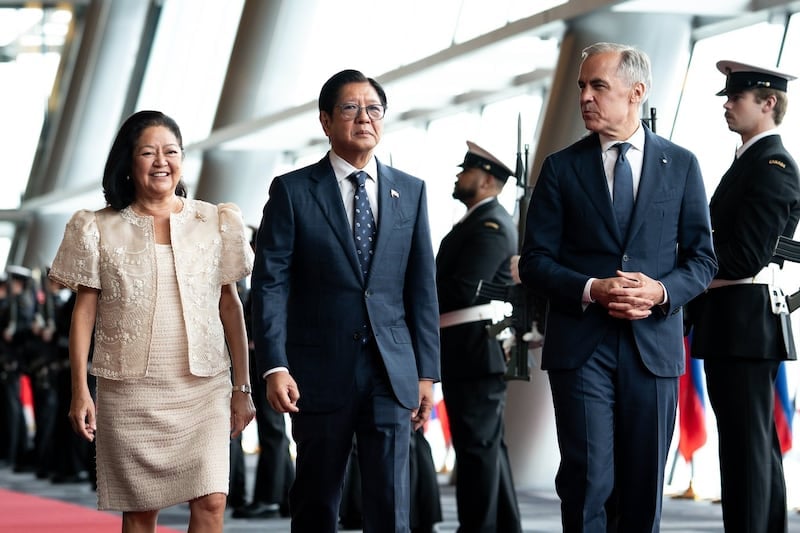
“We share the same aspirations,” Marcos said at a joint appearance with Carney in Vancouver, “in terms of what we would want to achieve in the world.” The framing was diplomatically general. The detail was in what was signed. The Prime Minister’s Office said the partnership was designed to serve as “the foundation” of the bilateral relationship going forward, and that completing the FTA by year-end was a joint priority.
The Filipino-Canadian diaspora gave the visit its warmest register. Canada is home to close to a million people of Filipino descent, concentrated in Greater Vancouver, the Greater Toronto Area, and the Prairie provinces. Carney described Filipino-Canadians as “at the very heart” of Canada at a community reception in Vancouver. Marcos met separately with diaspora business leaders. The emphasis was intentional: a Canadian pivot toward Asia is more politically durable if it arrives accompanied by kinship rather than transaction.
Carney will travel to Manila in November for the ASEAN leaders’ summit, his first visit there as a counterpart rather than an observer, with a live negotiating framework already in place. The sequence matters. A Canadian prime minister attending the ASEAN summit without an active trade agreement to tend to is a courtesy call. One arriving with FTA talks underway, a strategic partnership signed, and defence agreements active is something closer to a candidate for deeper integration.
What the week in Vancouver does not settle is whether either FTA can be completed in the window both governments have publicly set. Canada has attempted some form of ASEAN market access since 2017, and the process has stalled repeatedly over provisions that Southeast Asian governments have declined in previous negotiations. Completing a bilateral deal with the Philippines before December would be fast by any standard. What Carney is spending political capital on is the proposition that the urgency Washington has created for Canada changes the calculation on both sides of the Pacific. Whether it does will be measured against a clock that runs through November in Manila and December in the negotiating rooms between them.