
MOUNT RUSHMORE, S.D. — Rain and hail swept across Keystone, South Dakota on Thursday evening, briefly interrupting the proceedings meant to mark the 250th anniversary of the United States. The weather passed. Donald Trump’s argument did not.
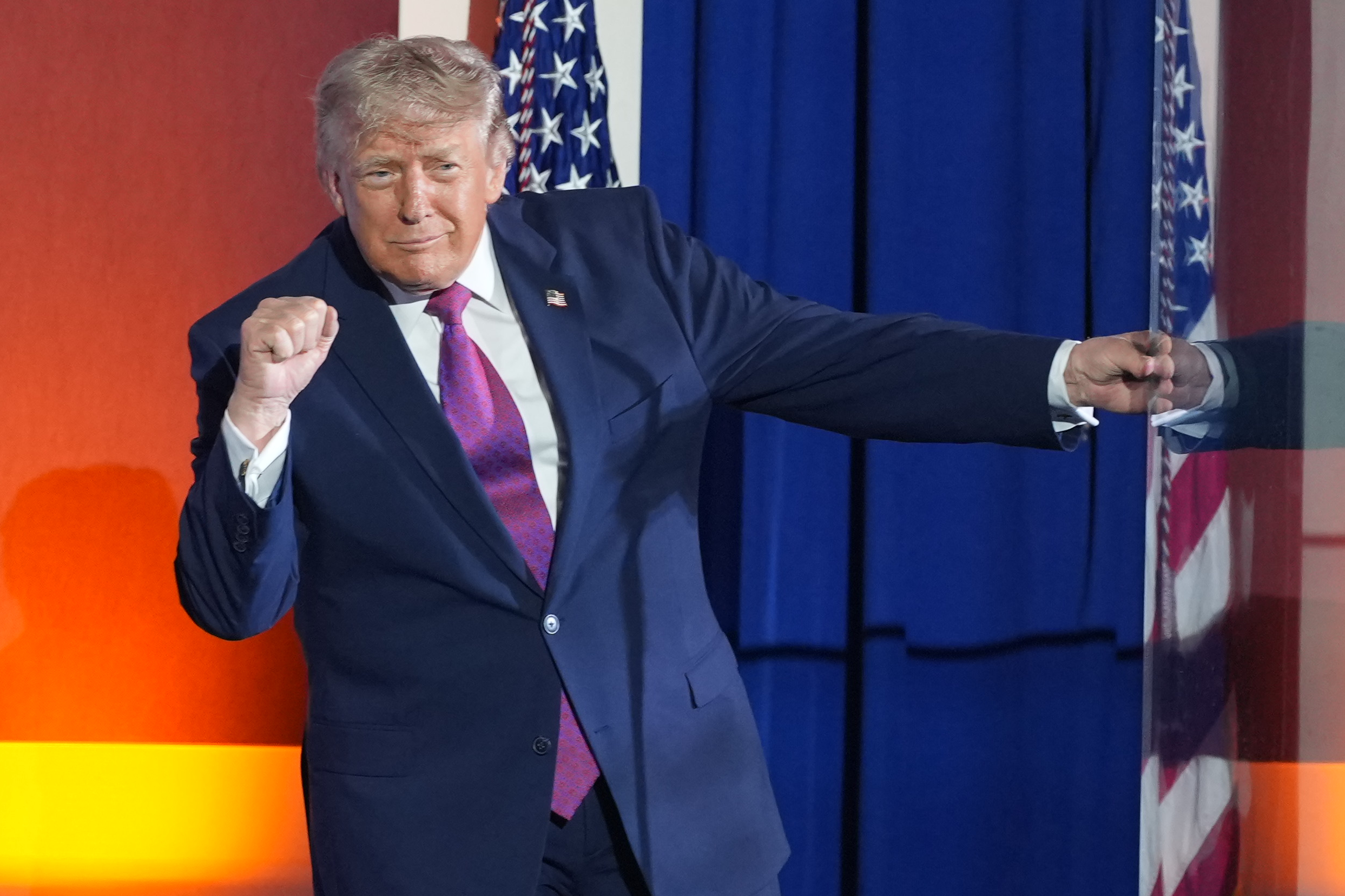
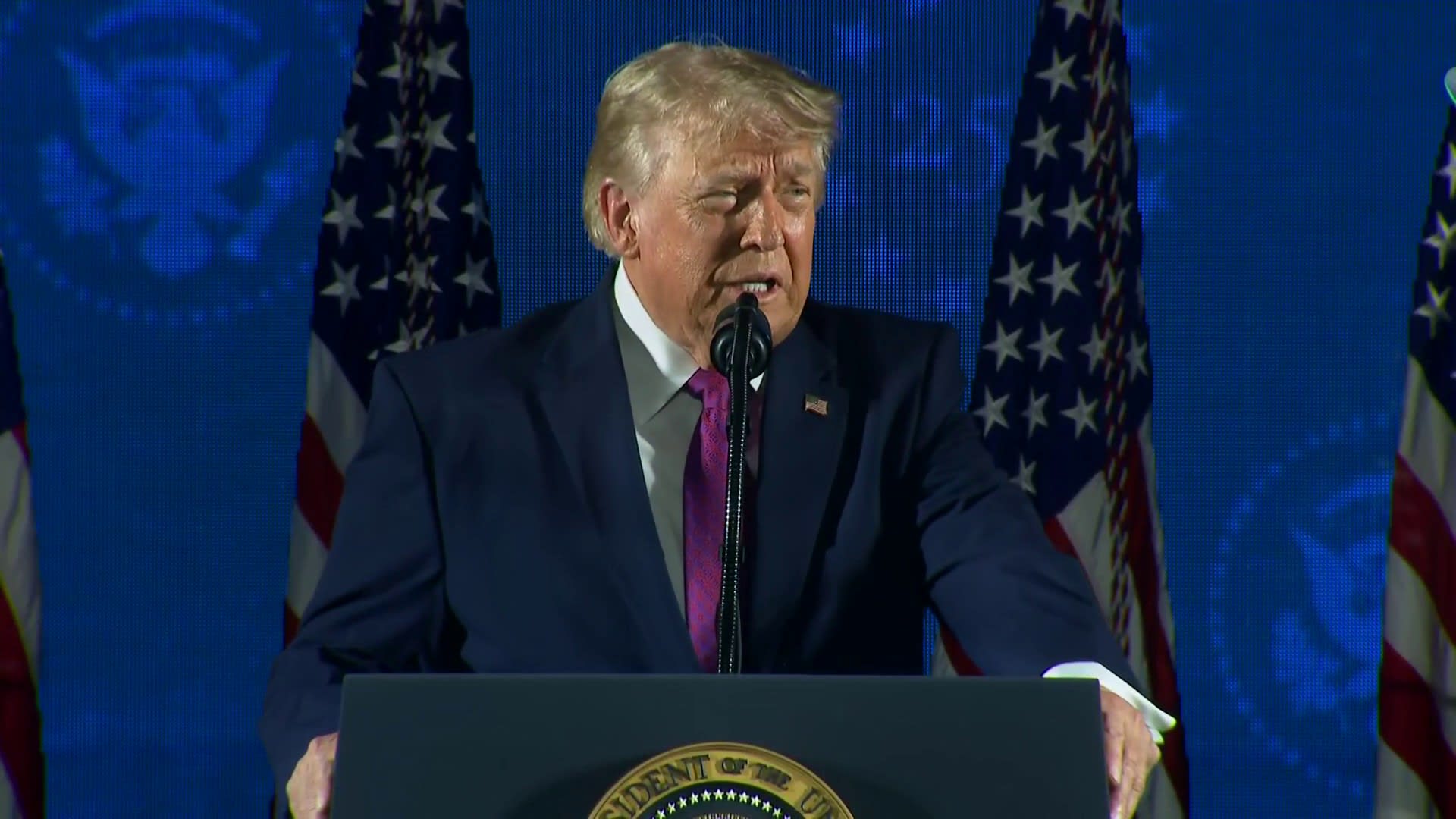
Standing below the granite faces of Washington, Jefferson, Roosevelt, and Lincoln, Trump delivered what began as a sweeping celebration of American exceptionalism before hardening into a near-half-hour political warning that would not have sounded out of place in the early 1950s. He declared communism not just a current threat but the single greatest menace the United States had ever confronted, greater in his explicit framing than the two World Wars, Pearl Harbor, and September 11 combined. The Associated Press reported that the address “veered into darkly political” territory, a departure that drew an immediate counter from one of the political figures his language was most precisely designed to invoke.
“There is now a resurgence of the communist menace in our land, including from newcomers to our country, who embrace ideas totally opposed to our way of life and our great success,” Trump said. The “newcomers” framing attached the immigrant label to an ideological threat Trump did not trace to any specific country, organization, or documented movement. It landed, not coincidentally, in the same week Trump has applied the communist designation to Democratic congressional candidates running in districts whose political histories contain no communist presence.
In New York, Mayor Zohran Mamdani, a democratic socialist who embodies precisely the political type Trump’s communist framing is designed to render radioactive, delivered his own July 4 address without naming the president. He spoke of America as “a nation of contradictions, working each day towards the perfection in which it was conceived,” and referenced without attribution the claim that when the world has sent its people to American shores, it has not sent its best. The counter-programming required no names. The target was unmistakable.
Among the crowd at Mount Rushmore that evening was Glenn Brooks, one of the January 6 Capitol rioters whom Trump pardoned in the early weeks of his second term. His presence below the carved faces of four presidents, now invoked as emblems of the democratic republic the January 6 attack sought to disrupt, went largely unremarked in the evening’s coverage of fireworks and weather delays. It was not staged as a provocation. It was simply a fact about who was there.
Past presidents treated major July 4 addresses as national property rather than partisan events. Gerald Ford and Ronald Reagan, addressing the country at high-profile Independence Day celebrations, kept their remarks deliberately unifying. Trump’s pattern runs in the opposite direction. The America 250 federal initiative, launched with bipartisan intent years before he returned to office, has become a backdrop for a political calendar that leads directly to November midterms. Interior Secretary Doug Burgum and South Dakota Governor Larry Rhoden introduced Trump on Thursday evening. South Dakota voted for him by 29 points in 2024. He did not appear to be addressing the unconvinced.
The communist framing has been a persistent feature of Trump’s second-term political vocabulary, and it has been applied broadly. Whether the label registers as an accurate ideological warning or as McCarthyite overreach depends substantially on the listener. For the conservative faction building a third-party alternative after breaking with Trump over the Iran war, the Mount Rushmore address was the president performing for a base he already holds, rather than bridging the fractures opening inside his own coalition.
“By the grace of God, the United States of America is the most successful, most accomplished, most exceptional nation ever to exist,” Trump said. He also told the crowd that “you do not have to be born here, but you do have to love what we have built,” a concession to immigrant patriotism delivered inside the same speech warning that newcomers were importing communist ideology. According to Fortune, Trump said the country would “vanquish communism quickly” and concluded with a vision of “the golden age of America.” Both the golden age and the communist menace were announced in the same half-hour. The crowd at Keystone heard them as one argument.
What the 250th anniversary address does not provide is specificity. Trump identified no organizations, no funding networks, no foreign-state sponsors behind the “resurgence” he described. The substance that would transform a political attack into a national security argument was absent. In its place stood a comparison to 9/11 and to the Second World War: large enough to invoke genuine historical trauma, flexible enough to apply to almost anyone his political operation chooses to designate as the enemy. The fireworks went up anyway. The rain had stopped by then, and the midterms are four months away.