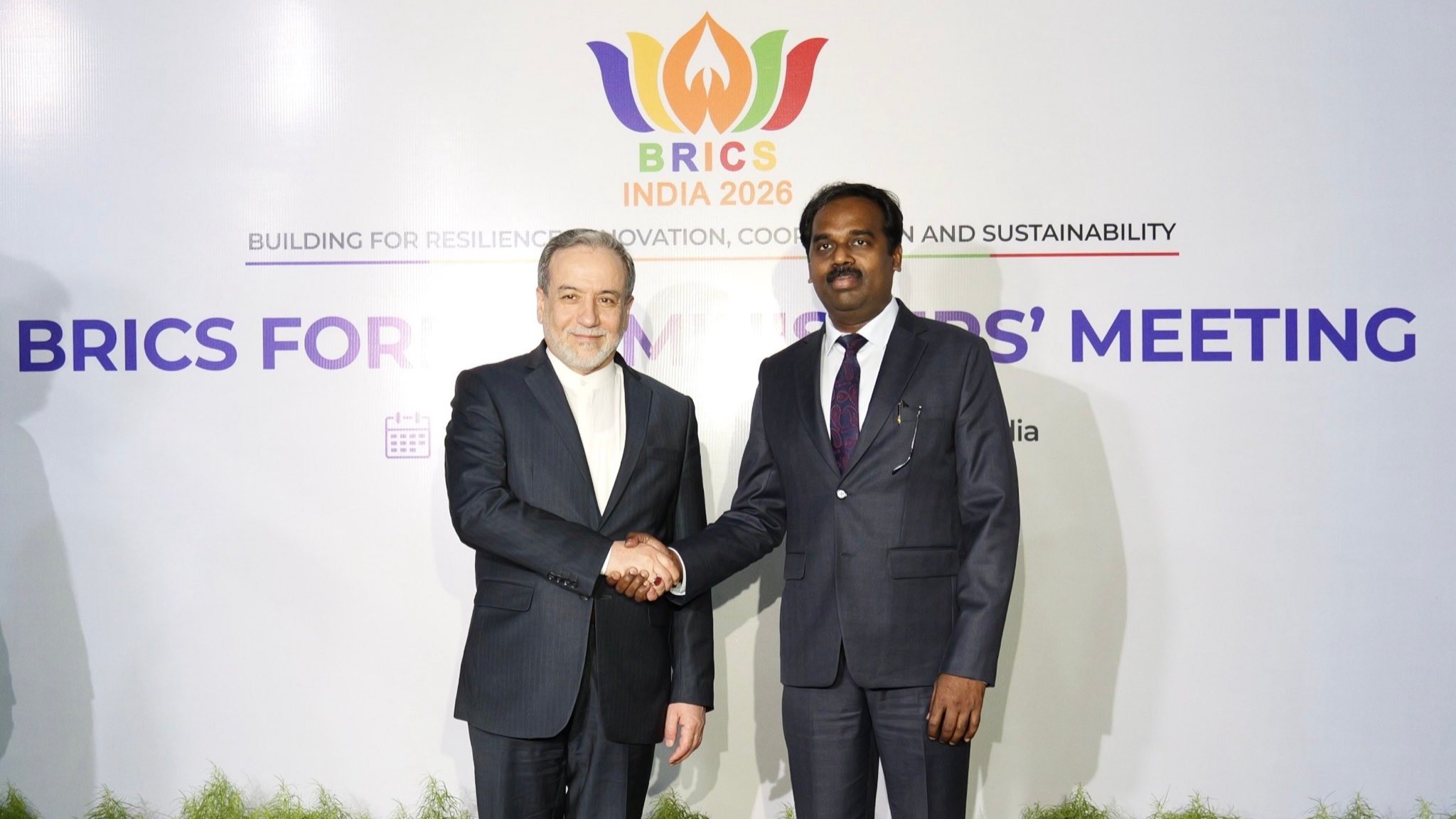

Iran’s Foreign Minister Abbas Araghchi said Friday that Tehran still considers the fragile ceasefire between the United States and Iran to be in effect despite mounting regional tensions, warning that the ceasefire remains unstable but insisting diplomacy must be given “a chance” before the Middle East slides deeper into confrontation.
Speaking during a press conference in New Delhi, Araghchi acknowledged the precarious nature of the current calm between Tehran and Washington following weeks of heightened military tensions across the Persian Gulf and renewed fears of a broader regional war involving Israel and the US military presence in the region.
“As you all know, we currently have a truce with the United States,” Araghchi said. “Although it is unstable, we are trying to maintain it in order to give diplomacy a chance to find a diplomatic and negotiated solution to the conflict.”
The remarks come at a moment of extraordinary geopolitical strain in West Asia, where fears of escalation have intensified following military exchanges involving Iran, Israel, and US forces stationed across the Gulf. The fragile ceasefire showed signs of collapse in recent days as regional armed groups and naval deployments raised fears of a wider war.
The fragile pause in hostilities has become a central focus for regional governments concerned that even a limited breakdown could trigger disruptions in global energy markets and maritime security, particularly around the Strait of Hormuz crisis.
Araghchi’s comments appeared carefully calibrated to present Tehran as willing to engage in serious negotiations while simultaneously placing responsibility on Washington to abandon what Iranian officials have repeatedly described as coercive and militarized pressure tactics.
“There is no military solution to issues related to Iran,” the foreign minister said, adding that Tehran remains interested in negotiations provided the United States adopts what he called a “serious approach.” Tehran has also sought to restart peace talks with the United States through intermediaries in the Gulf and South Asia.
His remarks are likely to resonate strongly among BRICS nations and Global South governments increasingly critical of Western military interventions and sanctions-based diplomacy. Iran has intensified efforts in recent years to deepen political and economic coordination with Russia, China, Saudi Arabia, and emerging Eurasian blocs as Tehran attempts to counter Western isolation strategies.
The New Delhi appearance also carries strategic significance. India has sought to maintain delicate diplomatic balancing between Iran, the US, Russia, and Gulf Arab states while protecting its own energy and trade interests in the region. Iranian officials have increasingly framed Asian powers as potential stabilizing actors amid what they describe as Washington’s unpredictable regional posture.
The latest comments from Tehran arrive only hours after Araghchi acknowledged the presence of naval mines in the Strait of Hormuz, a disclosure that fueled fresh concern among international shipping markets and defense analysts. While Iranian authorities stopped short of threatening maritime closures, the admission underscored the degree of military preparedness surrounding one of the world’s most critical oil transit chokepoints.
Iranian officials recently warned that Iran vowed to block US weapons shipments through Hormuz if Washington escalates military pressure further. At the same time, reports suggested US military moved to reopen the Strait of Hormuz after tensions disrupted commercial navigation routes.
Nearly one-fifth of global oil shipments pass through the narrow waterway, making any instability there a direct threat to global energy prices. Energy analysts have warned that a prolonged disruption could trigger the largest energy supply shock ever seen in modern markets.
Washington has so far responded cautiously to Tehran’s diplomatic messaging. US officials continue to insist that Iran must curb its regional military activities and nuclear-related capabilities before any broader normalization process can move forward. However, behind-the-scenes diplomatic contacts involving Oman, Qatar, and several European intermediaries are believed to remain active.
Analysts say both Tehran and Washington currently face strong incentives to avoid immediate escalation despite deep mistrust on both sides.
For Iran, preserving the truce could buy valuable economic breathing space at a time when sanctions continue to weigh heavily on domestic finances. Tehran is also seeking to strengthen ties with BRICS economies and attract alternative investment channels outside the Western financial system.
For the Trump administration, a major military conflict with Iran could further destabilize already volatile global energy markets and complicate Washington’s strategic competition with both Russia and China. The White House is simultaneously confronting concerns that Iran sanctions push US-China relations toward a dangerous clash as Beijing continues purchasing Iranian energy exports.
Still, the ceasefire remains deeply fragile.
Israeli military operations in Gaza, ongoing tensions in Lebanon and Syria, and periodic attacks involving regional armed groups continue to threaten broader escalation dynamics. Iranian officials have repeatedly argued that Tehran accused Washington of sabotaging diplomacy in the Gulf through military pressure and support for Israeli operations.
At the same time, hardline factions inside both Iran and the US remain skeptical of negotiations. Conservative voices within Iran warn that Washington cannot be trusted after years of sanctions and failed nuclear agreements, while hawkish US lawmakers continue pressing for tougher military deterrence measures.
The diplomatic deadlock has revived memories of the collapse of the 2015 nuclear agreement, formally known as the Joint Comprehensive Plan of Action, after Washington withdrew from the accord during Trump’s first presidential term. Since then, attempts to restore the agreement have repeatedly stalled amid disputes over sanctions relief, uranium enrichment, and regional security guarantees.
Despite those setbacks, Iranian officials now appear eager to project an image of strategic patience rather than immediate confrontation. Tehran recently signaled that it had responded to a US proposal aimed at ending the conflict, though negotiations remain stalled.
Araghchi’s insistence that “there is no military solution” reflects a broader effort by Tehran to position itself as open to dialogue while maintaining regional deterrence capabilities. Iranian state media has increasingly emphasized themes of sovereignty, resistance to external pressure, and multipolar diplomacy aligned with Russia and China.
Whether the fragile truce can survive the coming months may depend less on public rhetoric and more on quiet negotiations taking place far from cameras. Gulf states, including Saudi Arabia and Qatar, are believed to be actively encouraging de-escalation amid fears that any direct Iran-US conflict would devastate regional economies and energy infrastructure.
For now, Tehran appears determined to keep diplomatic channels alive even as the military shadow hanging over the region continues to grow. Officials in Tehran continue to argue that Western naval deployments amount to a reckless military adventure in the Gulf that risks destabilizing global trade routes and energy markets.
—Inputs from Sputnik.