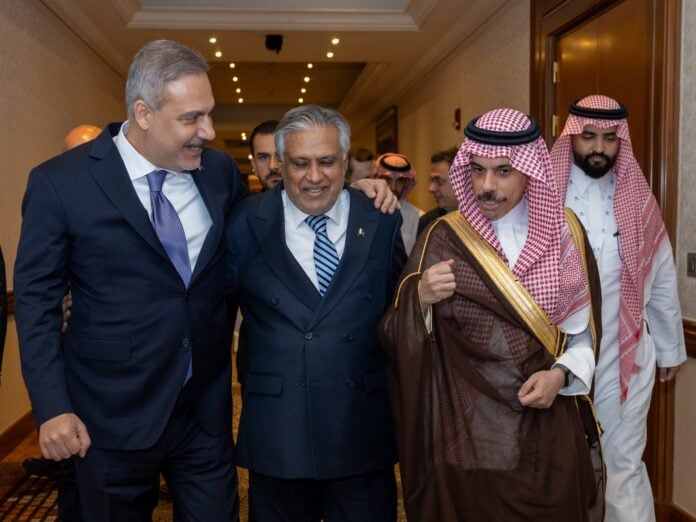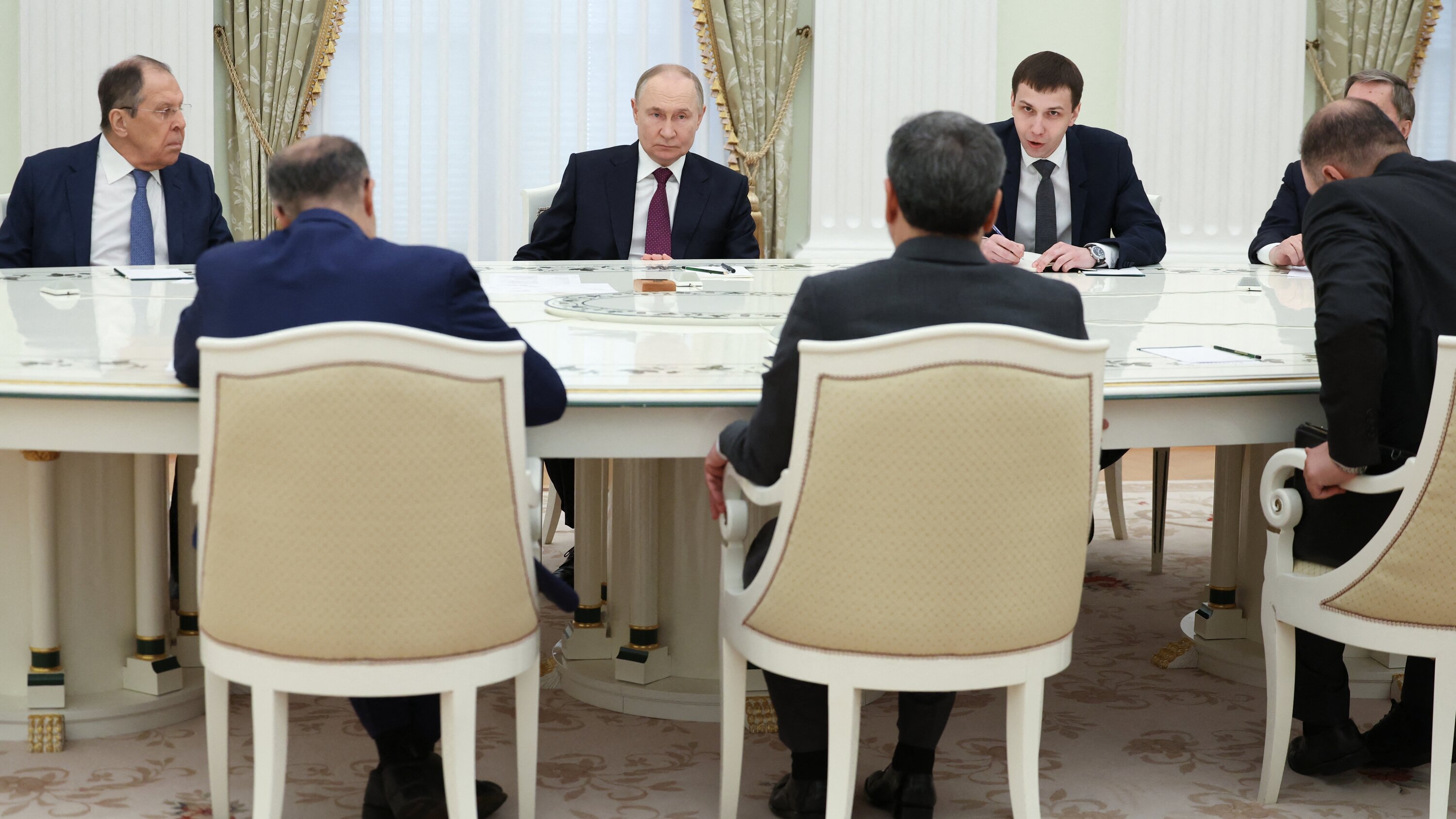

Russian President Vladimir Putin held urgent talks Saturday with UAE President Mohamed bin Zayed Al Nahyan as Moscow intensified efforts to prevent the escalating crisis surrounding Iran from triggering a wider Middle East war that could destabilize global energy markets, fracture Gulf security, and deepen confrontation between Russia and the West.
The Kremlin said the two leaders discussed “the crisis situation in the Middle East and around Iran,” underscoring mounting concern among regional powers that the military and political tensions engulfing West Asia are entering a dangerous new phase.
According to the Kremlin, Putin and Mohamed bin Zayed emphasized the need to continue a “political-diplomatic process” aimed at reaching “compromise peace agreements” that would account for the interests of all states in the region. The carefully worded statement reflected Moscow’s broader strategy of Putin expanding strategic alliances beyond the West while strengthening ties with Gulf monarchies increasingly wary of uncontrolled escalation.
The phone call came as rising tensions surrounding Iran continue to reverberate across the Gulf following months of military escalation involving Israel, the US, and Iranian-aligned forces. Regional governments have become increasingly concerned that the conflict could evolve into a prolonged multinational confrontation capable of disrupting critical maritime routes, energy infrastructure, and global oil supplies.
For Russia, the crisis presents both danger and opportunity.
Moscow has publicly condemned military pressure campaigns against Iran while simultaneously expanding Russia’s diplomatic engagement with Iran and Gulf states. Russian officials have repeatedly warned about the risks of escalation around Iran, saying continued confrontation could produce severe economic and geopolitical consequences far beyond the Middle East.
The Kremlin’s outreach to Abu Dhabi also reflects the growing strategic importance of the UAE in the rapidly shifting regional order.
Under President Mohamed bin Zayed Al Nahyan, the UAE has transformed itself into one of the Middle East’s most influential diplomatic actors, maintaining communication channels with Russia, China, the US, Iran, and Israel simultaneously. Analysts increasingly view Abu Dhabi as pivotal to UAE balancing regional security partnerships even as traditional alliances become more unstable.
Saturday’s discussion marked the latest in a series of high-level conversations between Putin and the Emirati leader since the regional crisis intensified earlier this year. In previous calls, both sides expressed serious concern about the deterioration of the military and political situation across the Middle East and urged an immediate halt to hostilities through diplomacy rather than military action.
The Kremlin statement on Saturday suggested that Moscow sees diplomacy as rapidly losing ground to military calculations.
While neither side disclosed details of possible mediation proposals, the language used by the Kremlin indicated growing urgency about preserving diplomatic channels before the conflict broadens further. Russia has attempted to present itself as one of the few major powers capable of speaking simultaneously with Tehran, Gulf monarchies, and regional actors opposed to Western intervention.
That balancing act has become increasingly delicate.
Russia’s strategic partnership with Iran has deepened dramatically in recent years as both countries confronted Western sanctions and geopolitical pressure. At the same time, Moscow has maintained Russia in constant touch with Iranian leadership while strengthening relations with Gulf powers concerned about Iranian military activity.
The UAE itself has faced rising regional pressure amid fears that Gulf states could become direct targets if the confrontation with Iran escalates further. Escalating tensions across the Persian Gulf have exposed vulnerabilities in regional defense systems and accelerated discussions among Gulf governments about long-term strategic autonomy.
At the same time, Abu Dhabi has sought to avoid being drawn fully into a regional military bloc against Tehran, preferring to preserve economic stability and strategic flexibility.
That approach has elevated the UAE’s diplomatic relevance at a moment when many traditional mediation channels are collapsing.
Putin also used Saturday’s call to thank the UAE leadership for humanitarian assistance connected to the Ukraine conflict. Abu Dhabi has maintained ongoing diplomatic channels between Moscow and Washington through mediation efforts involving prisoner exchanges and humanitarian negotiations.
The timing of the Putin-Mohamed bin Zayed conversation is particularly significant as fears grow over growing tensions in the Strait of Hormuz, one of the world’s most critical energy transit corridors. Roughly a fifth of global oil supplies traditionally pass through the narrow waterway, making any escalation there a major international concern.
The UAE has already accelerated efforts to reduce its dependence on the strait. Regional officials are increasingly warning about threats to Gulf energy infrastructure as military tensions intensify across the region.
Western governments, meanwhile, are increasingly worried that Russia could leverage the Iran crisis to expand influence across the Middle East while distracting attention from the war in Ukraine. Moscow’s broader strategy reflects Russia’s expanding Eurasian diplomatic strategy and wider efforts to reshape global power structures outside Western dominance.
The geopolitical shifts have also exposed divisions inside the expanding BRICS bloc as member states struggle to formulate unified responses to the escalating Middle East crisis.
For Gulf leaders, however, the immediate concern is less about great-power competition and more about survival in an increasingly volatile region where military escalation now appears capable of outrunning diplomacy.
Neither the Kremlin nor the UAE presidency indicated whether new regional initiatives or backchannel negotiations were discussed during Saturday’s conversation. But the tone of the call reflected a growing consensus among regional powers that the Middle East may be approaching one of its most unstable moments in years.
As Washington, Tehran, Tel Aviv, Moscow, and Gulf capitals continue recalibrating their strategies, the Putin-Mohamed bin Zayed talks underscored shifting geopolitical alignments beyond Western influence while highlighting fears of mounting instability near the Strait of Hormuz.
Diplomats across the region now fear that unless urgent negotiations resume, military escalation could soon overwhelm the remaining diplomatic channels. Russian officials have increasingly framed the crisis around Putin calling for a ceasefire in the Iran conflict, even as fighting and regional tensions continue to intensify.
—Inputs from Sputnik.