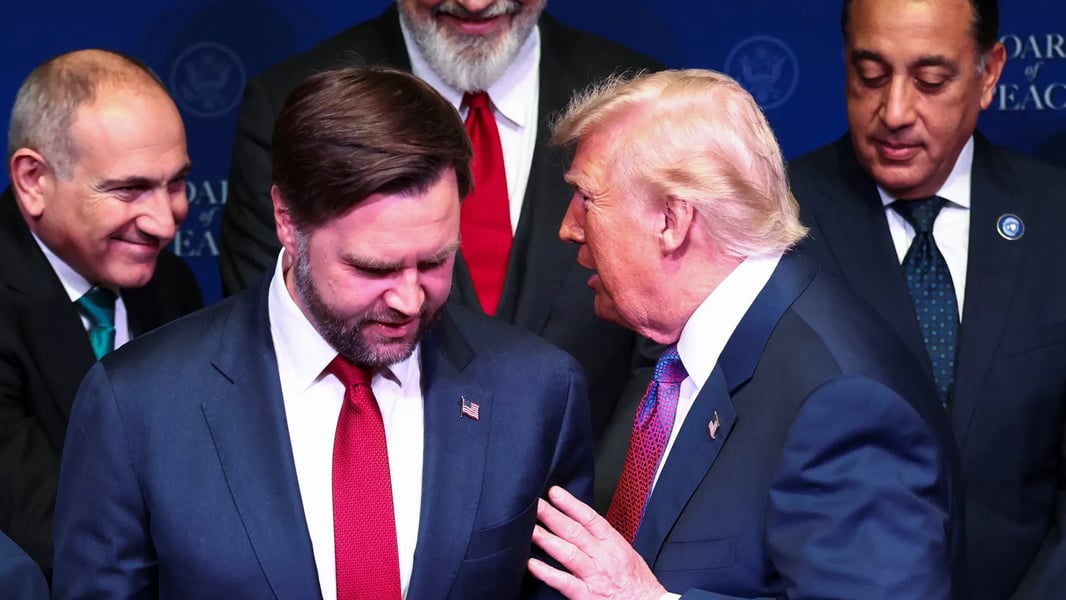

US Vice President JD Vance said Tuesday that the conflict with Iran would not spiral into another prolonged American military campaign in the Middle East, attempting to calm growing fears that Washington is sliding toward a new “forever war” despite continued tensions with Tehran.
“This is not a forever war. We’re going to take care of business and come home,” Vance told reporters at the White House while defending the Trump administration’s military and diplomatic strategy toward Iran.
The remarks come at a highly sensitive moment for the administration of President Donald Trump, which has spent weeks balancing military pressure, economic sanctions, and emergency diplomacy after months of escalating confrontation between Washington, Israel, and Tehran.
The crisis began on February 28 when the US and Israel launched coordinated strikes against Iranian targets, triggering retaliatory attacks by Tehran against Israeli territory and American military facilities across the Middle East. Since then, the region has remained on edge amid fears that the conflict could evolve into a broader regional war involving Gulf states and key shipping lanes.
Although Washington and Tehran announced a temporary fragile ceasefire on April 7, negotiations aimed at transforming the pause into a lasting agreement have repeatedly stalled. Diplomatic talks held in Islamabad reportedly ended without a breakthrough, forcing the Trump administration to extend the cessation of hostilities while backchannel negotiations continue.
Vance insisted Tuesday that the White House remains focused on preventing Iran’s nuclear program from advancing while avoiding a prolonged occupation or regime-change campaign. He said the administration believes both sides are still interested in reaching a settlement that could stabilize the region and reopen critical energy routes.
The Strait of Hormuz crisis remains one of the central flashpoints in the standoff. The strategic waterway, which handles a significant portion of global oil shipments, has faced repeated disruptions during the conflict, pushing energy prices sharply higher and intensifying pressure on world markets. Reuters reported that oil prices fell slightly Tuesday after Vance signaled progress in negotiations with Tehran.
President Trump has publicly claimed that he was “an hour away” from authorizing another major strike against Iran before deciding to delay military action due to ongoing diplomacy and pressure from Gulf allies including Saudi Arabia, Qatar, and the UAE.
Despite the diplomatic language, Washington has continued to maintain a hardline military posture. Vance warned this week that the US remains locked and loaded and prepared to resume military operations if Tehran refuses to accept guarantees preventing the future development of nuclear weapons.
The Trump administration has repeatedly argued that its campaign is fundamentally different from the long wars fought in Iraq and Afghanistan. Secretary of State Marco Rubio previously stated that US operations against Iran were expected to last “weeks, not months,” emphasizing that Washington does not intend to deploy large-scale ground forces into the country.
Still, skepticism continues to grow among analysts and sections of the American public who fear that limited operations could gradually expand into another costly regional conflict. The administration’s messaging has occasionally appeared inconsistent, with different officials offering conflicting timelines and military objectives.
Vance himself has faced scrutiny over his position on the war. Before becoming vice president, he frequently criticized earlier US military interventions in the Middle East and warned against endless foreign entanglements. Since the outbreak of the Iran conflict, reports have suggested that Vance was among the more cautious voices inside the administration regarding deeper military escalation.
Reuters previously reported that Vance sought to reassure conservative voters that Trump would avoid “the mistakes of the past” and prevent the conflict from evolving into a permanent military commitment.
At the same time, the White House continues to increase economic pressure on Tehran. New sanctions targeting Iranian financial networks, shipping entities, and regional supply chains have been announced in recent days as Washington attempts to weaken Iran’s ability to sustain long-term resistance.
Iran, meanwhile, has demanded lifting of sanctions, reparations for war-related damage, and a withdrawal of American military forces from parts of the Middle East as part of any future agreement. Tehran has also insisted that its sovereignty and regional security interests must be recognized before a permanent settlement can be reached.
The broader geopolitical implications of the crisis are becoming increasingly visible. The war has disrupted shipping disruptions, affected global energy supply chains, and intensified diplomatic maneuvering involving China, Russia, Pakistan, and Gulf monarchies attempting to prevent further escalation.
Analysts say the coming weeks may determine whether the ceasefire evolves into a fragile diplomatic breakthrough or collapses into another round of military confrontation.
For now, Vance and the Trump administration are trying to convince Americans that the conflict remains controlled, limited, and temporary. But with negotiations still unresolved and military assets positioned across the region, uncertainty surrounding the future of the US-Iran confrontation continues to grow.
—Inputs from Sputnik.