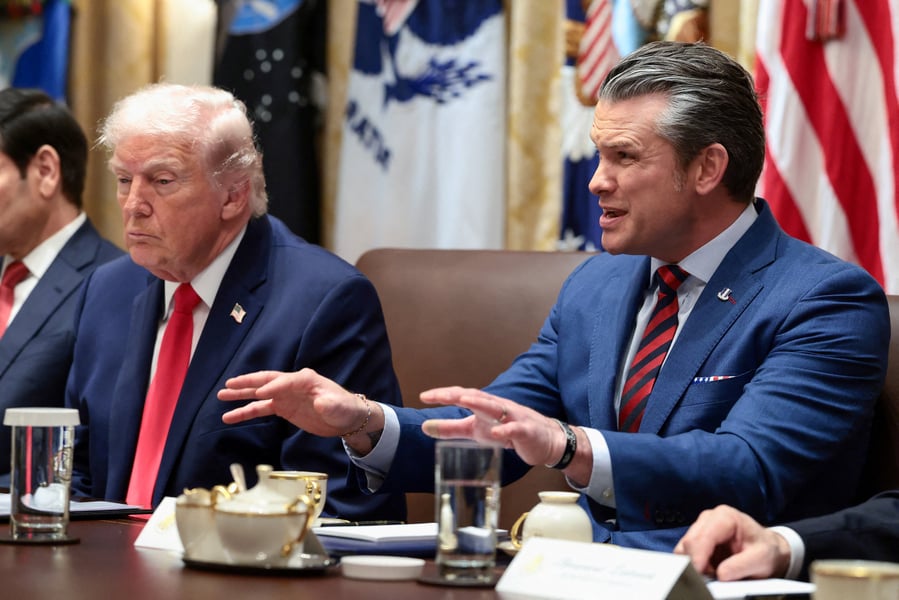

President Donald Trump abruptly shifted a rare Cabinet retreat from Camp David back to the White House on Wednesday as intensifying tensions with Iran, fragile ceasefire negotiations and mounting domestic political pressure converged into one of the most volatile moments of his second term.
The administration had initially planned to gather senior officials at the secluded presidential retreat in Maryland for high-level discussions centered on Iran, economic anxieties and broader national security concerns. But the White House confirmed the meeting would instead take place in Washington after Trump cited poor weather conditions that could disrupt helicopter travel to Camp David.
While the official explanation focused on logistics, the timing of the decision immediately fueled speculation about growing instability surrounding the White House response to the widening Iran crisis.
Trump’s Cabinet meeting convened amid increasingly fragile Iran negotiations between Washington and Tehran following nearly three months of military confrontation across the Middle East. Although the president has repeatedly claimed a peace framework is close, recent US strikes on Iranian military assets complicated the diplomatic landscape and triggered renewed fears of military escalation.
The latest strikes reportedly targeted Iranian missile infrastructure and mine-laying vessels that US officials said posed threats to regional shipping lanes and American military positions. Iran responded by accusing Washington of violating ceasefire understandings while insisting retaliation remained possible.
At the center of global concern remains the Strait of Hormuz, the strategic waterway through which a major portion of the world’s oil supply flows. Secretary of State Marco Rubio attempted to calm markets by declaring the passage would remain open “one way or the other,” but energy traders and geopolitical analysts remain wary of further disruptions to shipping routes.
The uncertainty surrounding the negotiations has already started affecting oil markets and investor sentiment. Brent crude prices climbed after reports of renewed military activity, reviving fears of inflationary pressure and economic volatility at a politically dangerous moment for the White House.
The Cabinet meeting also comes as Trump faces signs of weakening political momentum domestically. Several reports indicate declining approval ratings and rising economic pessimism are creating anxiety within Republican circles ahead of the midterm election cycle.
Trump has attempted to frame the Iran negotiations as a historic diplomatic breakthrough that could expand the Abraham Accords and reshape Middle East alliances. The administration is reportedly encouraging countries including Saudi Arabia, Qatar, Pakistan, Turkey, Egypt and Jordan to join an expanded regional framework tied to any final agreement with Tehran.
But the proposal has generated skepticism both internationally and within Trump’s own political coalition.
Some Republican allies fear the emerging framework could allow Iran to preserve strategic leverage despite months of conflict and sanctions relief pressure. Others worry that compromises over uranium stockpiles and a potential uranium freeze arrangement could weaken the administration’s hardline image heading into a contentious election season.
The Cabinet gathering carried additional political significance because it is expected to be among the final major meetings attended by Director of National Intelligence Tulsi Gabbard before her anticipated departure next month. Gabbard previously faced criticism after publicly suggesting Iran was not actively pursuing nuclear weapons prior to recent US military attacks against Iranian nuclear-linked facilities.
Her strained relationship with parts of the administration has become symbolic of broader internal disagreements over how aggressively the United States should confront Tehran.
The symbolism surrounding the presidential retreat also added another layer of intrigue to the developments.
Historically, Camp David has served as the backdrop for some of America’s most sensitive diplomatic negotiations, most famously the Camp David Accords brokered by President Jimmy Carter in 1978. Trump, however, has rarely used the site compared with previous presidents, preferring his own private properties for many official gatherings.
That made the decision to initially hold the Cabinet meeting there particularly notable, especially as the White House tried to project stability and control during a rapidly evolving geopolitical confrontation.
Instead, the abrupt return to Washington reinforced the sense that the administration is operating under growing pressure as events move quickly across multiple fronts.
Trump continued projecting confidence publicly, insisting negotiations remain alive despite military flare-ups and increasingly hostile rhetoric from Tehran. Yet conflicting signals from the White House, Pentagon officials and diplomatic intermediaries have contributed to confusion about how close any actual breakthrough may be.
Meanwhile, concerns persist that any collapse in negotiations could ignite broader regional instability involving Hezbollah in Lebanon and potentially disrupt commercial shipping routes across the Gulf.
For Trump, the stakes are both geopolitical and deeply political.
A successful agreement with Iran could allow the president to present himself as a dealmaker capable of ending another Middle East conflict while stabilizing energy markets before the midterms. Failure, however, risks triggering further military escalation, economic uncertainty and renewed criticism over his administration’s foreign policy strategy.