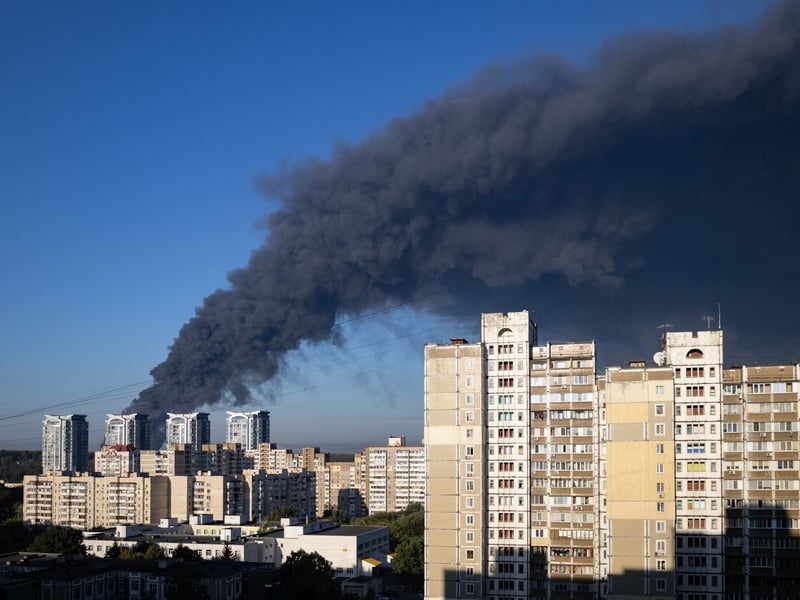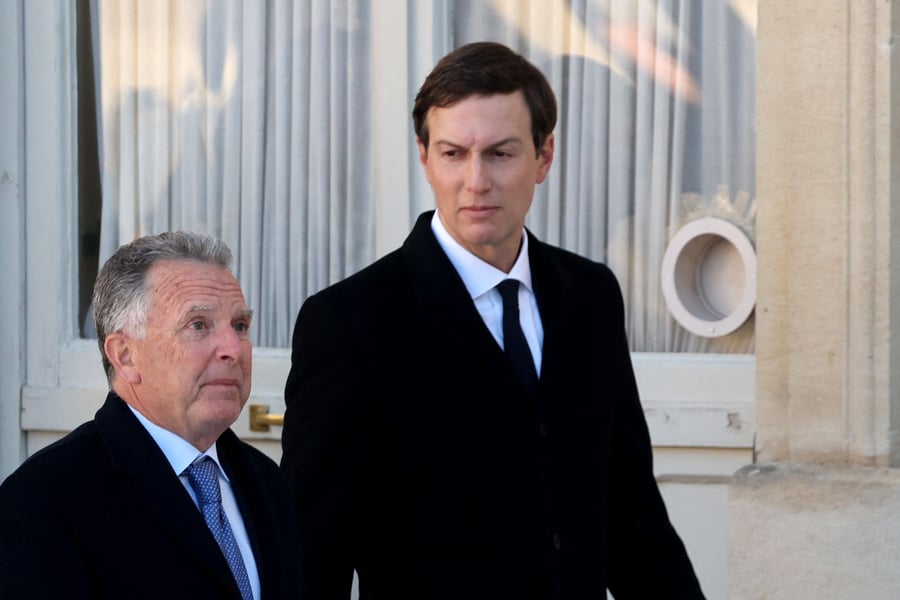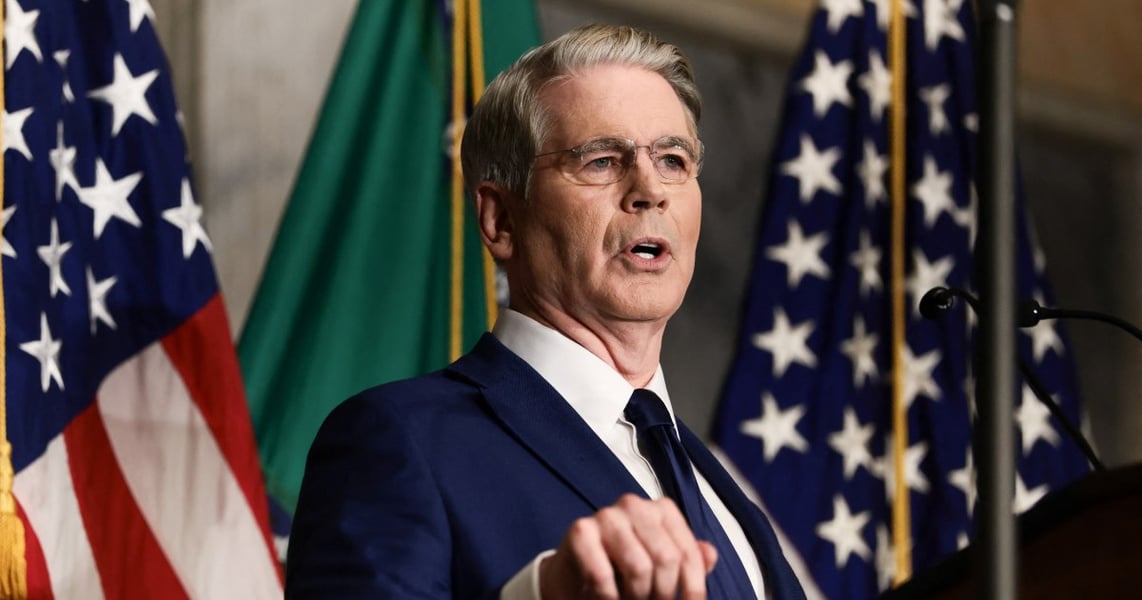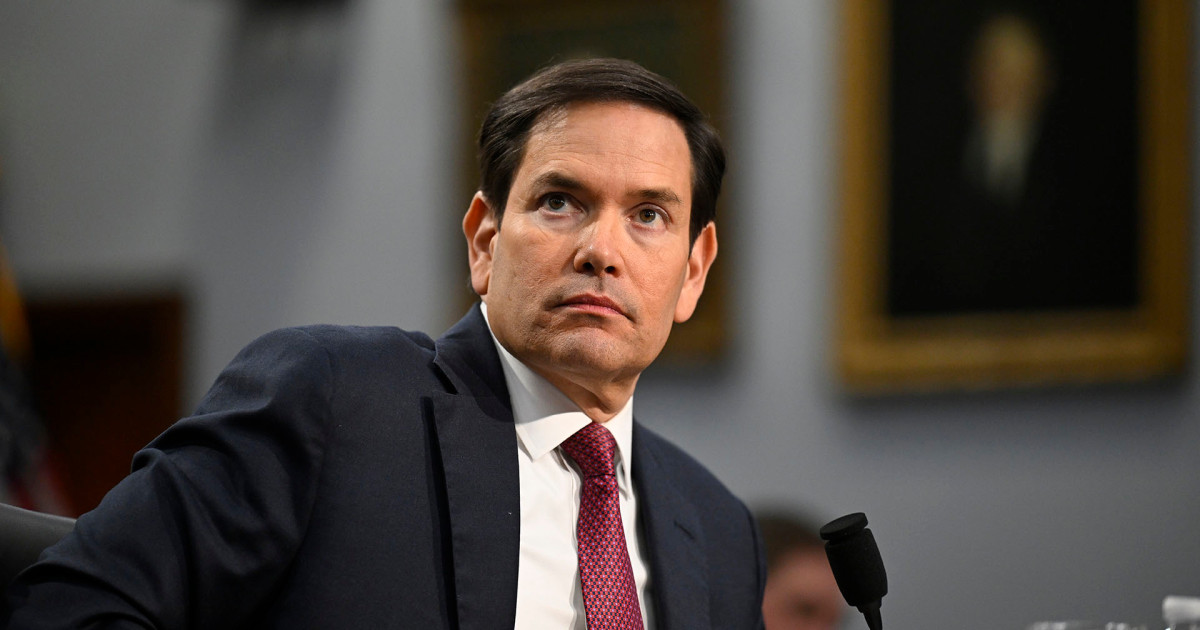

WASHINGTON — By the time the Group of Seven leaders arrive at the Hôtel Royal in Evian-les-Bains in thirteen days, the war in Ukraine will have been raging for more than four years. That math was not lost on Marco Rubio on Tuesday, when the secretary of state told the Senate Foreign Relations Committee that the conflict would inevitably dominate a summit of nations that, taken together, bear a direct stake in its outcome.
“The Russia-Ukraine conflict will always come up,” Rubio said, testifying before the committee during a budget hearing that sprawled far beyond its nominal subject. “Because obviously it directly impacts at least three or four of those members who are on the continent.” He also confirmed that France, which holds the G7 presidency this year and is hosting the June 15-17 summit at the Alpine resort on the shores of Lake Geneva, had extended an invitation to Kyiv to participate in the discussions.
The confirmation matters for reasons that extend well past protocol. Ukraine’s seat at the table — even as an invitee rather than a full member — signals that allied governments are not prepared to treat the war as background noise to the summit’s formal agenda. At the same time, it lands at a moment when Washington’s commitment to the Ukrainian cause is, at minimum, contested terrain. The same week Rubio was on Capitol Hill, the Pentagon had not ruled out redirecting military matériel originally earmarked for Kyiv toward operations in the Middle East. What Kyiv’s delegation will find in Evian — resolute allies or a coalition quietly recalibrating — is a question the summit itself cannot yet answer.
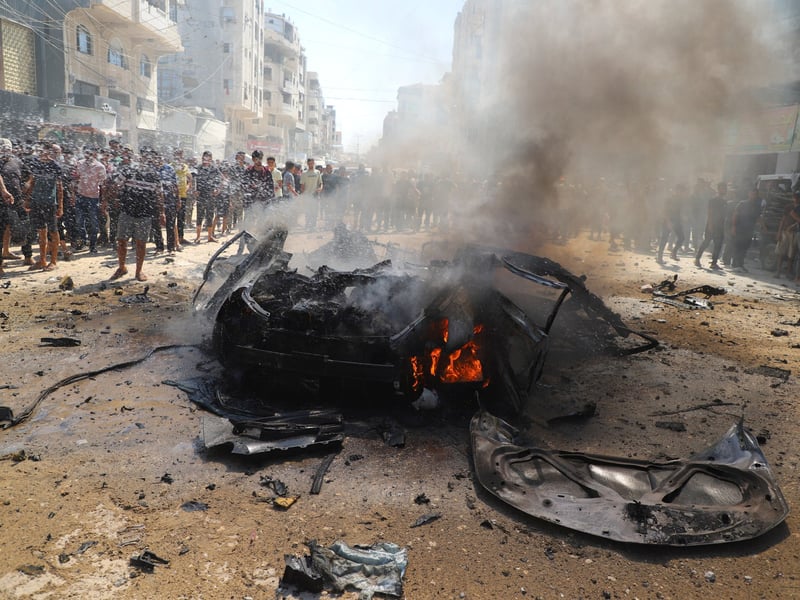
Rubio’s appearance before the Foreign Relations panel was his first public congressional testimony since the Trump administration launched strikes against Iran earlier this year. Iran’s retaliatory campaign and the effective closure of the Strait of Hormuz have consumed diplomatic bandwidth that, in any earlier moment, would have been focused almost exclusively on Eastern Europe. Tuesday’s hearing made plain how much the two crises now compete for the same attention, the same resources, and the same coalition.
He was pressed at points on the administration’s Ukraine posture, which has lurched between insistence that America has contributed more to the war than any other nation and suggestions, floated by the president himself, that the conflict is ultimately not Washington’s to resolve. Rubio did not resolve that tension on Tuesday. What he offered instead was a structural observation: when you put Canada, France, Germany, Italy, Japan, the United Kingdom, and the United States in the same room, the war in Ukraine — fought on the doorstep of three of those countries — does not stay off the agenda regardless of what the official agenda says.
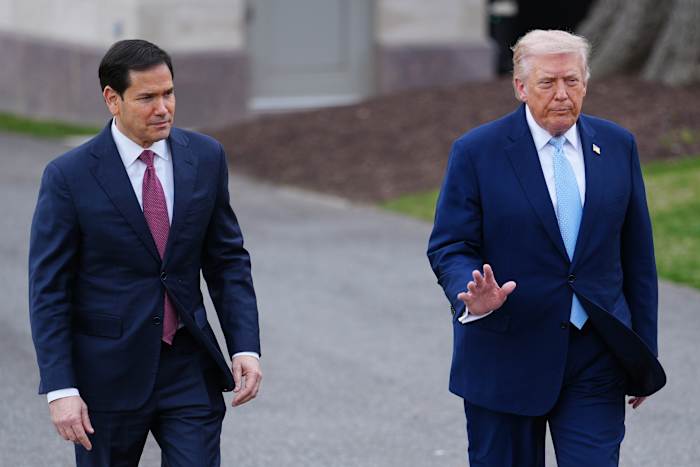
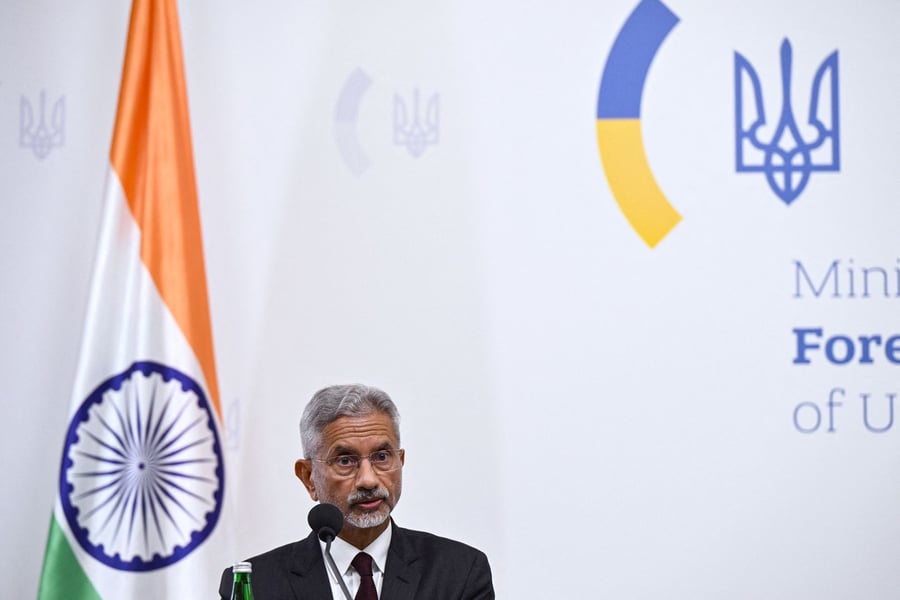
France’s decision to invite Kyiv follows a pattern established at recent summits, where Ukraine’s foreign minister has participated alongside delegations from Brazil, India, and South Korea. According to Reuters, continuing support for Ukraine and the formidable long-term cost of reconstruction are expected to rank among the summit’s first-tier concerns, alongside the fallout from the Iran conflict and China’s expanding strategic footprint.
The summit venue carries its own weight. Evian-les-Bains last hosted a gathering of this scale in 2003, when the G8 met at the same Hôtel Royal under French presidency — a summit overshadowed then, as this one risks being overshadowed now, by a parallel crisis that no amount of Alpine scenery could contain. That year it was the Iraq war. This year, it is two.
The geometry of the G7 on Ukraine has shifted since Russia’s full-scale invasion began in February 2022. Europe’s three G7 members — France, Germany, and Italy — have at various moments diverged from Washington over the pace of arms deliveries, the terms of any eventual settlement, and the wisdom of pushing Ukraine toward the negotiating table before Kyiv’s military position warranted it. Those divergences did not go away when the Iran war opened a new front; a heated exchange between Rubio and EU foreign policy chief Kaja Kallas at a G7 foreign ministers meeting in March laid the fault line bare. Kallas pushed for harder pressure on Moscow; Rubio, according to three people in the room, told his European counterparts that if they believed they could manage the war better, the United States was prepared to step aside.
Whether that exchange has shaped the atmosphere ahead of Evian, or whether it has been overtaken by the more immediate urgencies of the Iran ceasefire, remains unclear. What Rubio’s testimony confirmed Tuesday is the baseline: Ukraine will be at the table, the war will be on the agenda, and the seven governments convening in the French Alps on June 15 have not yet agreed on what they want the outcome to look like.
For Kyiv, the invitation itself is not a concession — it is the minimum. What President Volodymyr Zelenskyy’s government will be watching for in Evian is something harder to deliver: a unified position from Washington and its European partners on what comes next. That, according to people familiar with the pre-summit diplomatic track, this desk has found no indication is yet settled.
Rubio is due to continue his congressional testimony through Wednesday, appearing before the House Foreign Affairs Committee and the Senate Appropriations subcommittee on State Department funding. The G7 summit in Evian opens in thirteen days. Eastern Herald has contacted the State Department for additional comment on the scope of Ukraine’s participation and had not received a response at time of publication. Also among Tuesday’s subjects at the hearing: Rubio’s remarks on Western Hemisphere nations and their obligations to US cooperation priorities.
—Inputs from Sputnik.