
TEHRAN — The pause came with a warning, not a concession.
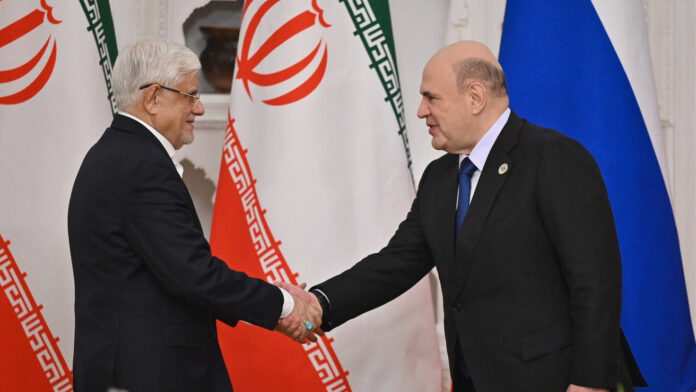
Iran’s Khatam Al-Anbiya Central Headquarters, the military command that coordinates the country’s armed forces during active operations, announced on Monday that it was suspending its offensive against Israel. The language chosen was deliberate and conditional: Lebanon, not Israeli territory, is the line that matters. “The cessation of armed forces operations is announced,” the command said in a statement carried by Iranian state media. “However, it is emphasized that if the aggression and acts of malice continue, including in southern Lebanon, much more severe and crushing measures than before will be forthcoming.”
The clause about southern Lebanon is the operative sentence. Israel and the United States have consistently maintained that the April 8 ceasefire — brokered by Pakistan and mediated by the U.S. — applies only to direct hostilities between Iran and Israel, not to Israeli military operations in Lebanese territory. Tehran has insisted from the outset that Lebanon is inseparable from the broader truce framework. Monday’s statement is the clearest expression yet of what Iran considers its tripwire: not an Israeli strike on Iranian soil, but continued Israeli operations against Hezbollah and southern Lebanese communities.
That framing makes the current pause structurally different from a ceasefire. Iran’s military command did not declare an end to hostilities. It declared a suspension — one tied explicitly to behavior it cannot control and that the other side does not recognize as part of any agreed boundary.
The exchange on Monday was itself a significant rupture. Iran fired a barrage of ballistic missiles at Israeli military sites, including Nevatim and Tel Nof air bases, after what the IRGC described as Israeli violations of the ceasefire through continued bombardment of Beirut’s southern suburbs. Israel’s ambassador to the United States, Yechiel Leiter, confirmed that eleven ballistic missiles had been launched. Israel responded by striking Iranian surface-to-air missile infrastructure. The exchange marked the first direct fire between the two countries since the April truce took effect — the 100th day of a conflict that began with coordinated U.S.-Israeli strikes on Iran in late February.
President Donald Trump, whose administration has staked enormous diplomatic capital on closing a final deal with Tehran, intervened publicly. “Israel and Iran must immediately stop ‘shooting,'” he wrote on social media Monday morning. Within hours of Iran’s suspension announcement, Trump claimed a broader outcome, posting that both sides were pursuing “an immediate CEASEFIRE” and that “final negotiations on ‘Peace’ are proceeding.” He warned, without elaboration, that “stupidity” could derail them, and confirmed that the U.S. naval blockade of Iranian ports would remain in place until a comprehensive deal is signed.
Whether Trump’s framing matches Tehran’s is unresolved. The Khatam Al-Anbiya statement did not describe the suspension as a step toward a final deal. It described it as a measured response to a lesson delivered — a framing that preserves Iran’s ability to re-escalate without contradicting its own narrative. The Fars news agency, which carried the statement, emphasized the conditional language. The Iranian Embassy in New Delhi had previously circulated similar language on behalf of the headquarters, warning that “devastating operations” would follow continued Israeli aggression against Lebanon.
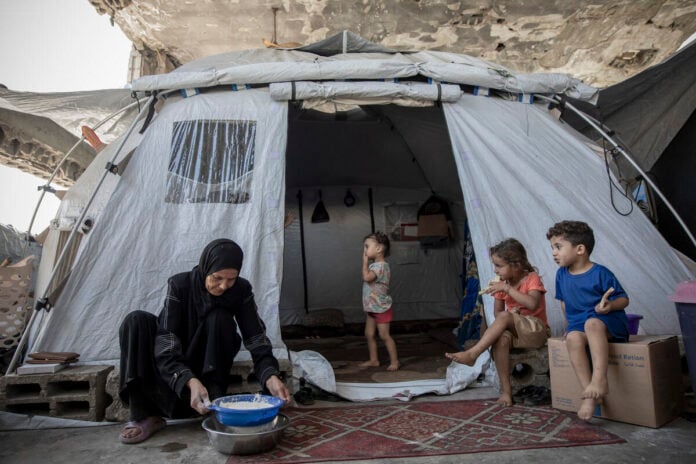
On the ground in Lebanon, the numbers make the Iranian position harder to dismiss as rhetoric. According to Lebanese officials cited by CNN, Israel carried out 3,491 air raids between April 17 and June 7 — a period nominally covered by the ceasefire framework — along with 407 bombing operations and six bulldozing operations that leveled entire villages. More than 3,500 people were killed and over 10,700 wounded. The World Food Program described a deepening humanitarian emergency. The United Nations said it was “deeply alarmed.”
The broader diplomatic picture remains deadlocked over sequencing: Iran wants frozen assets released before signing; the U.S. wants a signed deal before releasing anything. That impasse predates Monday’s exchange of fire and was not resolved by it. What changed on Monday is the operational tempo — Iran chose to strike, then chose to stop, and attached conditions to the stopping that ensure the next trigger is already visible. Whether Israel will alter its conduct in Lebanon to avoid crossing that line is a question neither Tehran nor Washington appears to have answered.
On Day 100 of the conflict, Benjamin Netanyahu has shown little sign of subordinating Israel’s Lebanon campaign to external pressure, including from Washington. Trump said last week, as the Times of Israel reported, that Netanyahu “won’t have any choice” and that “I call all the shots.” The Israeli prime minister has not visibly adjusted course. What that means for Iran’s stated conditions — and for the suspension declared on Monday — remains the central uncertainty in a conflict that has spent two months failing to end.