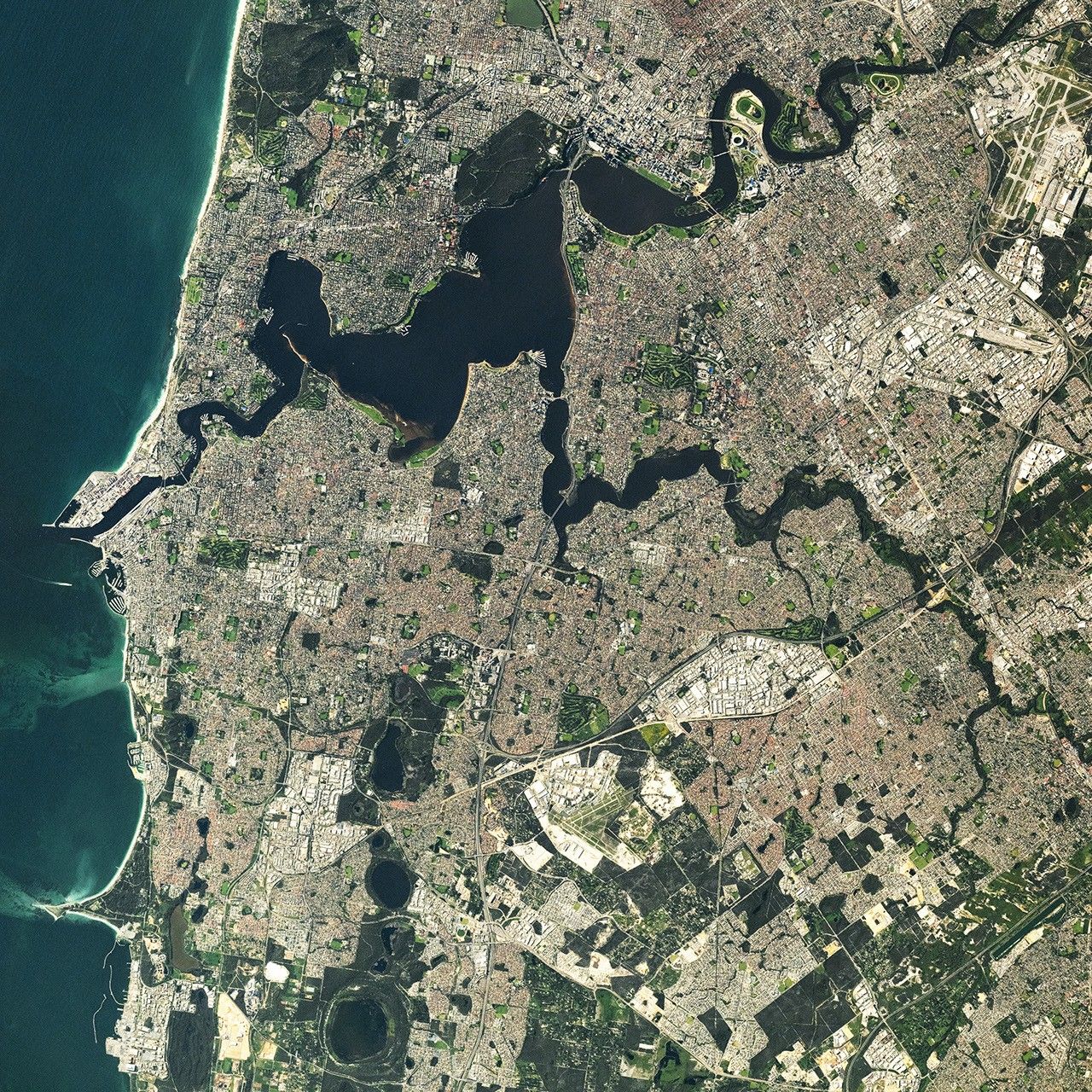

PERTH — Eighteen new community batteries will be wired into Western Australia’s electricity grid over the next year, the federal and state Labor governments announced on Saturday, the same week the Australian climate minister and COP31 negotiations president was in Bonn telling reporters that the world needs to get off fossil fuels. The batteries are a 6.6-megawatt addition to the country’s distributed-storage capacity, modest at the absolute scale of the Australian National Electricity Market but politically the part of the energy transition the Labor government is using to demonstrate that the international ambition has domestic delivery to back it up.
The 25-million-dollar project, of which 9.34 million dollars is federal funding through the Australian Renewable Energy Agency, will install 13 batteries across Perth and 5 in Bunbury. Western Power, the state-owned distribution-network operator, will own and run the units; the design connects roughly 130 households per metropolitan battery and a combined 3,600 households across the Bunbury sites. The federal assistant minister for climate change and energy, Josh Wilson, framed the announcement as helping the network make the most of the abundant solar generated during the day by storing and releasing it during the evening peak, the technical problem distributed batteries are designed to solve.
The substantive context is the Australian rooftop-solar build-out. Australia leads the OECD in per-capita household solar installation; rooftop arrays now produce about 15.8 percent of the country’s grid supply and 4.09 gigawatts on the average quarter. The volume produces a network-management problem the country has been negotiating in real time for a decade. Daytime solar generation routinely exceeds local demand, the network exports the surplus, the wholesale spot price collapses, and the late-afternoon peak still has to be met by something other than the solar that has already cleared. Community batteries are the cheapest technology available to absorb the daytime surplus and re-release it into the evening peak.
The numbers behind the Saturday announcement are the part the international press has tended to underplay. Since July 2025, when the Albanese government’s Cheaper Home Batteries program took effect, more than 45,000 household and small-business batteries have been installed across the country. The Australian Energy Market Operator’s grid-scale battery fleet now totals 482 megawatts across 10 regional projects, with another 2.3 gigawatts under construction. Renewables supplied 46.5 percent of the National Electricity Market in the first quarter of 2026, a new quarterly high, and have run ahead of coal on a monthly basis since September 2025. The build-out is the operational answer to the question every climate diplomat is asked: is your domestic policy keeping up with the rhetoric.

The COP31 diplomatic connection is the part the timing makes explicit. Chris Bowen told an AFP reporter at the Bonn UN climate talks this week that the world needs to get off fossil fuels, the most direct statement of phase-out language a sitting Australian government minister has made on the record. The contradiction his presidency has been negotiating is the export side of the Australian fossil-fuel industry, which is the second-largest in the world by coal volume. The domestic-renewables side of the same minister’s portfolio is the part that gives him standing to make the international argument; the Saturday batteries announcement is part of that case.
The state-level politics matter to how this works. Western Australia, the largest state by area and the second-largest by gas production, has been running its electricity grid on a separate network from the eastern seaboard for historical reasons, and the state Labor government under Premier Roger Cook has been able to design its own decarbonisation pathway in parallel with the federal one. The Cook government has committed to closing all of its remaining coal generation by 2030 and to replacing it with a combination of utility-scale solar, wind and storage; the community batteries are the distribution-side piece of that build-out. The state’s energy minister, Amber-Jade Sanderson, has signalled the federal-state cooperation is the model the federal government wants to scale to New South Wales and Queensland, where Coalition state governments have been less willing partners.
The energy-security context is the framing the Australian story now sits inside. Al Jazeera reported in April that the war on Iran and the closure of the Strait of Hormuz have left Australia’s eastern-seaboard LNG market exposed to the same shocks the European TTF benchmark has been absorbing, and that the domestic-renewables build-out has, against the run of media attention, become the single most consequential policy lever the country has against the price moment. The community-batteries program is one of the cheapest pieces of that lever.
The transition arithmetic Australia is operating under has, in turn, a global context. The European Union finalised its ETS2 carbon-market design this week, the United States sent California’s vehicle-emissions waivers to Congress for repeal, and California Governor Newsom released the first 46 million dollars of state climate-bond money for the Tijuana River sewage crisis the same day. The Australian story is the operational counter to the American one: a national government that is reducing fossil-fuel domestic dependence while continuing to ship fossil fuels abroad, a posture the European Union’s Green Deal architecture has not had to navigate at the same scale and the United States is not interested in attempting.
The G7 summit in Évian opens Monday with climate as the eighth agenda item, behind the Israel-Iran war and the Strait of Hormuz energy shock. Australia is not a G7 member, and Bowen’s diplomatic vehicle is the parallel UN climate track, but the COP31 negotiations are not a vacuum. The signal the European delegations will be reading at Évian on Monday is whether the Australian domestic-renewables build-out is the political model that survives the energy-price moment. The Saturday batteries announcement is one of the data points the European staff will be tracking.
The substantive constraint on Australia’s transition trajectory is the same one the country has been negotiating with itself for a decade. The 82-percent-by-2030 renewable-generation target the Labor government took to the 2022 election is, on current installation pace, not reachable. The Clean Energy Council has been arguing for the past year that the federal government needs to double the build-out rate of utility-scale projects to stay on the trajectory; the state-federal community-batteries program will not by itself close that gap. What the batteries do is fix the distribution-side bottleneck that is making the existing rooftop-solar fleet less valuable to the grid than it should be, which is a separate constraint with a separate solution.
The first of the 18 Western Australian batteries will be installed in the Perth metropolitan area within ninety days, the Cook government said on Saturday; all 18 will be operational by mid-2027. The Bunbury units, which serve the smaller regional grid south of the metropolitan area, will be commissioned in stages through the second half of 2026. The federal funding round currently open, the second tranche of the Community Batteries for Household Solar program, has 46.3 million dollars left to allocate and will announce its next round of awards through April and May. The international audience for the announcement is the people Bowen will be reading the Saturday press release to in Bonn on Monday.
Related Posts