
TEHRAN – The Doha round produced, among other things, this gap: Trump told reporters after it concluded that “the denuclearization of Iran is moving along well.” The same day, Iran’s parliament speaker Mohammad Bagher Ghalibaf told state television that inspectors from the International Atomic Energy Agency will not be permitted to visit Fordow, Natanz, or Isfahan – the three facilities at the center of any serious nuclear access framework. “Access to sites that have been bombed and damaged is not allowed under any circumstances,” ANI News reported Ghalibaf as saying. “This is the law.”
The law he cited is real. Both the Majlis and the Supreme National Security Council have enacted restrictions prohibiting IAEA access to sites damaged in the US-Israeli strikes. Those restrictions have the force of Iranian domestic statute. Reversing them would require a parliamentary act, an SNSC repeal, or both. The distance between Trump’s “moving along well” and Ghalibaf’s “under any circumstances” is not rhetorical. It is the distance between what Washington believes Phase 2 of the Islamabad MoU must produce and what Tehran has placed outside the frame of what negotiators can offer.
Ghalibaf was not alone in stating this position. Iran’s deputy foreign minister and Doha negotiator Kazem Gharibabadi also confirmed after the round concluded that IAEA inspectors cannot visit nuclear sites bombed by the United States. The position was not stated as a negotiating posture to be traded away. It was stated as a boundary condition – something the working groups, once they convene, will not be in a position to change through technical discussion alone.
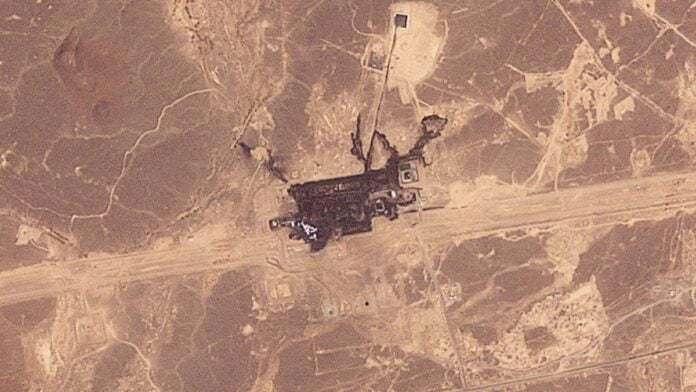
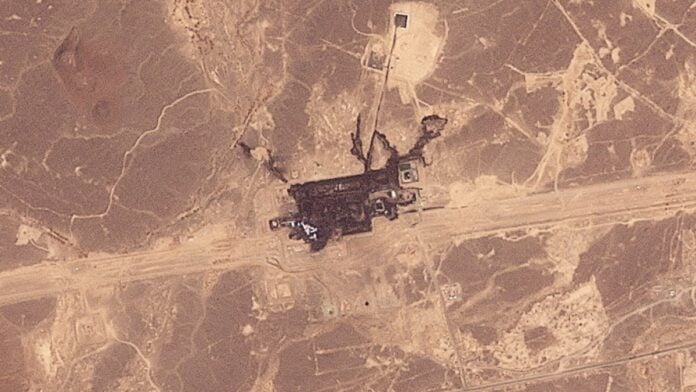
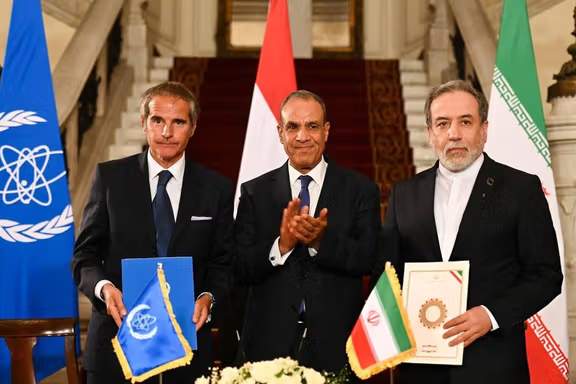
What the IAEA can currently access is narrow. Bushehr Nuclear Power Plant in southern Iran remains open to inspectors. The Tehran Research Reactor remains accessible. Everything else – the Fordow enrichment facility buried under a mountain near Qom, the Natanz complex that was the center of Iran’s uranium enrichment program, the Isfahan uranium conversion plant – sits behind the parliamentary and SNSC bar. Those three sites are also where the most consequential questions about Iran’s nuclear program are lodged: how much enriched uranium remains, at what level, whether enrichment equipment survived the strikes, and whether any weapons-relevant material was transferred before the bombing began.
The technical talks in Doha addressed Hormuz transit and frozen assets. The nuclear inspection file was not on the formal agenda. JD Vance said nuclear discussions “would start soon.” No round has yet been scheduled. The working groups that Phase 2 requires have been constituted but formal negotiations within them have not begun. The next round cannot begin until after the burial of Ayatollah Ali Khamenei’s father concludes on or after July 9 – a mandatory pause in the diplomatic calendar that gives the existing positions more time to harden before they are tested in a room.
Iran’s framework for what “IAEA access” means is also narrower than the MoU’s language might suggest. The Islamabad MoU’s 14 points do not explicitly specify which sites will be inspected or at what level of access – that ambiguity was a feature of the agreement that let both sides sign while holding incompatible downstream positions. Iran’s statutory bar on access to bombed sites was in place before the MoU was signed; it was not resolved by signing. Washington has treated the agreement as a framework inside which nuclear access will be negotiated. Tehran has treated it as a framework inside which nuclear access is already defined by its own laws.
Phase 2 will eventually need to produce a shared answer to what IAEA access looks like at Fordow, Natanz, and Isfahan. Iran’s parliament and SNSC have said categorically what the answer is from their side. The working groups are constituted but have not yet met. The 45-day window has 38 days remaining, the burial pause has not yet begun, and the next round has not been scheduled. Washington has not been specific about what nuclear access it requires from Phase 2. Both sides have been specific about the distance between them.