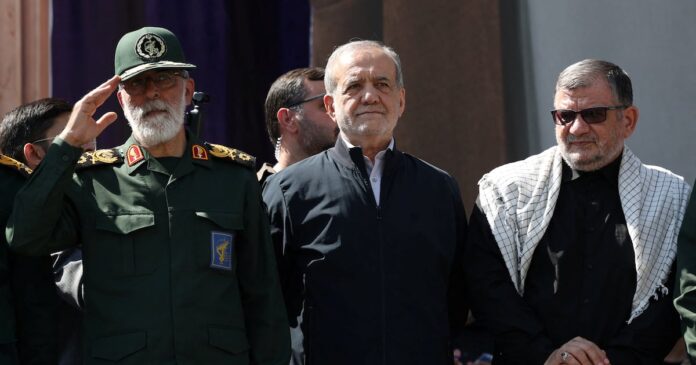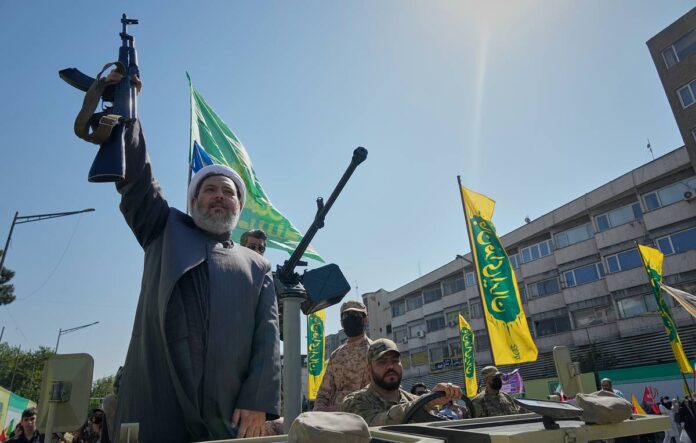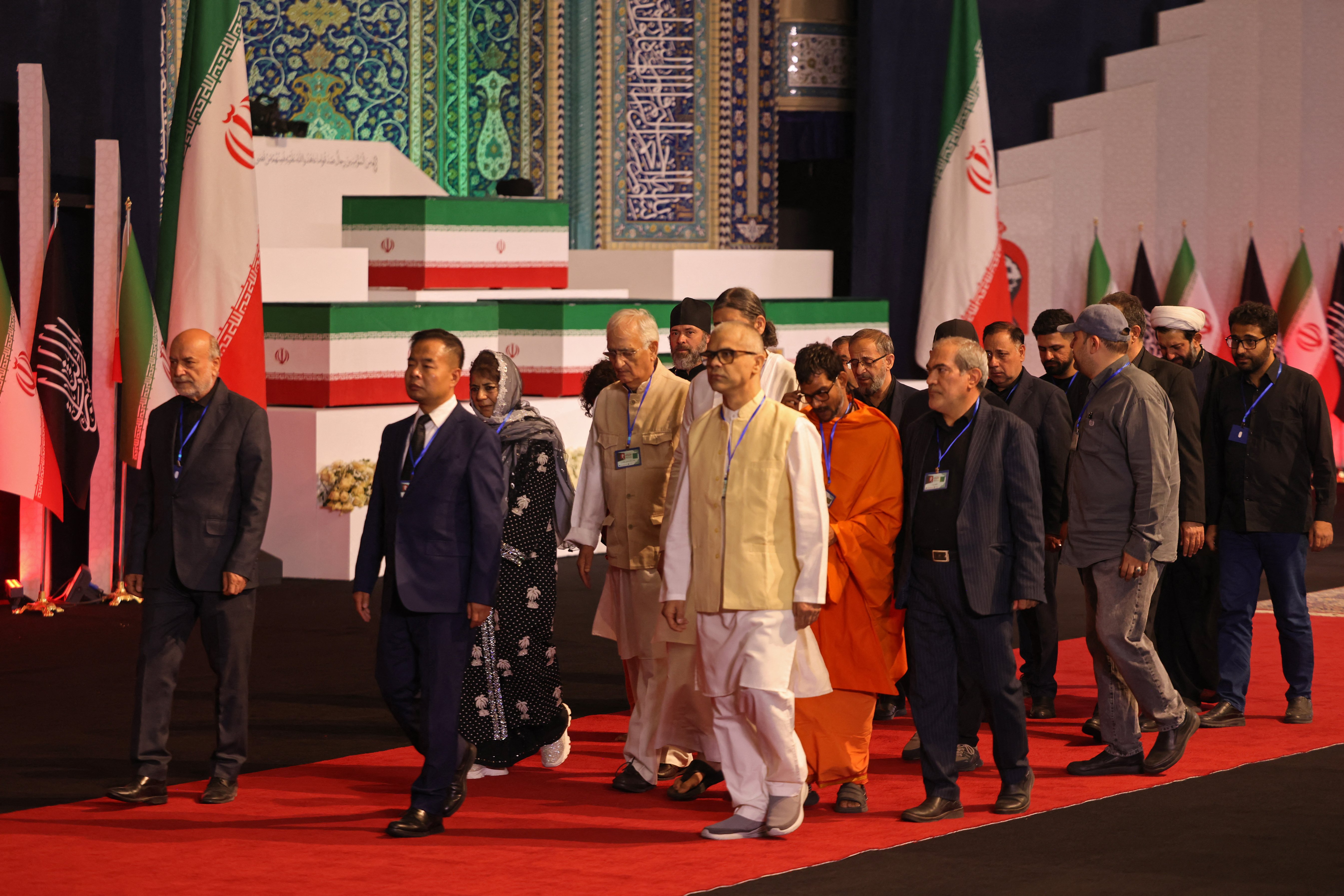

TEHRAN – The smallest coffin arrived last. Wrapped in green cloth alongside the flag-draped caskets of Iran’s assassinated supreme leader and three other family members killed in the same airstrike, the remains of a three-year-old girl were carried through streets lined with millions on Friday as Tehran opened seven days of mourning for Ali Khamenei.
Khamenei was killed on February 28, 2026, when a joint US-Israeli strike hit a compound in the capital where he had gathered with his family. He was 85. His daughter, his daughter-in-law, his son-in-law, and his granddaughter died alongside him. They will be buried together at the Imam Reza shrine in Mashhad on July 9, at the close of a procession that moves through Tehran, Qom, and Iraq before the final interment.
For many in the crowds, the ceremony carries a dimension that extends beyond Khamenei himself. The four family members buried alongside him, including a grandchild three years old at the time of the strike, were not combatants or officials. Tehran has described the February attack as a targeted assassination of a civilian religious authority and his family. That framing has shaped the emotional register of the seven-day ceremony in ways official mourning cannot fully contain.
Iranian state television estimated more than 20 million people lined the route from the Imam Khomeini Grand Mosalla mosque through central Tehran on Friday. The figure cannot be independently verified. But ground footage and aerial images showed crowds on a scale the city has not seen since the funeral of Qasem Soleimani in January 2020, and Soleimani was not the supreme leader.
More than 100 countries sent delegations. The diplomatic arithmetic encoded in each attendance list was not subtle: who flew to Tehran on Friday, and who did not, is the clearest map yet drawn of where the world stands with Iran four months after the strike that reshaped it.
Pakistan sent Prime Minister Shehbaz Sharif and Army Chief General Asim Munir. Russia’s Dmitry Medvedev led Moscow’s delegation. Turkey sent Vice President Cevdet Yilmaz. China was represented by He Wei, vice president of the National People’s Congress Standing Committee. Tajikistan’s president, Emomali Rahmon, flew in. Armenia’s prime minister, Nikol Pashinyan, was present. Georgia’s president, Mikheil Kavelashvili, attended. Afghanistan’s foreign minister, Amir Khan Muttaqi, came alongside Deputy Prime Minister Abdul Ghani Baradar. Bangladesh’s parliament speaker was in the hall.
India did not send a cabinet minister. It sent Deputy Foreign Minister Pabitra Margherita and Bihar Governor Syed Ata Hasnain, alongside opposition politicians Salman Khurshid and Mehbooba Mufti. The calibration was deliberate: visible without being committal, aligned without being declared.
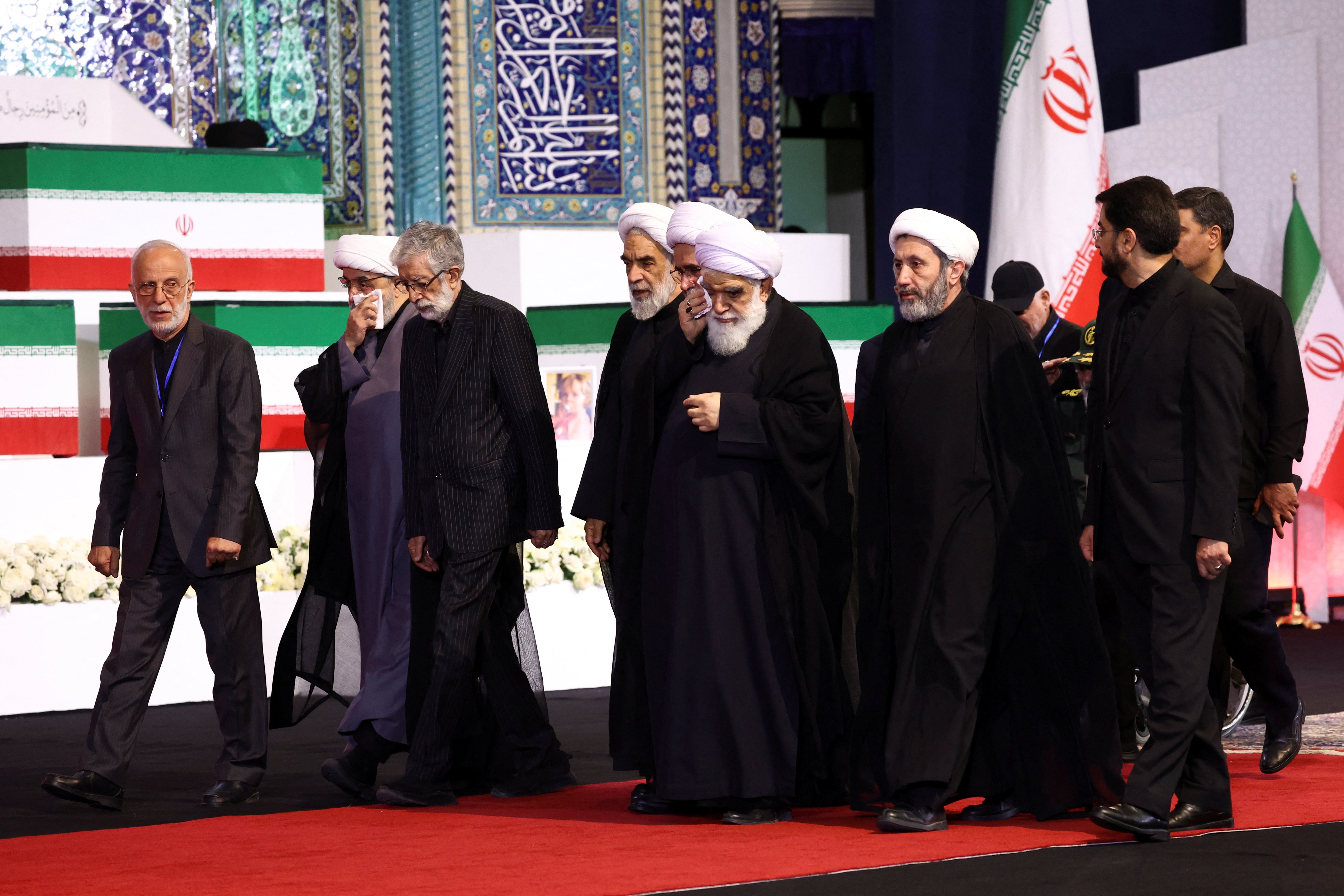
The most noticed absence within the Khamenei family was Mojtaba, the supreme leader’s son and the figure Iranian observers had long watched as an informal succession candidate. He did not attend. Iranian state media said he had received credible intelligence of an Israeli assassination plan targeting him if he appeared at any public ceremony. The threat has not been independently confirmed, but Tehran treated it as operational. Mojtaba has not appeared in public since his father’s death in February.
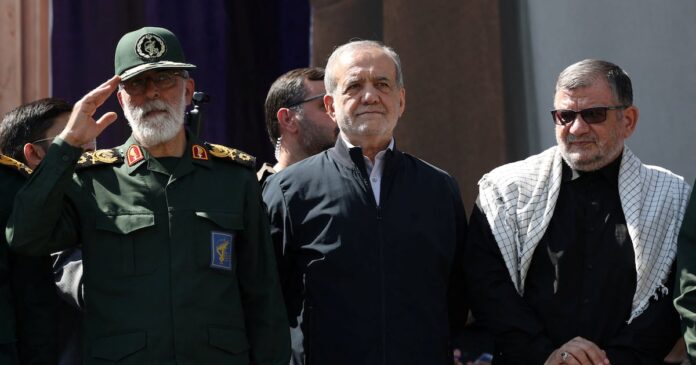
Succession remains formally open. A three-member Interim Leadership Council, comprising Assembly of Experts chairman Alireza Arafi, President Masoud Pezeshkian, and Chief Justice Gholam-Hossein Mohseni-Ejei, has exercised executive authority since the February strike. The Assembly of Experts, which under Iran’s constitution holds the authority to elect the next supreme leader, has not convened a formal vote.
At the funeral podium, parliamentary speaker Mohammad Baqer Ghalibaf addressed the assembled dignitaries in terms that left little interpretive room. He told the hall Iran would demand full implementation of the ceasefire memorandum of understanding signed with the United States, and that if the US and the Zionist regime failed to fulfill their commitments, Iran would resume proportionate actions.
Defense Minister Aziz Nasirzadeh-Hatami addressed the same theme. He told mourners Iran would pursue accountability for the killing with firmer resolve, directing his words at what he called the enemies of the Iranian nation, naming America and the criminal Zionist regime.
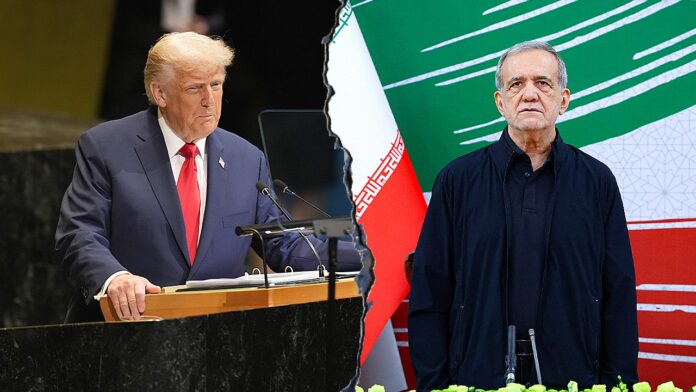
The US-Iran nuclear talks, already paused in the days before the ceremony began, remain suspended through the official mourning period. A next round of dialogue has no confirmed date, Al Jazeera reported.
The procession leaves Tehran on Sunday. The body moves to Qom on July 6 and 7, where pilgrims at one of Shia Islam’s most prominent seminarian cities will pay their respects. On July 8, the cortege crosses into Iraq, calling at the shrines of Najaf and Karbala. The burial is scheduled for July 9.
The question the funeral cannot answer is the one that now sits beneath every calculation involving Tehran: who governs Iran next, and under what doctrine. The Interim Council has kept the state functional, but it holds no constitutional authority to bind a future supreme leader to the agreements the existing government has signed. Every framework negotiated in the past four months, including the ceasefire, the Strait of Hormuz service fee memorandum, and the nuclear pause, carries that unresolved question inside it.
The green-wrapped casket buried alongside her grandfather on July 9 will have no answer to offer. She was three years old.