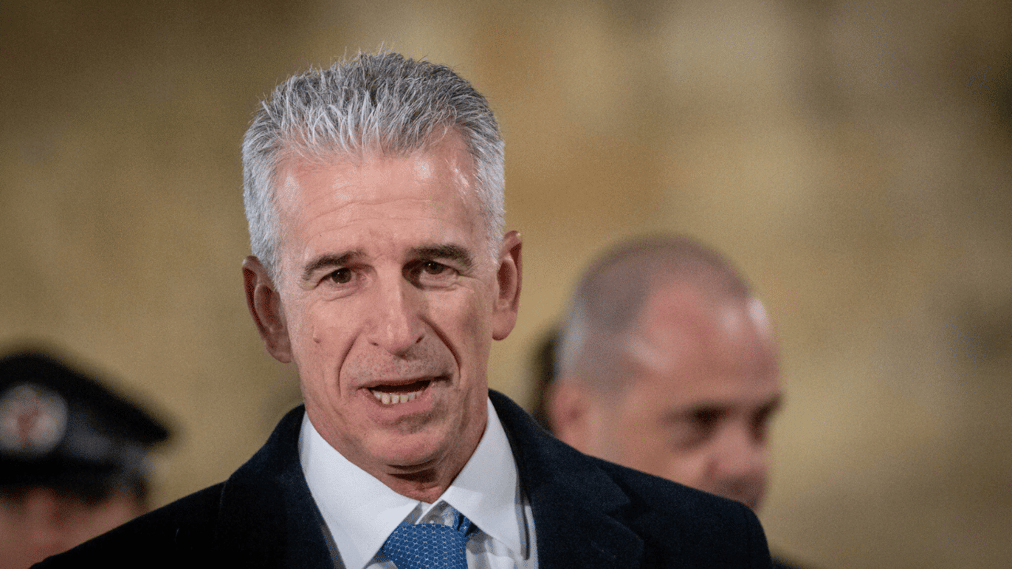
Claims circulating across social media platforms are alleging that David Barnea, the director of Israel’s Mossad intelligence agency, was killed during Iranian missile strikes on Tel Aviv. As of publication, no official Israeli statement, military confirmation, or credible international media report has confirmed the death of the Mossad chief.
The rumors began spreading rapidly across online networks amid escalating hostilities between Israel and Iran, with posts claiming that a precision Iranian missile strike targeted sensitive intelligence facilities in the Tel Aviv area. The viral claims suggest that the strike may have hit locations connected to Israel’s intelligence infrastructure, potentially killing senior security officials including Barnea. However, journalists and fact-checking outlets have found no verified evidence supporting these allegations.
The reports appear to have emerged in the chaotic information environment surrounding the widening Israel–Iran war. Analysts note that during intense conflicts, rumors and disinformation frequently spread alongside genuine battlefield updates, making verification difficult during the early hours of breaking developments.
At present, Israeli authorities have not reported any confirmed casualties among senior government or intelligence officials following the recent Iranian missile barrages targeting central Israel. Israeli emergency services have confirmed casualties among civilians and damage to buildings in areas around Tel Aviv following Iranian missile strikes on Tel Aviv.
The war between the two regional rivals has evolved from years of shadow conflict involving cyberattacks, covert operations, and proxy warfare into an increasingly open military confrontation. Israeli officials have repeatedly warned that their military campaign against Iran would intensify until what they describe as strategic objectives are achieved.
Iranian authorities have likewise vowed retaliation for Israeli operations targeting its military infrastructure and leadership. The confrontation dramatically escalated after a series of Israeli airstrikes on Iranian facilities and high-ranking figures earlier this year, triggering retaliatory missile attacks toward Israeli cities.
Within this volatile environment, the role of Israel’s intelligence services has become central to the unfolding conflict. Mossad, Israel’s foreign intelligence agency, has been widely reported to have conducted extensive covert operations targeting Iranian nuclear facilities, military installations, and strategic assets.
Under the leadership of David Barnea, Mossad expanded a range of clandestine capabilities designed to penetrate Iran’s security apparatus and disrupt its military infrastructure. Intelligence analysts say that Israeli intelligence operations in Iran have included cyber campaigns, sabotage missions, targeted assassinations, and covert drone strikes.
These operations have significantly intensified tensions between the two countries, pushing the long-running rivalry into open conflict. Iran has repeatedly accused Israel of orchestrating sabotage and assassination campaigns against Iranian scientists, military officials, and infrastructure connected to its nuclear program.
The current wave of rumors regarding Barnea’s alleged death appears to be part of the broader information war accompanying the military confrontation. Fact-checking organizations have noted that similar false claims about Israeli officials being killed in Iranian strikes have circulated widely online during the conflict.
In several cases, viral posts falsely claimed that senior Israeli figures had been killed in missile strikes. Investigations later found that the claims were fabricated or based on recycled video footage unrelated to the alleged events. The spread of rumors circulating on social media has become a defining feature of the conflict’s information battlefield.
Despite the lack of confirmation, the rumors have spread rapidly due to the dramatic nature of the claims and the heightened tensions across the Middle East. Analysts say the psychological dimension of the Israel–Iran confrontation increasingly includes propaganda and information warfare aimed at shaping public perception and morale.
Meanwhile, the military confrontation continues to escalate across multiple fronts. Israeli officials have warned that further strikes on Iranian military targets could be launched in the coming weeks as part of a broader campaign against Iran’s strategic capabilities.
Iran has responded with missile attacks targeting Israeli cities and infrastructure, raising fears that the conflict could expand into a wider regional war involving additional actors across the Middle East.
The possibility of a broader regional escalation has also raised alarm among international observers. Oil markets, shipping lanes, and critical energy infrastructure across the Gulf region have already experienced disruptions linked to the conflict.
The regional escalation has been accompanied by geopolitical developments far beyond Israel and Iran. Reports indicate that the crisis has drawn in multiple countries across the Middle East and beyond, with attacks targeting American military facilities and strategic infrastructure.
Iran’s Islamic Revolutionary Guard Corps has claimed responsibility for missile and drone attacks on facilities used by US forces across the Gulf, including strikes described in reports about Iranian strikes on US military sites in the UAE and Bahrain.
The crisis has also triggered political shockwaves across the region. In Saudi Arabia, a controversial drone attack on critical energy infrastructure fueled accusations that intelligence services could be operating across the Gulf as the war expands. Iranian officials have pointed to allegations involving Israeli intelligence in incidents such as the Saudi Aramco refinery drone strike.
Meanwhile, governments across the Middle East have begun preparing for the possibility of a wider war. The United States has already taken precautionary measures in the region, including the evacuation of diplomatic personnel amid fears that the conflict could spread across the Gulf. Reports describing how US diplomats fled Saudi Arabia highlighted growing concerns about the regional security situation.
Iran has also warned that American military infrastructure across the Middle East could become legitimate targets in the conflict. Officials in Tehran have argued that installations hosting US forces effectively function as operational platforms for attacks against Iran, a position outlined in statements about how US bases in the Middle East could become war targets.
As the information environment becomes increasingly chaotic, experts caution that unverified claims about the deaths of senior officials should be treated with extreme caution until confirmed by reliable sources.
For now, the reports claiming that Mossad chief David Barnea was killed in Iranian strikes on Tel Aviv remain unconfirmed. Israeli authorities have not acknowledged any such casualty, and major international media outlets have not reported confirmation of the claim.
Until verified information emerges, the rumors surrounding the alleged death of the Mossad director remain part of the fog of war engulfing one of the most dangerous geopolitical confrontations in the modern Middle East.