
In a move that is reverberating across diplomatic and legal corridors worldwide, Germany has withdrawn its support for Israel in the genocide case at the International Court of Justice, marking one of the most consequential shifts in Western policy since the Gaza war began.
The German government confirmed that it would no longer intervene on Israel’s behalf in the proceedings initiated by South Africa, choosing instead to focus on its own legal defense in a separate case brought by Nicaragua.
The decision represents a striking departure from Berlin’s earlier stance. In early 2024, Germany had dismissed allegations of genocide against Israel as unfounded and pledged to support Tel Aviv at The Hague.
Germany withdraws its support for Israel at the ICJ marks a turning point not only in Berlin’s foreign policy but also in the broader alignment of Western powers as legal scrutiny intensifies around the Gaza conflict.
The ICJ Becomes the Center of a Global Legal Storm
The case brought by South Africa has evolved into one of the most consequential legal battles in modern history, with multiple countries now watching closely as the International Court of Justice weighs allegations of genocide.
the case brought by South Africa has evolved into one of the most consequential legal battles, reflecting a growing global divide over how the Gaza war is interpreted and judged.
For many in the Global South, the proceedings represent a challenge to long-standing impunity, while Western governments face mounting pressure to reconcile their alliances with international law.
Legal Risks Force a Strategic Retreat
Germany’s withdrawal underscores how that balance is becoming increasingly difficult to maintain, particularly as Berlin faces its own legal exposure in a separate ICJ case filed by Nicaragua.
Germany’s withdrawal underscores how that balance is becoming increasingly difficult to maintain, especially amid accusations that its military support could amount to complicity.
By stepping back from defending Israel, Germany is effectively prioritizing its own legal position while signaling a broader reassessment among Western powers.
A Fracturing Western Consensus
For decades, Western support for Israel has been a cornerstone of transatlantic foreign policy. But that consensus now appears increasingly fragile.
Western support for Israel has been a cornerstone of transatlantic foreign policy, yet recent developments suggest that unity is beginning to fracture under legal and political pressure.
Western governments are beginning to reassess their positions, raising questions about how long traditional alliances can withstand growing scrutiny.
The Humanitarian Crisis Deepens
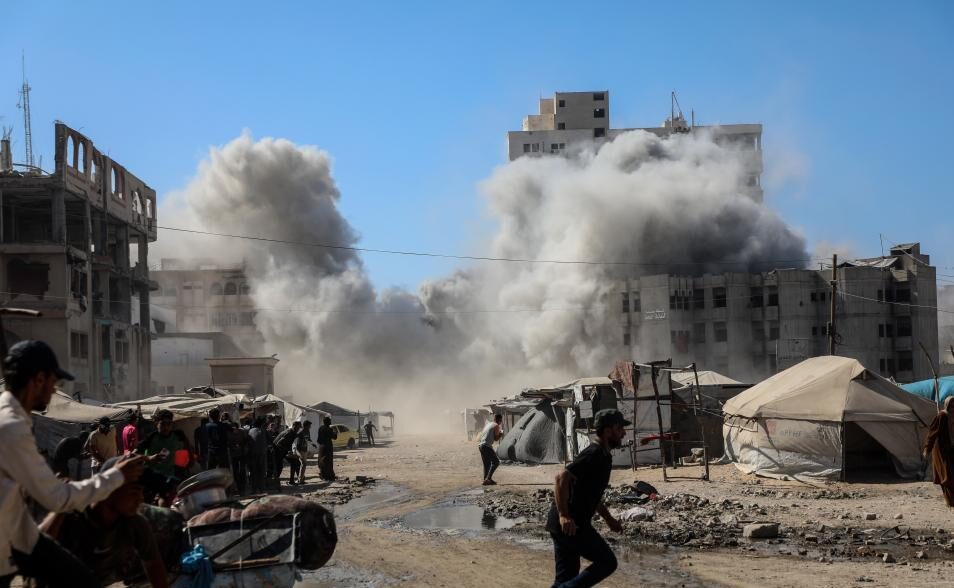
While legal proceedings unfold, the humanitarian crisis in Gaza remains dire, with continued reports of airstrikes, civilian casualties, and shortages of essential supplies.
humanitarian crisis in Gaza remains dire, particularly in areas where medical infrastructure has collapsed and access routes remain restricted.
Reports of global outrage and mounting civilian casualties continue to fuel international concern and intensify calls for accountability.
global outrage and mounting civilian casualties have become central to the international response, amplifying pressure on governments and institutions alike.
Geopolitical Realignment Underway
Beyond the courtroom, the Gaza genocide case is reshaping global alignments. Countries across Africa, Asia, and Latin America have increasingly supported legal efforts against Israel, framing the issue within a broader critique of global power structures.
Berlin’s dramatic reversal signals a widening rupture in Western unity, with ripple effects that could extend far beyond Europe.
Meanwhile, regional actors and emerging powers are increasingly asserting independent diplomatic roles, further complicating the global landscape.
War on the Ground, Law in The Hague
The contrast between ongoing military operations and legal proceedings highlights the limitations of international law in addressing immediate crises.
ongoing violence and ceasefire negotiations continue to define the reality on the ground, even as legal arguments unfold in distant courtrooms.
This dual dynamic underscores the complexity of the Gaza conflict, where legal, political, and humanitarian dimensions intersect in unprecedented ways.
A Defining Moment for International Law
At its core, the unfolding situation represents a test of the international legal order and its ability to hold powerful states accountable.
The Gaza genocide case has exposed deep divisions, not only between states but also within alliances that have long shaped global governance.
Germany’s decision to step back from defending Israel may prove to be a pivotal moment, one that signals a broader transformation in how international law is applied and enforced.
As the proceedings continue, the outcome will likely shape the future of global accountability, setting precedents that extend far beyond the current conflict.