
The moon phase today is Waning Gibbous. On Sunday, November 29, 2026, NASA’s Daily Moon Guide puts the lunar disk at 71 percent illuminated, with other calendars landing between 67 and 70 percent depending on the hour they sample. The moon is about 20 days old in its 29.5-day cycle, five days past the Beaver Moon and two days short of Last Quarter.
The spread in those percentages is not an error. Illumination changes by roughly ten points a day at this stage of the cycle, so a figure taken at dawn differs from one taken at dusk. Whichever number a calendar uses, the moon phase today is the same: a shrinking, lopsided disk that is still more than half lit but losing light along its right edge for observers in the Northern Hemisphere.
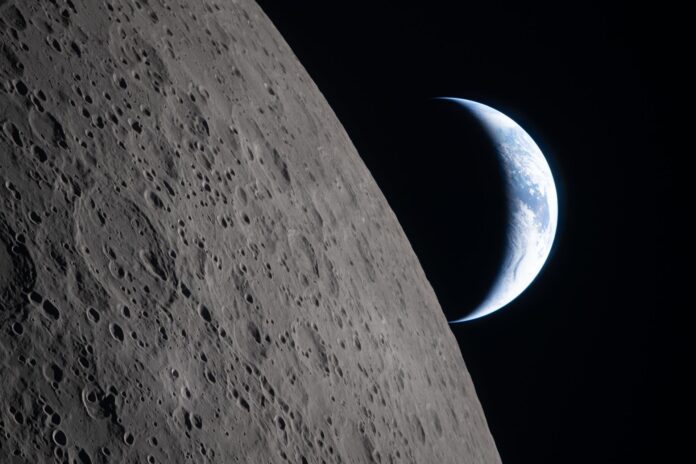
Gibbous comes from a Latin word for hump, and the shape explains the name. Between Full Moon and Last Quarter the lit portion falls from 100 percent toward 50, and the terminator, the line dividing day from night on the lunar surface, slides across the disk each night. We covered the same stage of the cycle earlier this autumn in our report on the Waning Gibbous moon of September 3.
| Detail | Value |
|---|---|
| Moon phase today | Waning Gibbous |
| Illumination | About 70% (NASA: 71%) |
| Moon age | About 20 days |
| Moon sign | Leo |
| Previous Full Moon | November 24, 2026 (Beaver Moon, about 9:53 a.m. ET) |
| Next Last Quarter | December 1, 2026, about 1:08 a.m. ET |
| Next New Moon | December 8, 2026, about 7:52 p.m. ET |
| Next Full Moon | December 23, 2026, 8:28 p.m. EST (Cold Moon, supermoon) |
| Source: NASA Daily Moon Guide; timeanddate.com moon phase calendars. Times are converted to Eastern Time and vary by a few minutes between sources. | |
For skywatchers, tonight is a late-evening and after-midnight moon. It rises around 10 p.m. at mid-northern latitudes, climbs highest in the southern sky before dawn and sets in the late morning, close to noon in many locations. That timing leaves the early evening sky dark, which helps for planets. Astronomy magazine’s daily guide flags November 29 as the day Venus reaches its greatest brilliancy, so the evening sky is worth a look before the moon appears.
Binoculars are enough to pick out the maria, the dark basaltic plains, along the lit side of the disk. The shadowed edge of the terminator is where craters show the most relief, because the low sun angle stretches their shadows. No telescope is needed, and the view is the same in the Southern Hemisphere apart from the orientation: the lit edge appears on the left there.
The Beaver Moon on November 24 was the first of a run. NASA’s November skywatching guide describes it as the opening of three consecutive supermoons, in November, December and January. A supermoon is a full Moon that coincides with the near point of its slightly oval orbit, so it looks larger and brighter than average, although NASA notes the difference can be subtle. We followed the previous full moon cycle in our report on the Harvest Moon night of September 25.
The video above is NASA’s “What’s Up” skywatching episode for November 2026, produced by the agency’s Jet Propulsion Laboratory and hosted by Raquel Villanueva. At 3 minutes 35 seconds, it covers the Taurid and Leonid meteor showers, the close pairing of Mars and Jupiter before sunrise on November 15 and 16, the November supermoon, and the milestone we reported when Voyager 1 reached one light-day from Earth. It closes with the month’s moon phases, which NASA lists as New Moon on November 8, First Quarter on November 17, the Full Moon on November 24 and Third Quarter on November 30. NASA’s dates are in Pacific Time, which is why its Third Quarter date reads a day earlier than the Eastern Time of 1:08 a.m. on December 1 in the table above.
The cycle moves quickly from here. Last Quarter, also called Third Quarter, arrives early on Tuesday, December 1, when exactly half the disk is lit. That is the same half-moon geometry we described in our report on the Last Quarter moon of September 4. The moon then thins through the Waning Crescent phase into the New Moon on the evening of December 8 Eastern Time, which leaves the pre-dawn sky dark for deep-sky observing in the week before.
The December Full Moon is the one to plan around. The Cold Moon peaks at 8:28 p.m. EST on Wednesday, December 23, and it is a supermoon, which makes it the closest and largest full moon since January 2018. It will look nearly full from December 22 through Christmas Eve, so a cloudy night does not close the window. The January full moon then completes the three-supermoon run that NASA describes.
A few habits make daily moon watching more rewarding. Check the moon phase today at the same hour each evening, and note where the moon sits against landmarks on your horizon, because its rise time slides later by roughly 50 minutes a night as it wanes. Give your eyes about half an hour to adjust to the dark, as NASA advises for all skywatching, and look for the moon in the late morning sky as well, when the waning disk is still visible in daylight.
Moon phase data changes daily, and exact illumination depends on the minute and the observer’s location. NASA publishes its own tracker and monthly viewing guides on its Science skywatching pages, which are the best place to confirm numbers for your own sky. We will track the next phase as it arrives in our daily moon phase today report.